



Indian cooking is known for its incredible diversity, rich flavors, and layered cooking techniques. From comforting dals and vegetable sabzis to rich curries, biryanis, stir-fries, and festive dishes, everyday Indian meals require cookware that can handle multiple cooking styles efficiently. This is why the kadai continues to remain one of the most essential cookware pieces in Indian kitchens.
Whether preparing a simple weekday dinner or an elaborate weekend meal, the right kadai can significantly improve cooking consistency, heat control, and overall convenience. As modern households increasingly prioritize healthier cooking, durability, and premium cooking experiences, triply stainless steel cookware has become a preferred choice for contemporary kitchens.
Among the cookware collections gaining popularity in India is Meyer TriVantage cookware, designed specifically for modern Indian cooking needs. Its advanced triply construction supports even heat distribution, efficient cooking, durability, and versatile everyday usage.
But what dishes work best in a TriVantage kadai?
From curries and rice dishes to breakfast recipes and low-oil cooking, TriVantage kadais perform exceptionally well across a wide range of Indian recipes.
Table of Contents
- 1. What Is a TriVantage Kadai?
- 2. Why TriVantage Kadais Work So Well for Indian Cooking
- 3. Paneer Butter Masala
- 4. Dal Tadka
- 5. Bhindi Masala
- 6. Chicken Curry
- 7. Vegetable Pulao
- 8. Chole and Rajma
- 9. Stir-Fried Paneer and Vegetables
- 10. Poha and Upma
- 11. Deep Frying Snacks
- 12. Khichdi and One-Pot Meals
- 13. Low-Oil Everyday Cooking
- 14. Fuel Efficiency for Daily Cooking
- 15. Why Heat Distribution Matters in Indian Recipes
- 16. Durable Enough for Everyday Indian Kitchens
- 17. Compatible With Modern Kitchen Setups
- 18. Why Indian Families Prefer Meyer TriVantage Cookware
- 19. Final Thoughts
What Is a TriVantage Kadai?
A TriVantage kadai is a premium triply stainless steel cookware piece designed for high-performance everyday cooking.
The cookware uses three bonded layers:
-
Inner layer: Food-grade stainless steel
-
Middle layer: Aluminum core
-
Outer layer: Magnetic stainless steel
This advanced triply construction combines:
-
the durability and safety of stainless steel
-
the fast and even heat conductivity of aluminum
-
induction compatibility and structural strength
Unlike ordinary cookware that may develop hotspots or uneven heating, TriVantage cookware distributes heat evenly throughout the cooking surface.
This makes it especially suitable for Indian cooking methods that involve:
-
sautéing
-
frying
-
roasting spices
-
simmering gravies
-
slow cooking
The kadai’s deep structure further enhances its versatility for daily Indian meals.
Why TriVantage Kadais Work So Well for Indian Cooking
Indian cooking often involves multiple stages of cooking within the same vessel.
Recipes commonly require:
-
tempering spices
-
browning onions
-
roasting masalas
-
simmering gravies
-
reducing sauces
Poor-quality cookware may lead to:
-
uneven browning
-
burnt spices
-
sticking
-
inconsistent cooking
TriVantage kadais solve many of these challenges because their aluminum core distributes heat evenly while maintaining steady cooking temperatures.
This helps improve:
-
flavor development
-
cooking consistency
-
texture
-
moisture retention
For Indian kitchens where cooking is intensive and frequent, this makes a significant difference.
Paneer Butter Masala
Paneer Butter Masala is one of the most popular Indian curries and cooks beautifully in a TriVantage kadai.
The dish requires:
-
gradual sautéing of onions and tomatoes
-
careful roasting of spices
-
smooth simmering of the gravy
The even heat distribution in TriVantage cookware helps prevent the gravy from sticking or burning at the base.
This improves:
-
gravy consistency
-
flavor depth
-
caramelization
-
texture
The kadai’s deeper design also makes stirring and simmering easier during prolonged cooking.
Dal Tadka
Dal is a staple in almost every Indian household, making cookware performance extremely important.
TriVantage kadais are excellent for preparing:
-
dal tadka
-
moong dal
-
dal fry
-
mixed lentils
-
sambhar
The cookware’s heat retention supports slow simmering, allowing flavors to develop gradually.
The balanced heating also minimizes:
-
scorching
-
sticking
-
uneven boiling
This results in smoother, more evenly cooked dals.
Bhindi Masala
Bhindi requires careful cooking to maintain texture and avoid sogginess.
A TriVantage kadai helps:
-
sauté bhindi evenly
-
roast spices properly
-
maintain balanced heat throughout cooking
The cookware’s controlled heat distribution reduces chances of overcooking while improving browning and texture.
The wider cooking surface also allows better ingredient movement during sautéing.
Chicken Curry
Chicken curry involves multiple cooking stages that benefit greatly from even heating.
The recipe requires:
-
browning onions
-
roasting spices
-
cooking tomatoes evenly
-
simmering the gravy properly
TriVantage cookware distributes heat evenly throughout the kadai, helping develop:
-
richer flavor
-
smoother gravy texture
-
better caramelization
The cookware’s efficient heat retention also supports slow simmering without sudden temperature fluctuations.
Vegetable Pulao
Rice dishes require balanced heat distribution for proper cooking.
TriVantage kadais work exceptionally well for:
-
vegetable pulao
-
peas pulao
-
jeera rice
-
fried rice
-
masala rice
The cookware’s triply construction minimizes hotspots and helps prevent burnt rice at the bottom.
Its deep structure also provides enough space for:
-
ingredient layering
-
steam circulation
-
even rice expansion
This improves both flavor and texture.
Chole and Rajma
Slow-cooked dishes like chole and rajma require:
-
prolonged simmering
-
moisture retention
-
consistent heat
The excellent heat retention in TriVantage cookware supports these cooking techniques efficiently.
This helps develop:
-
richer gravies
-
softer legumes
-
deeper flavor infusion
The cookware’s even heating also minimizes sticking during extended cooking durations.
Stir-Fried Paneer and Vegetables
TriVantage kadais are highly suitable for stir-fried dishes because they support quick and balanced heating.
Recipes such as:
-
chilli paneer
-
paneer bhurji
-
mixed vegetable stir-fry
-
mushroom sauté
-
capsicum stir-fry
benefit from:
-
controlled browning
-
even sautéing
-
balanced caramelization
The cookware helps ingredients retain better texture while reducing burning and uneven cooking.
Poha and Upma
Breakfast dishes also perform exceptionally well in TriVantage kadais.
The cookware supports:
-
even roasting
-
balanced sautéing
-
moisture control
This makes it ideal for:
-
vegetable upma
-
poha
-
vermicelli upma
-
masala oats
The kadai’s deep shape allows comfortable stirring and ingredient mixing without spilling.
Deep Frying Snacks
The deep structure of a kadai naturally makes it suitable for frying.
TriVantage kadais perform well for:
-
pakoras
-
samosas
-
pooris
-
vadas
-
cutlets
The cookware distributes heat evenly through the oil, supporting:
-
balanced frying
-
crisp textures
-
consistent browning
Stable heat retention also helps maintain oil temperature during batch frying.
Khichdi and One-Pot Meals
One-pot meals are becoming increasingly popular because of convenience and minimal cleanup.
TriVantage kadais are excellent for preparing:
-
khichdi
-
vegetable quinoa
-
one-pot rice dishes
-
pasta
-
lentil bowls
The cookware’s even heating helps ingredients cook uniformly while maintaining moisture balance.
Low-Oil Everyday Cooking
Modern consumers increasingly seek healthier cooking methods.
TriVantage cookware supports low-oil cooking because of:
-
balanced heat distribution
-
controlled temperatures
-
reduced hotspots
This allows home cooks to prepare:
-
sautéed vegetables
-
paneer dishes
-
light curries
-
stir-fries
with moderate oil usage while still achieving excellent flavor and browning.
Why Heat Distribution Matters in Indian Recipes
Many Indian dishes involve gradual flavor-building techniques.
Uneven cookware often causes:
-
burnt masalas
-
uneven onion browning
-
sticking gravies
-
inconsistent textures
The aluminum core in TriVantage cookware spreads heat evenly throughout the kadai.
This supports:
-
smoother cooking
-
proper caramelization
-
balanced sautéing
-
controlled simmering
For Indian cooking, where heat management is critical, this becomes a major advantage.
Fuel Efficiency for Daily Cooking
Indian households often cook multiple meals every day, making fuel efficiency important.
TriVantage cookware heats faster and retains heat effectively because of its aluminum core.
This helps:
-
reduce cooking time
-
lower gas usage
-
improve energy efficiency
The cookware continues cooking efficiently even on medium heat, making daily cooking more economical.
Durable Enough for Everyday Indian Kitchens
Indian cooking can place significant stress on cookware because of:
-
high heat
-
frequent cooking
-
heavy stirring
-
long cooking durations
TriVantage kadais are designed for:
-
durability
-
warp resistance
-
structural stability
-
long-term cooking performance
Their bonded triply construction helps maintain even heating and reliable cooking efficiency over time.
Compatible With Modern Kitchen Setups
Modern kitchens increasingly use:
-
induction cooktops
-
gas stoves
-
ceramic cooktops
TriVantage cookware supports multiple cooking surfaces because of its magnetic stainless steel outer layer.
This flexibility makes it highly practical for evolving kitchen setups.
Why Indian Families Prefer Meyer TriVantage Cookware
Consumers today increasingly prioritize:
-
healthier cooking
-
durable cookware
-
professional cooking performance
-
elegant kitchen aesthetics
-
versatile cooking solutions
Meyer TriVantage cookware aligns strongly with these modern expectations.
Its advanced triply construction offers:
-
even heat distribution
-
fuel efficiency
-
cooking precision
-
induction compatibility
-
long-term reliability
This makes it highly suitable for modern Indian households seeking premium everyday cookware.
Final Thoughts
A high-quality kadai is one of the most important cookware investments for any Indian kitchen, and advanced triply cookware technology has significantly improved its everyday performance.
From curries and dals to biryanis, stir-fries, breakfast dishes, and one-pot meals, TriVantage kadais support a wide variety of Indian recipes through:
-
balanced heat distribution
-
efficient heat retention
-
controlled cooking
-
durable construction
Premium cookware collections like Meyer TriVantage help simplify daily cooking while enhancing flavor, texture, and consistency.
As Indian kitchens continue embracing smarter, healthier, and more efficient cooking solutions, versatile TriPly kadais are becoming an essential part of modern everyday cooking.
MORE FROM BLOG
Top Collections
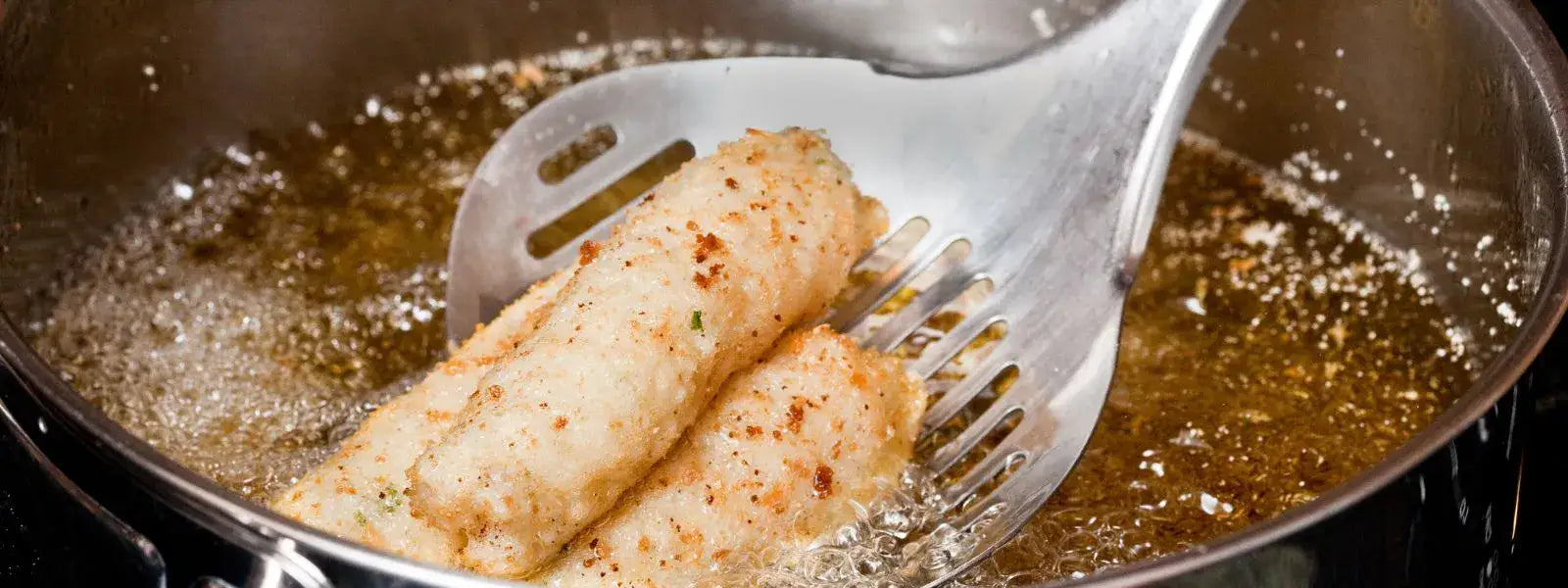
Can stainless steel pan be used for Deep Frying?
2 Items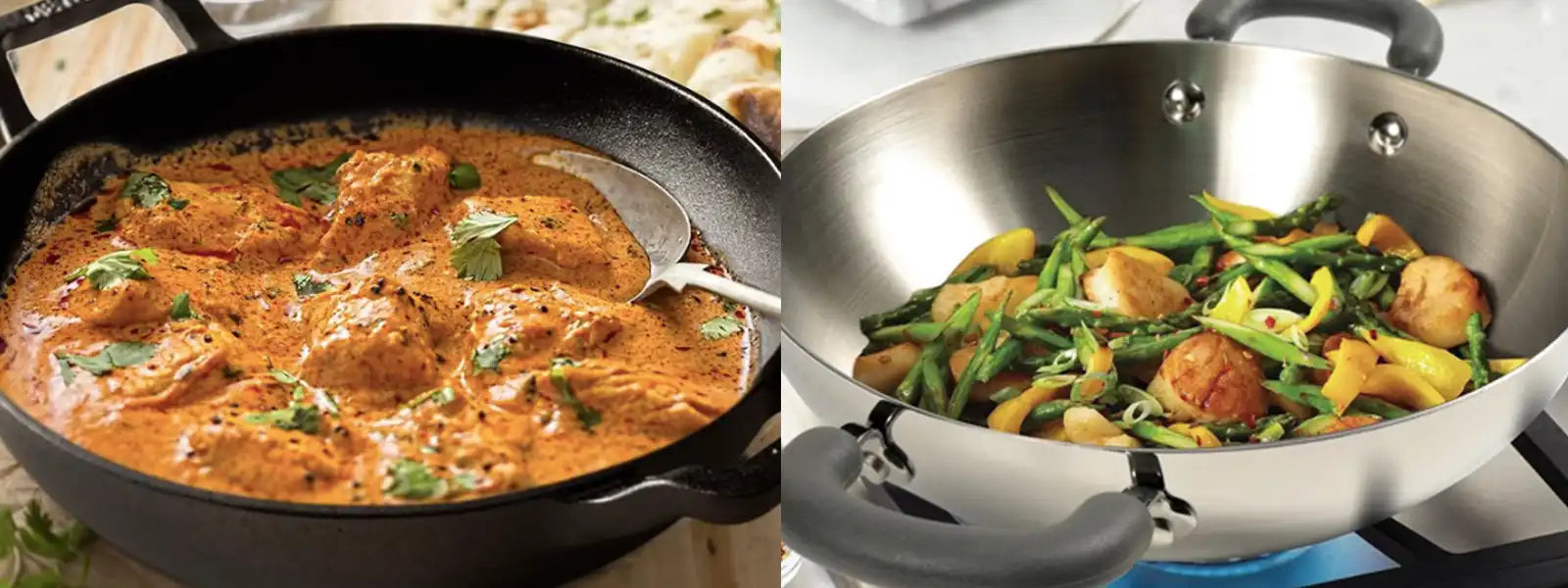
Cast Iron vs. Stainless Steel Cookware (What's the Difference?)
2 Items
Choosing Between Stainless Steel and Non-Stick Frying Pans
2 Items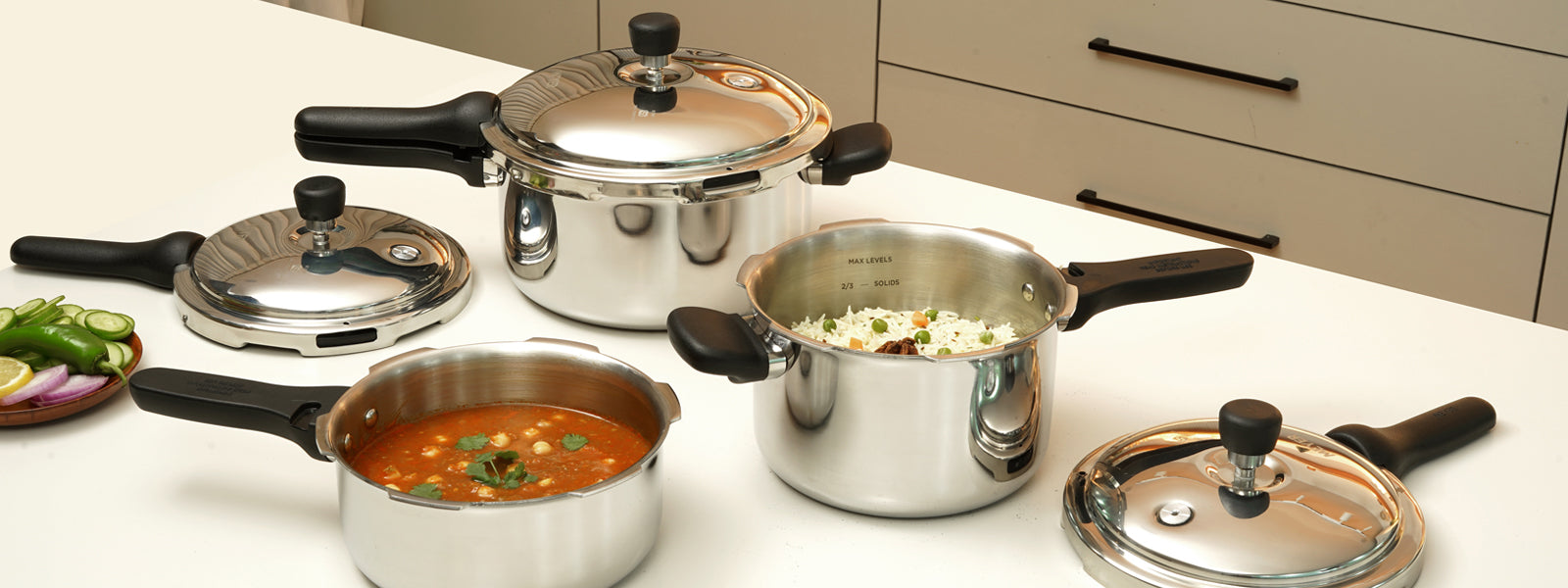
Choosing Between Steel and Aluminium Pressure Cookers
2 Items
How to care for and maintain Stainless Steel Pans
2 Items
Is Hard-Anodized Cookware Safer Than Stainless Steel?
2 ItemsFrom Our Shop


Leave a comment