



Stainless steel cookware has long been a staple in Indian kitchens because of its durability, safety, and versatility. From simmering dals to sautéing vegetables and preparing gravies, stainless steel utensils are used daily in households across the country. However, with the evolution of cookware technology, many home cooks now come across terms such as triply stainless steel cookware, layered construction, or clad cookware.
While both regular stainless steel and triply stainless steel cookware are widely used, they are built differently and offer distinct cooking experiences. Understanding the difference between the two can help home cooks choose cookware that suits their cooking style, kitchen setup, and long-term needs.
This article explains how regular stainless steel cookware differs from triply stainless steel cookware, how each performs in Indian cooking, and how modern cookware collections such as Meyer Select and Meyer Trivantage represent these two approaches.
Table of Contents
- 1. Understanding Regular Stainless Steel Cookware
- 2. Advantages of Regular Stainless Steel Cookware
- 3. Limitations of Regular Stainless Steel
- 4. What Is Triply Stainless Steel Cookware?
- 5. Benefits of Triply Stainless Steel Cookware
- 6. Why Triply Cookware Is Popular in Modern Indian Kitchens
- 7. Meyer Select: A Practical Stainless Steel Choice
- 8. Meyer Trivantage: Advanced Triply Cooking Performance
- 9. Which One Should You Choose?
- 10. Final Thoughts
Understanding Regular Stainless Steel Cookware
Regular stainless steel cookware is typically made from a single layer of stainless steel. It is widely used because it is strong, rust-resistant, and safe for cooking a wide range of foods.
Stainless steel itself is valued for its non-reactive nature, which means it does not react with acidic ingredients such as tomatoes, tamarind, vinegar, or lemon. This makes it suitable for many Indian dishes that include acidic components.
Because of these characteristics, regular stainless steel cookware is often used for:
-
cooking dals and lentils
-
boiling vegetables
-
preparing soups and broths
-
cooking curries and gravies
However, stainless steel by itself is not the best conductor of heat. As a result, cookware made from a single stainless steel layer may sometimes develop hot spots, especially if the base is thin.

Advantages of Regular Stainless Steel Cookware
Regular stainless steel cookware remains popular because it offers several practical benefits:
Durability
Stainless steel utensils are known for their strength and resistance to corrosion. They can last for many years with proper care.
Non-reactive cooking surface
Foods with high acidity do not react with stainless steel, preserving natural taste and color.
Ease of maintenance
Regular stainless steel cookware is simple to clean and does not require seasoning.
Affordability
Compared to more advanced cookware constructions, single-layer stainless steel cookware is generally more economical.
Limitations of Regular Stainless Steel
Despite its advantages, regular stainless steel cookware has some limitations.
Because stainless steel is not a highly efficient heat conductor, thin cookware may experience:
-
uneven heating
-
localized burning
-
food sticking if heat is not controlled carefully
For this reason, many modern cookware designs incorporate additional materials to improve heat distribution.
What Is Triply Stainless Steel Cookware?
Triply stainless steel cookware is designed using three bonded layers of metal, each serving a specific purpose in the cooking process.
The typical triply structure includes:
-
Inner stainless steel layer – provides a safe, non-reactive cooking surface.
-
Aluminium core layer – ensures efficient heat conduction.
-
Outer stainless steel layer – adds durability and compatibility with various stovetops.
These three layers are bonded together through advanced manufacturing techniques, creating cookware that combines the benefits of different metals in one construction.
Why the Aluminium Core Matters
Aluminium is an excellent conductor of heat. When placed between stainless steel layers, it helps distribute heat evenly across the entire surface of the cookware.
This reduces hot spots and allows food to cook more consistently.
Benefits of Triply Stainless Steel Cookware
Triply cookware has become increasingly popular because it enhances the cooking experience in several ways.
Even heat distribution
The aluminium core spreads heat evenly throughout the cookware, reducing the chances of food burning in specific spots.
Better temperature control
Triply cookware responds more efficiently to changes in heat, which helps when cooking delicate dishes.
Improved cooking efficiency
Food cooks more uniformly, allowing ingredients to retain texture and flavor.
Compatibility with multiple cooktops
Triply stainless steel cookware generally works well on gas, induction, and electric stovetops.
Durability and strength
The outer stainless steel layer protects the cookware while maintaining structural stability.
Why Triply Cookware Is Popular in Modern Indian Kitchens
Indian cooking techniques often involve multiple stages of heating, including tempering spices, sautéing aromatics, simmering gravies, and slow cooking dals.
Triply cookware supports these processes by maintaining consistent heat levels. For example:
-
when sautéing onions and spices, even heat prevents burning
-
when cooking dals, steady heat helps maintain uniform simmering
-
when preparing gravies, ingredients cook evenly without sticking excessively
These benefits make triply cookware especially attractive for home cooks who want reliable results in everyday cooking.
Meyer Select: A Practical Stainless Steel Choice
Cookware collections such as Meyer Select represent a refined approach to regular stainless steel cookware. Designed for everyday cooking convenience, Meyer Select focuses on durability, safety, and ease of use.
The cookware range features nickel-free stainless steel construction, making it suitable for households that prefer cookware without nickel content. This feature also makes the cookware particularly relevant for people who may be sensitive to nickel.
Key characteristics include:
-
durable stainless steel body
-
non-reactive cooking surface
-
compatibility with modern kitchens
-
easy cleaning and maintenance
Because of its practical design and durability, Meyer Select cookware is well suited for daily cooking tasks such as preparing dals, sabzis, soups, and gravies.
Meyer Trivantage: Advanced Triply Cooking Performance
For cooks looking for enhanced heat performance, Meyer Trivantage cookware showcases the benefits of triply stainless steel construction.
Built with a layered structure that incorporates an aluminium core between stainless steel layers, Meyer Trivantage cookware offers improved heat distribution and cooking efficiency.
This design supports a wide variety of cooking techniques used in Indian kitchens, including:
-
sautéing vegetables
-
preparing gravies and curries
-
cooking lentils and stews
-
simmering sauces
The triply construction ensures that heat spreads evenly across the cookware surface, helping reduce burning and promoting consistent cooking results.
In addition to its performance benefits, Meyer Trivantage cookware is designed to be durable and compatible with modern stovetops, making it a practical choice for contemporary kitchens.
Which One Should You Choose?
Both regular stainless steel cookware and triply stainless steel cookware have their place in Indian kitchens.
Regular stainless steel cookware works well for households that prioritize durability, simplicity, and affordability. It is perfectly suitable for many everyday cooking tasks.
Triply stainless steel cookware, on the other hand, is ideal for those who want better heat control and more consistent cooking performance.
Many experienced home cooks prefer to include both types of cookware in their kitchen:
-
regular stainless steel cookware for everyday boiling and simmering
-
triply cookware for more precise sautéing, frying, and controlled cooking
This combination offers flexibility while ensuring reliable cooking results.
Final Thoughts
The difference between regular stainless steel cookware and triply stainless steel cookware lies mainly in their construction and heat performance. While regular stainless steel cookware provides durability and ease of maintenance, triply cookware enhances heat distribution and cooking efficiency through its layered structure.
Modern cookware collections such as Meyer Select and Meyer Trivantage reflect these two approaches—offering home cooks practical choices depending on their cooking preferences and kitchen needs.
By understanding how each type of cookware performs, home cooks can make informed decisions and build a cookware collection that supports both everyday meals and more refined cooking techniques.
MORE FROM BLOG
Top Collections
5 Reasons Why Every Home Cook Needs Stainless Steel Pots
2 Items
Advantages of a 2 Litre Stainless Steel Pressure Cooker
2 Items
Benefits of using stainless steel cookware in India
2 Items
Best Stainless Steel Cookers for Daily Cooking
2 Items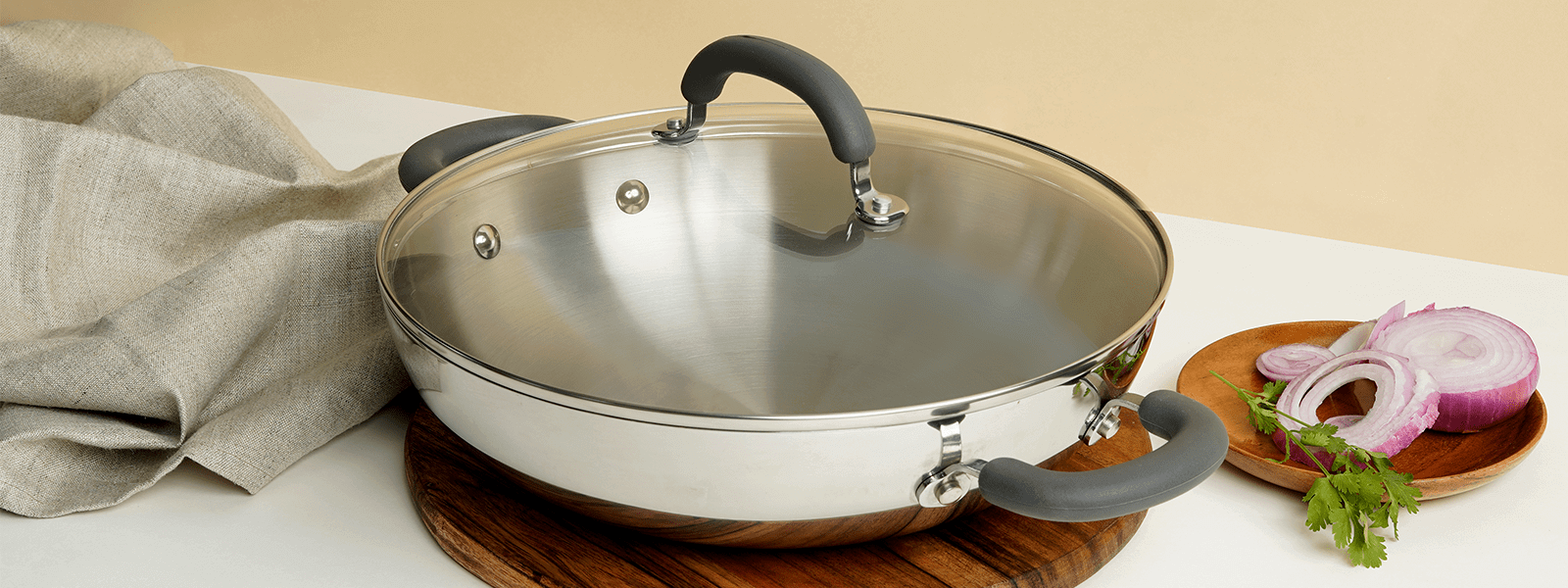
Best stainless steel cookware for summer cooking
2 Items


Leave a comment