



In Indian households, hygiene in cooking is not just a preference—it is a necessity. With daily cooking involving spices, oils, acidic ingredients, high heat, and repeated reuse of cookware, the material you cook in plays a critical role in food safety. This is why stainless steel cookware has earned a reputation as one of the most hygienic and safest cookware materials for Indian kitchens.
But what exactly makes stainless steel cookware hygienic? Is it truly better than nonstick, cast iron, or aluminum? And why do professional kitchens and health-conscious homes continue to rely on stainless steel cookware for everyday cooking?
In this detailed guide, we explain why stainless steel cookware is considered hygienic, how it supports food safety, and why premium stainless steel cookware from Meyer is trusted for clean, worry-free cooking in Indian homes.
Table of Contents
Understanding Hygiene in Cookware
Cookware hygiene goes beyond visible cleanliness. Truly hygienic cookware should:
-
Prevent bacterial growth
-
Not absorb food, moisture, or odours
-
Remain chemically stable during cooking
-
Be easy to clean and sanitise
-
Stay safe over long-term use

Indian cooking, with its frequent reuse of vessels, long simmering gravies, and strong spices, puts cookware under constant stress. Stainless steel cookware is uniquely suited to meet these hygiene demands.
Non-Porous Surface Prevents Bacteria and Germ Build-Up
One of the biggest reasons stainless steel cookware is considered hygienic is its non-porous surface.
A non-porous material does not absorb:
-
Food particles
-
Oils and fats
-
Moisture
-
Odours
Because nothing seeps into the surface, bacteria and germs have no place to hide or multiply. This is especially important in Indian cooking, where vessels are often used repeatedly for different dishes throughout the day.
Unlike porous materials, stainless steel does not retain residue even after cooking spicy gravies, masalas, or oil-rich dishes.
Stainless Steel Is Non-Reactive With Indian Foods
Indian cuisine relies heavily on acidic ingredients such as:
-
Tomatoes
-
Tamarind
-
Kokum
-
Lemon juice
-
Vinegar
Stainless steel cookware is non-reactive, which means it does not chemically interact with these ingredients. As a result:
-
No metallic taste enters the food
-
Nutritional integrity is preserved
-
Food colour remains unchanged
-
No harmful substances leach into meals
This makes stainless steel cookware hygienic and safe for long cooking durations, especially for gravies and curries that simmer for extended periods.
Meyer’s stainless steel cookware, including its nickel-free ranges, is engineered to ensure complete food safety and purity during cooking.
Easy to Clean and Easy to Sanitise
Hygienic cookware must be easy to clean thoroughly. Stainless steel cookware excels in this area.
It can be:
-
Washed with regular dish soap and hot water
-
Scrubbed without surface damage
-
Cleaned with natural agents like baking soda or vinegar
-
Sanitised using boiling water when needed
There are no coatings that can peel or degrade, and no layers that trap food residue over time. This makes stainless steel cookware especially suitable for Indian households where vessels are washed frequently and rigorously.
Resistant to Bacterial and Mould Growth
Because stainless steel:
- Does not absorb moisture
- Dries quickly after washing
- Does not develop micro-cracks under normal use
it naturally resists bacterial and mould growth. This is particularly important in humid Indian climates, where cookware hygiene can be harder to maintain.
Compared to materials that trap moisture or develop surface wear, stainless steel remains clean and stable for years.
No Peeling, Flaking, or Surface Degradation
One major hygiene concern with certain cookware types is surface degradation. When coatings peel or flake, they can:
-
Contaminate food
-
Trap bacteria
-
Compromise safety
High-quality stainless steel cookware does not peel, flake, or chip. Its surface remains intact even with daily use, high heat, and frequent washing.
Meyer stainless steel cookware is reinforced with advanced manufacturing techniques such as SteelShield technology, ensuring long-term surface integrity and hygienic performance.
No Flavour or Odour Transfer Between Dishes
A hygienic cooking surface should not retain flavours or smells. Stainless steel cookware does not absorb odours, which means:
-
Yesterday’s curry smell does not affect today’s milk or rice
-
No cross-contamination between dishes
-
Clean, neutral cooking every time
This is particularly important in Indian kitchens where the same cookware is used for a wide variety of dishes throughout the day.
Safe for High-Temperature Indian Cooking
Indian cooking often involves high heat for:
-
Tadka
-
Roasting spices
-
Stir-frying
-
Shallow frying
Stainless steel cookware remains stable at high temperatures and does not release harmful fumes or toxins. This makes it hygienic for cooking methods where nonstick cookware may degrade or become unsafe.
Meyer stainless steel cookware is designed to handle Indian cooking temperatures confidently on gas stoves, induction cooktops, and even in ovens.
Hygienic Over Long-Term Daily Use
Hygiene is not just about one meal—it is about years of safe cooking. Stainless steel cookware:
- Maintains its structure over time
- Does not leach chemicals with age
- Remains safe even after thousands of uses
This long-term stability makes stainless steel cookware a smart hygienic investment for Indian households.
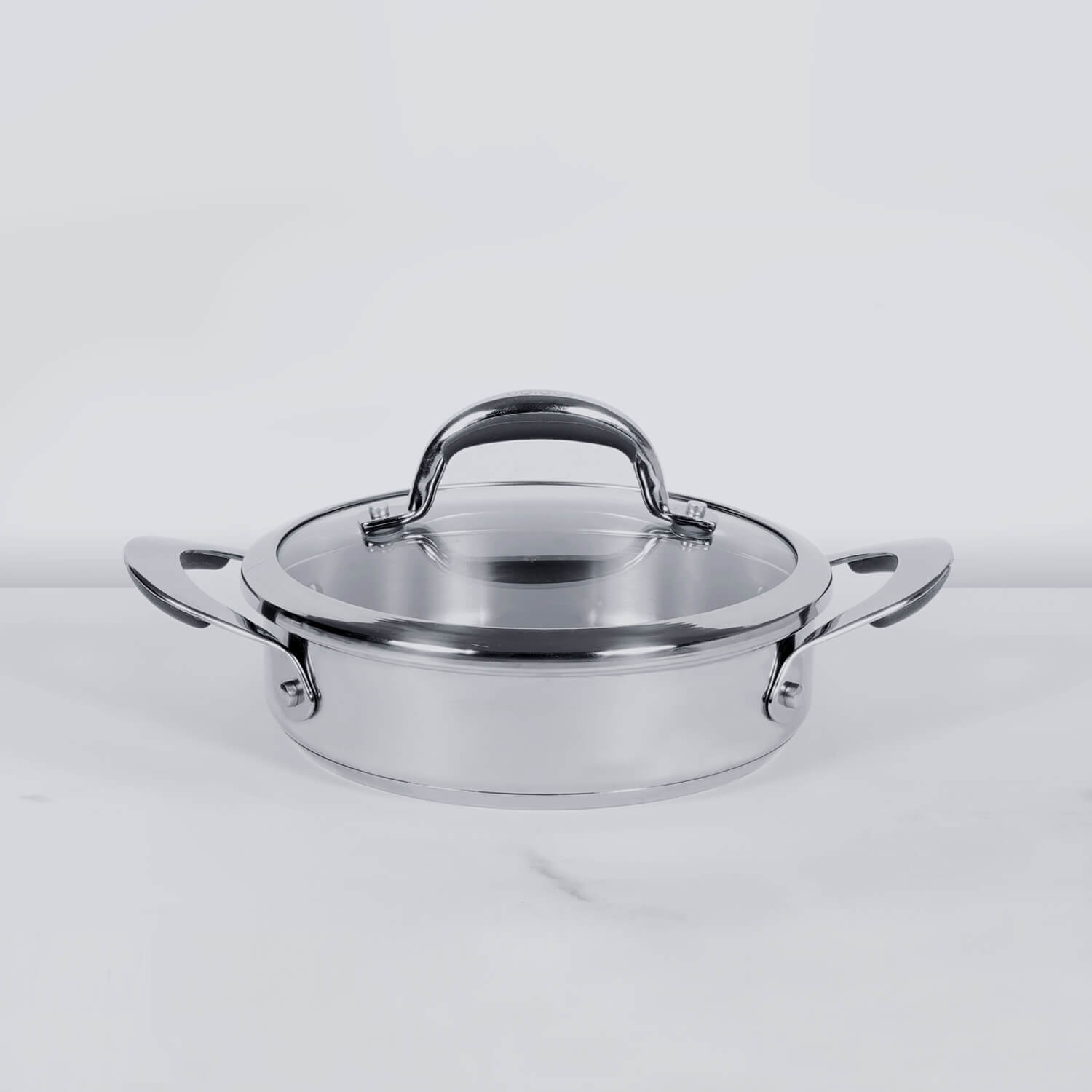
Meyer Select Stainless Steel Sauteuse 24cm
Stainless Steel vs Other Cookware Materials: A Hygiene Comparison
When hygiene is the priority, stainless steel stands out.
-
Nonstick cookware may develop scratches that trap food and bacteria over time.
-
Cast iron is porous and requires careful drying and seasoning to prevent rust and bacterial growth.
-
Aluminum cookware can react with food and may compromise hygiene if not properly coated.
Stainless steel cookware offers the most consistent hygiene with the least maintenance.
Why Meyer Stainless Steel Cookware Is a Hygienic Choice
With over six decades of global cookware expertise, Meyer designs stainless steel cookware that prioritises safety, hygiene, and performance for Indian kitchens.
Key hygiene-focused features include:
-
Food-grade and nickel-free stainless steel options
-
Non-reactive cooking surfaces
-
Multi-ply construction for even heat and easy cleaning
-
Durable surfaces that resist wear and damage
-
Toxin-free, long-lasting performance
Meyer stainless steel cookware is trusted by families who value clean cooking, food safety, and peace of mind.
Final Verdict: Why Stainless Steel Cookware Is Considered Hygienic
Stainless steel cookware is considered hygienic because it:
-
Has a non-porous, smooth surface
-
Does not react with Indian foods
-
Is easy to clean and sanitise
-
Resists bacteria, mould, and odours
-
Does not degrade or release toxins over time
For Indian kitchens where cookware is used daily and for diverse recipes, stainless steel remains one of the safest and most hygienic materials available.
Choosing Meyer stainless steel cookware means choosing cleanliness, safety, and confidence—meal after meal, year after year.
MORE FROM BLOG
Top Collections

1 Litre Steel Cookers: A Guide to Mini Meals
2 Items
5 Reasons Why Every Home Cook Needs Stainless Steel Pots
2 Items
Advantages of a 2 Litre Stainless Steel Pressure Cooker
2 Items
Benefits of using stainless steel cookware in India
2 Items
Best Stainless Steel Cookers for Daily Cooking
2 Items


Leave a comment