



Few dishes represent the joy of Indian breakfast as perfectly as a golden, crisp dosa. Whether it is a quick weekday breakfast or a leisurely weekend meal, dosa making is a ritual in many homes. But achieving the perfect dosa—thin, evenly spread, and beautifully crisp—depends greatly on one key factor: the tawa used for cooking.
Among the most popular choices in Indian kitchens today are cast iron tawas and non-stick tawas. Both cookware types are widely used and can produce delicious dosas, but they differ in terms of heat distribution, cooking performance, maintenance, durability, and convenience.
Understanding how each type of tawa performs can help home cooks choose the best cookware for their kitchen. With thoughtfully designed cookware collections such as Meyer Cast Iron cookware and Meyer Non-Stick cookware, modern kitchens can enjoy both traditional cooking performance and contemporary convenience.
This practical comparison explores the differences between cast iron and non-stick tawas to help you decide which one suits your cooking style best.
Table of Contents
- 1. Why the Right Tawa Matters for Dosa
- 2. Cast Iron Tawa
- 3. Advantages of Cast Iron Tawa
- 4. Considerations When Using Cast Iron
- 5. Non-Stick Tawa
- 6. Advantages of Non-Stick Tawa
- 7. Considerations When Using Non-Stick Cookware
- 8. Cooking Performance Comparison
- 9. Maintenance Comparison
- 10. Which Tawa Is Better for Dosa?
- 11. The Ideal Kitchen Solution
- 12. Final Thoughts
Why the Right Tawa Matters for Dosa
Dosa batter is delicate. It requires the right surface temperature, even heat distribution, and a cooking surface that allows batter to spread smoothly without sticking.
If the tawa heats unevenly, the dosa may cook unevenly—becoming burnt in some spots and undercooked in others. Similarly, if the surface is too sticky, spreading the batter becomes difficult and the dosa may tear when flipping.
A good dosa tawa must therefore provide:
· consistent heat distribution
· a smooth cooking surface
· proper heat retention
· easy food release
Both cast iron and non-stick cookware approach these requirements in different ways.

Cast Iron Tawa
Cast iron cookware has been used in Indian kitchens for generations. It is known for its thick construction, excellent heat retention, and ability to develop a natural non-stick surface over time.
A cast iron tawa absorbs heat slowly but retains it extremely well. Once the pan reaches the right temperature, it maintains consistent heat across the surface, which is essential for making crisp dosas.
Modern cookware collections such as Meyer Cast Iron cookware bring together traditional cooking techniques with improved design and manufacturing precision. These cookware pieces are built to support authentic cooking while offering durability for everyday use.
Advantages of Cast Iron Tawa
Superior Heat Retention
One of the most important advantages of cast iron is its ability to retain heat. Once heated, the tawa stays hot for longer periods, allowing dosa batter to cook evenly.
This stable heat level helps create dosas that are crispy on the outside and perfectly cooked inside.
Authentic Texture and Browning
Traditional dosa makers often prefer cast iron because it produces deeper browning and crisp edges. The surface encourages proper caramelization of the batter, which contributes to the characteristic golden color and rich flavor of dosas.
Naturally Non-Stick Over Time
When a cast iron tawa is seasoned with oil and used regularly, it develops a natural coating that helps reduce sticking. Over time, this seasoning improves the cooking surface and makes dosa preparation easier.
Long-Lasting Durability
Cast iron cookware is extremely durable. With proper care, a cast iron tawa can last for decades and sometimes even generations. It does not rely on synthetic coatings and maintains its cooking performance for many years.
Versatile Cooking
A cast iron tawa is not limited to dosas. It can also be used for:
· rotis and parathas
· uttapams
· pancakes
· vegetable roasting
· shallow frying
This versatility makes cast iron cookware a valuable addition to any kitchen.
Considerations When Using Cast Iron
While cast iron has many advantages, it also requires a little more attention compared to other cookware.
Requires Seasoning
To maintain its natural non-stick properties, cast iron cookware should be seasoned occasionally with oil. This process protects the surface and improves cooking performance.
Heavier Than Other Cookware
Cast iron tawas are heavier than non-stick pans, which may make them slightly harder to handle, especially for beginners.
Needs Proper Drying
After washing, cast iron cookware should be dried thoroughly to prevent moisture from causing rust.
Although these maintenance steps require some care, many home cooks find that the long-term performance of cast iron cookware makes it worthwhile.
Non-Stick Tawa
Non-stick cookware has become extremely popular because of its ease of use, lightweight design, and convenience in everyday cooking.
Non-stick tawas are coated with a specially engineered surface that prevents food from sticking. This allows dosa batter to spread smoothly and release easily once cooked.
Modern cookware ranges such as Meyer Non-Stick cookware are designed to offer reliable cooking performance while supporting low-oil cooking. These cookware pieces are created with durable coatings and thoughtful construction to meet the demands of everyday kitchens.
Advantages of Non-Stick Tawa
Easy for Beginners
Non-stick tawas are particularly helpful for people who are new to making dosas. The smooth surface makes it easier to spread the batter evenly and flip the dosa without tearing.
Minimal Oil Usage
Because the surface prevents sticking, very little oil or ghee is needed. This makes non-stick cookware a practical option for those who prefer lighter cooking.
Lightweight and Comfortable
Non-stick pans are generally much lighter than cast iron cookware. This makes them easy to lift, move, and clean, especially during busy cooking sessions.
Quick Heating
Non-stick tawas heat up faster than cast iron. This means less waiting time before starting to cook and quicker preparation during busy mornings.
Easy Cleaning
Food residue usually does not stick to non-stick surfaces, making cleaning simple and convenient.
Considerations When Using Non-Stick Cookware
While non-stick cookware is convenient, there are a few factors to keep in mind.
Coating Requires Care
The non-stick surface should be protected from scratches by avoiding metal utensils and harsh scrubbing.
Avoid Extremely High Heat
Cooking on very high heat can damage the coating over time. Moderate heat levels are usually sufficient for most dishes.
Lifespan
Unlike cast iron cookware, which can last for decades, non-stick cookware may need replacement after several years depending on usage and care.
Cooking Performance Comparison
When it comes to making dosas, the difference between cast iron and non-stick tawas becomes most noticeable in heat behavior and cooking texture.
Cast iron tawas excel in heat retention. Once heated properly, they maintain consistent temperature across the cooking surface. This allows dosas to cook evenly and develop crisp edges and deeper browning.
Non-stick tawas, on the other hand, heat quickly but also cool down faster. This means the surface temperature may fluctuate slightly when making multiple dosas in succession.
While non-stick pans still produce good dosas, the texture may sometimes be softer compared to the crispness achieved on cast iron.
Maintenance Comparison
Maintenance requirements differ significantly between these two cookware types.
Cast iron cookware requires seasoning and careful drying to maintain its natural cooking surface. With regular use, however, the seasoning improves and the cookware becomes more efficient.
Non-stick cookware requires less maintenance. Gentle washing with mild detergent and avoiding abrasive tools is usually sufficient.
Which Tawa Is Better for Dosa?
The best choice depends largely on your cooking preferences and experience level.
A cast iron tawa is ideal for those who value traditional cooking results, long-lasting cookware, and deeply crisp dosas. It suits cooks who enjoy authentic cooking techniques and are comfortable with basic seasoning care.
A non-stick tawa is ideal for beginners, busy households, and those who prefer quick and convenient cooking with minimal maintenance.
The Ideal Kitchen Solution
Many experienced home cooks prefer to keep both types of cookware in their kitchen.
A Meyer Non-Stick tawa can be perfect for quick breakfasts, eggs, and beginner-friendly dosa preparation. Meanwhile, a Meyer Cast Iron tawa can be used when you want authentic dosa texture, stronger heat retention, and long-lasting cookware performance.
Having both options provides flexibility and ensures that you always have the right cookware for different cooking needs.
Final Thoughts
Both cast iron and non-stick tawas offer valuable advantages when making dosas. Cast iron delivers traditional cooking performance, exceptional durability, and crisp texture, while non-stick cookware provides convenience, ease of use, and low-oil cooking.
Choosing between the two depends on personal cooking habits, comfort with maintenance, and how frequently dosas are prepared at home.
For many kitchens, the best solution is a balanced cookware collection that includes both Meyer Pre-Seasoned Cast Iron cookware and Meyer Non-Stick cookware rage, allowing home cooks to enjoy the strengths of each material.
With the right tawa and proper cooking techniques, preparing perfectly crisp and delicious dosas at home becomes both easy and enjoyable.
MORE FROM BLOG
Top Collections
Cast Iron Cookware: Why It’s Perfect for Outdoor Cooking
2 Items
Cast Iron Dosa Tawa With Handle For Ease Of Use
2 Items
Cast iron Vs Non-stick cookware: Which one is good for you?
2 Items
Cast Iron vs. Stainless Steel Cookware (What's the Difference?)
2 Items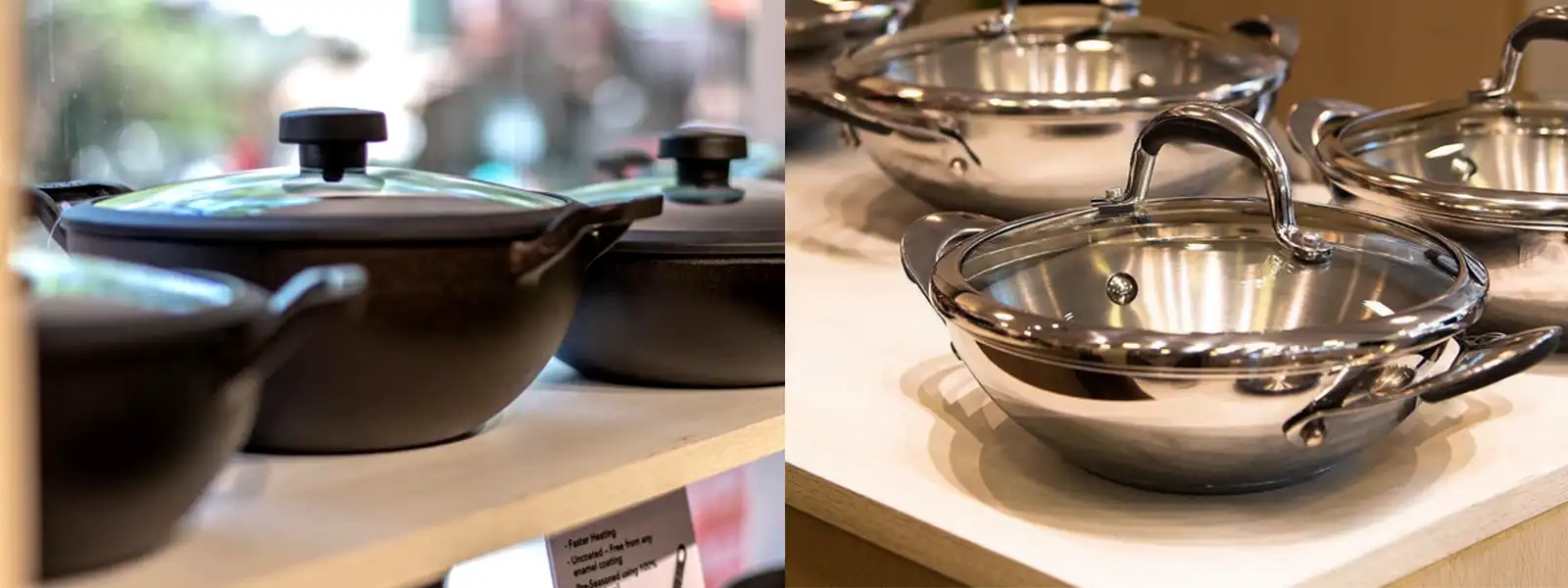
Cast Iron Vs Stainless Steel Cookware: Which one should you pick?
2 Items


Leave a comment