



In Indian households, making rotis is more than just a daily task—it’s a ritual that defines the rhythm of the kitchen. From soft phulkas that puff perfectly to evenly roasted chapatis with just the right texture, the quality of your roti depends heavily on one essential tool: the tawa.
Among the most commonly used options, the debate between iron tawa vs cast iron tawa continues to be a topic of discussion for both beginners and experienced home cooks. While both are rooted in traditional cooking practices, they differ significantly in terms of heat behavior, cooking performance, durability, and ease of use.
In 2026, with more awareness around cookware materials and health, choosing the right tawa has become even more important. This guide breaks down the differences in depth—helping you understand not just which is better, but which is better for you.
Table of Contents
- 1. Understanding the Basics
- 2. Heat Distribution
- 3. Roti Softness and Texture
- 4. Speed and Convenience in Daily Cooking
- 5. Durability and Long-Term Value
- 6. Maintenance and Care
- 7. Health Benefits: A Hidden Advantage
- 8. The Meyer Advantage
- 9. What Should You Choose?
- 9. The Smart Kitchen Approach in 2026
- 9. Final Verdict
- 9. Conclusion
Understanding the Basics: Iron vs Cast Iron
At first glance, an iron tawa and a cast iron tawa may look similar, but they are fundamentally different in how they are made and how they perform.
An iron (loh) tawa is typically made from rolled sheets of iron. It is thinner, lighter, and heats up quickly. Because of its lightweight nature, it is easy to handle and widely used for everyday cooking, especially in homes where speed and convenience are priorities.
A cast iron tawa, on the other hand, is made by pouring molten iron into molds, resulting in a thicker and heavier structure. This process gives cast iron its signature strength and ability to retain heat for longer periods. Over time, with proper seasoning, cast iron develops a naturally non-stick surface, enhancing its performance.
This difference in construction directly impacts how each tawa behaves on the flame—and ultimately, how your rotis turn out.

Heat Distribution: The Key to Perfect Rotis
One of the most critical factors in making good rotis is even heat distribution. A well-heated surface ensures that the roti cooks uniformly, allowing it to puff up properly and develop a soft texture.
Cast iron tawas excel in this area because of their thickness and heat retention capabilities. Once heated, they maintain a stable temperature across the surface, reducing the chances of hot and cold spots. This consistency is what helps rotis cook evenly and puff beautifully.
Iron tawas, while quick to heat, tend to lose heat just as quickly. This can result in uneven cooking if the flame is not carefully controlled. For experienced cooks, this may not be a major issue, but beginners may find it challenging to achieve consistent results.
Roti Softness and Texture
The softness of a roti is influenced by how evenly and gently it is cooked. Cast iron tawas, with their ability to retain heat, create an environment where rotis cook gradually and evenly. This helps retain moisture within the dough, resulting in softer, fluffier rotis.
Iron tawas, due to their thinner build, can sometimes cause rotis to cook too quickly on one side while remaining undercooked on the other. This can lead to slight dryness, especially if multiple rotis are being made in quick succession.
For those who prioritize restaurant-style soft rotis or perfectly puffed phulkas, cast iron is often the preferred choice.
Speed and Convenience in Daily Cooking
In busy households where multiple meals are prepared daily, speed and convenience play a crucial role. Iron tawas are particularly well-suited for this environment because they heat up almost instantly and are easy to maneuver.
Their lightweight design makes flipping rotis effortless, and they are less physically demanding to use, especially when cooking in large batches. For families that prepare rotis several times a day, this ease of use can make a significant difference.
Cast iron tawas, while superior in performance, require a bit more patience. They take longer to heat up and are heavier to handle. However, once heated, they maintain their temperature, allowing for consistent cooking without frequent adjustments.
Durability and Long-Term Value
When it comes to durability, cast iron tawas are unmatched. Built to last for decades, they become better with use as the seasoning layer improves over time. With proper care, a cast iron tawa can easily become a lifelong kitchen companion.
Iron tawas, although durable, are more prone to wear and tear. They may warp over time, especially if exposed to uneven heating or improper storage. While they are still a reliable choice, they typically do not offer the same longevity as cast iron.
For those looking at cookware as a long-term investment, cast iron clearly stands out.
Maintenance and Care
Maintenance is another important factor to consider when choosing between iron and cast iron tawas.
Iron tawas are relatively easy to maintain. They require basic cleaning and occasional oiling to prevent rust. Their simplicity makes them a practical choice for everyday use.
Cast iron tawas, however, require a bit more attention. They need to be seasoned regularly to maintain their non-stick properties and prevent rusting. While this may seem like an extra effort initially, many users find that the improved cooking performance makes it worthwhile.
Modern innovations from brands like Meyer are simplifying this process by offering pre-seasoned cast iron cookware, reducing the initial effort required and making cast iron more accessible to modern users.
Health Benefits: A Hidden Advantage
One of the often-overlooked benefits of using iron-based cookware is its potential contribution to dietary iron intake. Cooking on iron or cast iron surfaces can add small amounts of iron to food, which can be beneficial, especially in households where iron deficiency is a concern.
Cast iron, due to its longer cooking times and heat retention, may contribute slightly more in this regard. While it is not a replacement for dietary sources of iron, it is certainly a valuable added benefit.
The Meyer Advantage: Tradition Meets Innovation
In today’s evolving kitchens, cookware is no longer just about tradition—it’s about enhancing that tradition with modern innovation. Meyer has been at the forefront of this transformation, offering cookware solutions that combine heritage materials with contemporary design and engineering.
Meyer’s cast iron cookware is designed to deliver superior heat retention, durability, and ease of use, making it ideal for traditional Indian cooking. With pre-seasoned surfaces and ergonomic designs, these products remove many of the barriers associated with conventional cast iron.
At the same time, Meyer’s broader cookware ecosystem—including stainless steel and non-stick ranges—allows users to build a kitchen that is both versatile and efficient. This makes it easier to choose the right tool for every cooking need, rather than relying on a single type of cookware.
What Should You Choose?
The choice between an iron tawa and a cast iron tawa ultimately depends on your cooking style and priorities.
Choose an iron tawa if you:
- Prefer lightweight cookware
- Need quick heating for daily cooking
- Value ease of use and minimal maintenance
Choose a cast iron tawa if you:
-
Want softer, evenly cooked rotis
-
Prioritize consistency and quality
-
Are looking for long-lasting cookware
The Smart Kitchen Approach in 2026
Modern Indian kitchens are moving towards a more balanced and practical approach. Instead of choosing one over the other, many households now use both:
-
An iron tawa for quick, everyday cooking
-
A cast iron tawa for better-quality rotis and special meals
This combination allows you to enjoy the benefits of both materials without compromise.
Final Verdict: What’s Better for Roti?
If your goal is to achieve soft, evenly cooked rotis with perfect puffing, a cast iron tawa is the clear winner. Its ability to maintain consistent heat makes it ideal for achieving professional-quality results at home.
However, if convenience, speed, and ease of use are your top priorities, an iron tawa remains a practical and reliable choice.
Conclusion
The debate between iron tawa vs cast iron tawa is not about which one is universally better—it’s about which one suits your kitchen and cooking habits.
Iron tawas offer speed and simplicity.
Cast iron tawas offer consistency and longevity.
With thoughtfully designed cookware solutions from brands like Meyer, you no longer have to compromise. You can build a kitchen that combines tradition, innovation, and performance, ensuring that every roti you make is not just good—but perfect.
MORE FROM BLOG
Top Collections
Cast iron pan vs. stainless steel pan — which should I buy?
2 Items
Cast Iron vs. Stainless Steel Cookware (What's the Difference?)
2 Items
Cast Iron Vs Stainless Steel Cookware: Which one should you pick?
2 Items
Cast Iron vs. Stainless Steel: Which is Better for Your Kitchen?
2 Items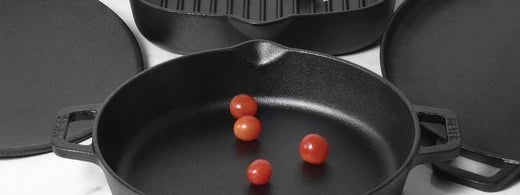
Does cast iron make food taste better?
2 Items


Leave a comment