



Before selecting cookware, it’s important to understand the basics of induction technology. Induction cooktops use electromagnetic fields to directly heat the cookware, rather than heating the surface itself. This makes the process incredibly efficient, as very little energy is wasted.
However, for this mechanism to work, your cookware must have a magnetic base. Materials like stainless steel and cast iron are naturally compatible, while aluminium or copper require a specially designed induction base.
This is why simply placing any old pan on an induction cooktop won’t work—it needs to be specifically designed for induction compatibility.
Table of Contents
Why Choosing the Right Cookware Matters
The right cookware does more than just “work” on induction—it enhances your entire cooking experience. Poor-quality or incompatible cookware can lead to uneven heating, longer cooking times, and even damage to your cooktop.
On the other hand, well-designed induction-compatible cookware ensures:
-
Faster and more efficient cooking
-
Even heat distribution
-
Better control over temperature
-
Enhanced safety and durability
This is where trusted brands like Meyer stand out, offering cookware that is not only compatible with induction but also optimized for Indian cooking techniques.

Key Features to Look for in Induction Cookware
1. A Strong Magnetic Base
The most critical feature of induction cookware is its magnetic base. Without this, the cookware simply won’t heat up. When choosing cookware, always look for clear labeling that indicates induction compatibility.
Meyer cookware is engineered with induction-ready bases that ensure seamless performance across both gas and induction cooktops, making it a versatile choice for modern homes.
2. Flat and Stable Bottom Surface
A flat base ensures maximum contact with the induction surface, which is essential for efficient heat transfer. Even slight warping can reduce performance and lead to uneven cooking.
High-quality cookware, such as Meyer’s tri-ply stainless steel range, is designed to maintain structural stability over time, ensuring consistent results even with regular use.
3. Material That Supports Even Heat Distribution
While compatibility is important, performance depends heavily on the material and construction of the cookware. Let’s explore the most suitable options.
Triply Stainless Steel: The Gold Standard for Induction Cooking
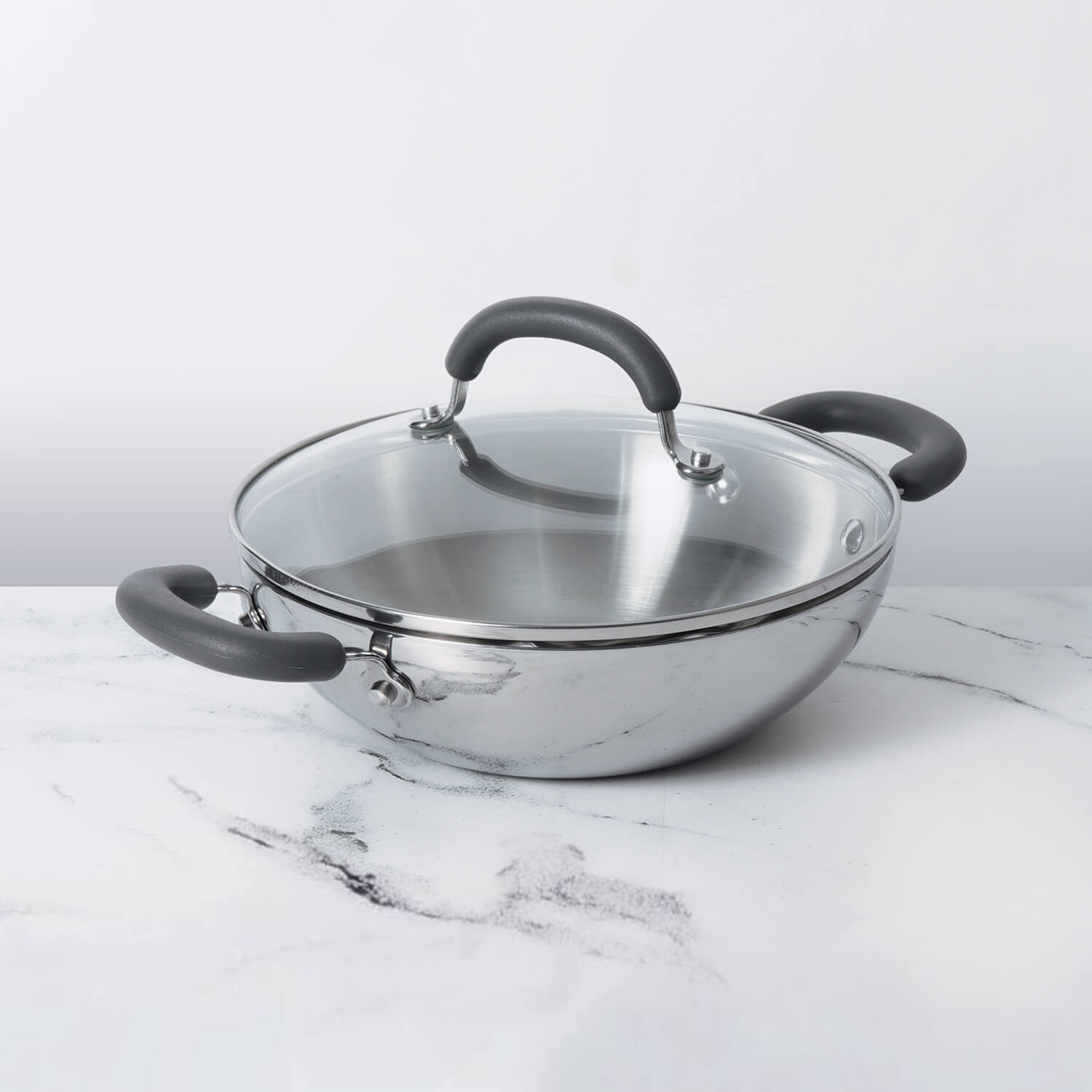
Triply stainless steel cookware is widely considered the best choice for induction cooktops in India. It features a three-layer construction, typically with stainless steel on the outer layers and an aluminium core in between.
This design offers the perfect combination of magnetic compatibility and even heat distribution.
Why It Works So Well
The aluminium core ensures that heat spreads evenly across the surface, eliminating hotspots. At the same time, the stainless steel exterior makes it compatible with induction and safe for all types of cooking.
This makes triply cookware ideal for Indian cooking techniques like:
-
Tadka and tempering
-
Slow cooking gravies
-
Sautéing vegetables
-
Cooking dals and rice
Meyer’s tri-ply stainless steel cookware is crafted to deliver consistent performance, allowing you to cook efficiently without worrying about uneven heat or food sticking excessively.
Non-Stick Induction Cookware: Convenience Meets Compatibility
For those who prefer quick, low-oil cooking, non-stick cookware with an induction base is a practical choice.
Why It’s Popular
Non-stick cookware is designed to prevent food from sticking, making it easier to cook delicate items like eggs, dosas, and paneer. It also reduces the need for excess oil, supporting healthier cooking habits.
When paired with an induction-compatible base, it becomes a versatile option for everyday use.
What to Keep in Mind
While non-stick cookware offers convenience, it performs best at moderate heat levels. Induction cooktops heat up quickly, so it’s important to control the temperature to protect the coating.
Meyer’s non-stick cookware features advanced, toxin-free coatings that are built for durability and safety, making them a reliable choice for daily cooking.
Cast Iron: Traditional Strength Meets Modern Compatibility
Cast iron cookware is naturally compatible with induction cooktops due to its magnetic properties. It is known for its exceptional heat retention, making it ideal for dishes that require steady, high heat.
Why It Stands Out
Cast iron retains heat longer than most materials, which makes it perfect for:
-
Deep frying
-
Roasting
-
Slow cooking
-
Making crispy dosas or parathas
It also enhances flavour over time, as the surface develops a natural seasoning.
Points to Consider
Cast iron requires maintenance, including regular seasoning, and is heavier than other cookware. However, for those who value traditional cooking methods, it is a worthwhile investment.
Meyer’s cast iron cookware is pre-seasoned and designed for modern kitchens, offering the benefits of traditional cooking with improved usability.
Matching Cookware to Indian Cooking Needs
Indian cooking is unique in its techniques and demands. It involves high heat, continuous stirring, and a variety of ingredients—from spices to acidic components like tomatoes and tamarind.
This makes it essential to choose cookware that can handle:
-
Rapid temperature changes
-
Long cooking durations
-
Heavy-duty usage
A combination of cookware types often works best. For example, using stainless steel for curries, non-stick for quick meals, and cast iron for high-heat cooking ensures versatility and efficiency.
Safety and Energy Efficiency
One of the biggest advantages of induction cooking is safety. Since the cooktop itself does not heat up significantly, the risk of burns is reduced. However, using the right cookware further enhances safety.
Cookware with a stable base, heat-resistant handles, and durable construction ensures a secure cooking experience. Meyer cookware is designed with these features in mind, making it suitable for everyday use.
Additionally, induction cooking is highly energy-efficient, but only when paired with the right cookware. A well-designed induction-compatible pan heats quickly and retains heat effectively, reducing overall cooking time and energy consumption.
Common Mistakes to Avoid
When choosing cookware for induction cooktops, many people make avoidable mistakes:
-
Buying cookware without checking induction compatibility
-
Choosing very thin or low-quality materials
-
Ignoring the importance of a flat base
-
Using oversized cookware on small induction zones
Avoiding these mistakes ensures that your cookware performs optimally and lasts longer.
Conclusion
Choosing the best cookware for induction cooktops in India is not just about compatibility—it’s about performance, durability, and how well it fits your cooking style.
Triply stainless steel offers unmatched versatility and is ideal for everyday use. Non-stick cookware brings convenience and ease, especially for quick meals. Cast iron adds depth of flavour and excels in high-heat cooking.
For most households, the best approach is to create a balanced cookware collection that includes all three. This ensures that you are prepared for every type of dish, from simple breakfasts to elaborate meals.
With thoughtfully designed cookware from Meyer, you can confidently embrace induction cooking and transform your kitchen into a space that is efficient, safe, and enjoyable to cook in every day.
MORE FROM BLOG
Top Collections
Cookware That Works Best on Induction Stovetops in 2025
2 Items
Easy To Use Induction Tawa For Roti
2 Items
How to Use a Pressure Cooker on an Induction Cooktop
2 Items
Induction Base Dosa Tawa For Effective Cooking
2 Items
Induction Pressure Cookers: What You Need to Know
2 Items


Leave a comment