



Indian cooking is dynamic, expressive, and deeply rooted in technique. One of its defining characteristics is the use of heat — not just warmth, but intensity. Whether it is the crackle of mustard seeds in hot oil, the rapid tossing of bhindi in a kadhai, or the quick searing of paneer cubes to achieve golden edges, heat plays a critical role in developing flavor and texture.
This naturally leads to a common and important question in modern kitchens: can non-stick pans truly handle high-heat Indian stir-frying?
For decades, the default answer would have been no. Traditional cooks relied heavily on cast iron and stainless steel because they were perceived as the only materials strong enough to withstand Indian cooking’s intensity. However, cookware engineering has evolved significantly. Today, premium non-stick ranges such as Meyer Midnight, Meyer Merlot, and Circulon are designed to meet the demands of contemporary Indian kitchens — where performance, durability, and health-conscious cooking go hand in hand.
The real answer lies not in whether non-stick can handle heat, but in understanding how to use it correctly.
Table of Contents
How Much Heat Is Too Much?
Most high-quality non-stick cookware performs safely at temperatures up to approximately 200–240°C. Indian stir-frying, when done correctly, rarely exceeds this range.
The misconception that Indian food requires extremely high flame often stems from visual cues rather than actual temperature needs. A large gas flame may look dramatic, but effective cooking depends on surface temperature, not flame size.
Using controlled medium-high heat allows spices to bloom properly, onions to caramelize gently, and vegetables to sear without scorching. Excessive flame often leads to burnt spices, uneven cooking, and unnecessary stress on cookware.
In other words, authentic flavor comes from precision, not intensity alone.

Oil Usage and the Health Advantage
One of the most significant benefits of using premium non-stick cookware for Indian stir-frying is reduced oil consumption.
Traditional stainless steel or iron pans may require two to three tablespoons of oil to prevent sticking. With high-performance surfaces like Meyer Midnight and Meyer Merlot, one to two teaspoons are often sufficient. Circulon’s structured non-stick design further minimizes food adhesion, reducing dependency on oil.
For health-conscious households, this makes a substantial difference. Lower oil usage supports balanced eating habits, improved calorie control, and long-term cardiovascular health — without altering the essential taste of Indian dishes.
Spices release their aroma effectively even in small quantities of oil when heated properly. The richness of flavor does not depend on excess fat.
Achieving Proper Texture in Non-Stick
A common concern is whether non-stick pans can deliver the slight crispness or browning that defines a good stir-fry.
The key lies in technique rather than cookware material. Browning occurs when moisture evaporates and natural sugars caramelize. To achieve this in non-stick cookware:
Avoid overcrowding the pan. Overloading traps moisture and prevents browning.
Allow ingredients to sit undisturbed briefly before stirring.
Use medium-high heat instead of maximum flame.
Do not cover the pan during dry stir-fries.
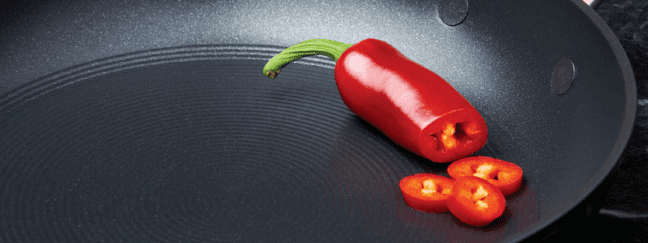
Meyer Midnight and Meyer Merlot distribute heat evenly across the base, preventing hotspots that can cause uneven cooking. Circulon’s raised non-stick system enhances airflow and reduces surface abrasion, supporting consistent caramelization.
When used correctly, these pans produce vibrant, well-textured dishes that retain both color and bite.
Preheating and Heat Management
Proper preheating is essential for high-heat stir-frying in non-stick pans.
Unlike cast iron, non-stick cookware should not be heated empty for extended periods. Always add oil before turning on the flame. Allow the oil to warm gradually over medium heat. Once it shimmers lightly, spices can be added.
This controlled method ensures spice blooming without exposing the coating to excessive dry heat.
Managing heat throughout cooking is equally important. If onions begin browning too quickly, reduce the flame slightly. If vegetables release water, increase heat moderately to encourage evaporation. Responsive heat control enhances both flavor and cookware longevity.
Gas vs Induction Cooking
Indian kitchens predominantly use gas stoves, offering visual control of flame intensity. Non-stick pans can be safely used on gas as long as the flame does not extend beyond the base of the pan.
Induction cooktops provide even more precise temperature control. Because induction generates heat directly in the base, it minimizes hotspots and reduces the risk of overheating.
Both Meyer and Circulon ranges are designed to perform efficiently across multiple stovetops, ensuring versatility in modern kitchens.
Durability and Long-Term Performance
When maintained properly, premium non-stick cookware can withstand years of regular stir-frying.
To extend lifespan:
Use wooden or silicone utensils.
Avoid metal spatulas that may scratch the surface.
Allow the pan to cool before washing.
Avoid abrasive scrubbers.
Cook within recommended temperature limits.
Consistent overheating is what shortens lifespan — not stir-frying itself. Responsible usage ensures lasting performance.
When to Use Alternative Cookware
While non-stick is suitable for most Indian stir-fries, certain cooking styles may still benefit from traditional materials.
Direct-flame roasting, intense charring for smoky tandoori-style searing, or prolonged high-temperature cooking may be better suited to cast iron or carbon steel.
Maintaining a well-balanced kitchen with multiple cookware types allows flexibility. However, for daily vegetable stir-fries, paneer dishes, egg preparations, and quick sabzis, premium non-stick remains highly practical.
Tradition Meets Modern Convenience
Indian cooking traditions are deeply respected, but kitchens today operate under different demands. Time efficiency, health awareness, and ease of maintenance are essential considerations.
Non-stick cookware does not replace heritage cookware; it complements it. Meyer Midnight, Meyer Merlot, and Circulon embody this balance — combining modern engineering with the practical needs of Indian households.
They allow cooks to prepare authentic dishes with reduced oil, easier cleanup, and reliable performance — without sacrificing the bold flavors that define Indian cuisine.
Conclusion
Non-stick pans can absolutely be used for high-heat Indian stir-frying — when heat is controlled and cookware quality is prioritized. Authentic Indian flavor does not require extreme flame. It requires understanding of temperature, timing, and technique. Medium to medium-high heat, proper preheating with oil, and mindful stirring are all that is needed.
With thoughtfully engineered ranges like Meyer Midnight, Meyer Merlot, and Circulon, modern home cooks can confidently embrace high-heat stir-frying while maintaining health, convenience, and durability.
Indian cooking continues to evolve, and so does cookware. When tradition meets innovation thoughtfully, the result is a kitchen that delivers both performance and authenticity every single day.
MORE FROM BLOG
Top Collections
5 essential qualities of a non-stick cookware
2 Items
5 Healthy Meals You Can Prepare in Your Non-stick Cookware
2 Items
Appam Pan Non Stick Makes Cooking Easy
2 Items
Baking Essentials: Must-Have Non-Stick Bakeware for Beginners
2 Items
Best Non Stick Roti Tawa in India For Minimal Oil Cooking
2 Items


Leave a comment