



For decades, non-stick cookware has been a staple in kitchens around the world. Its convenience, easy food release, and effortless cleaning have made it a popular choice for everyday cooking. However, as consumers become more conscious about durability, cooking performance, and long-term value, many are asking an important question:
Can stainless steel cookware replace non-stick pans?
The answer is yes—for most cooking needs, high-quality stainless steel cookware can effectively replace non-stick pans and often offer additional benefits that make it a more versatile and long-lasting investment.
With advancements in cookware technology and the availability of premium options such as Meyer Select Nickel-Free Stainless Steel Cookware and Meyer TriVantage Stainless Steel Cookware, more home cooks are discovering that stainless steel can handle almost every cooking task while providing superior durability and performance.
Table of Contents
- 1. Understanding the Difference Between Stainless Steel and Non-Stick Cookware
- 2. Why More Home Cooks Are Switching to Stainless Steel
- 3. What About Foods That Usually Stick?
- 4. Why Meyer Select Is an Excellent Everyday Alternative
- 5. Why Meyer TriVantage Elevates Stainless Steel Cooking
- 6. Situations Where Stainless Steel Excels
- 7. Is There Still a Place for Non-Stick Cookware?
- 8. The Long-Term Value Advantage
- 9. Final Verdict
Understanding the Difference Between Stainless Steel and Non-Stick Cookware
Before deciding whether stainless steel can replace non-stick cookware, it helps to understand how the two materials differ.
Non-stick cookware relies on a coating that prevents food from adhering to the cooking surface. This makes it convenient for cooking delicate foods and simplifies cleanup.
Stainless steel cookware, on the other hand, uses a durable metal cooking surface without relying on a coating. When used correctly, stainless steel provides excellent cooking performance while maintaining its integrity for years.
The biggest difference lies in cooking technique. Non-stick cookware is designed to release food with minimal effort, whereas stainless steel rewards proper heat management and cooking skills with exceptional results.

Why More Home Cooks Are Switching to Stainless Steel
Today's consumers are looking beyond convenience and considering factors such as longevity, versatility, and overall cooking performance.
Stainless steel cookware offers several advantages that make it an attractive alternative to non-stick pans.
Exceptional Durability
One of the biggest advantages of stainless steel cookware is its longevity.
While non-stick coatings can gradually wear down over time, stainless steel cookware is built to withstand years of regular cooking. It resists scratches, dents, corrosion, and everyday wear, making it a reliable long-term kitchen companion.
Premium cookware collections such as Meyer Select and Meyer TriVantage are designed to maintain their performance and appearance even after extensive use.
No Coating to Wear Out
Non-stick cookware depends on a surface coating to deliver its food-release properties.
Over time, repeated heating, cleaning, and utensil use can affect the condition of the coating. Stainless steel cookware eliminates this concern by offering a naturally durable cooking surface that does not rely on an applied coating.
This gives many consumers greater confidence in the longevity of their cookware.
Superior Browning and Searing
One area where stainless steel often outperforms non-stick cookware is browning and searing.
The surface of stainless steel promotes the development of rich flavors and appealing textures, making it ideal for:
-
Searing vegetables
-
Browning onions
-
Preparing paneer
-
Cooking meats
-
Creating flavorful sauces
-
Building complex flavors in curries and gravies
The ability to achieve deeper caramelization is one reason why professional chefs frequently choose stainless steel cookware.
Greater Cooking Versatility
Stainless steel cookware can handle a wide variety of cooking methods.
These include:
-
Sautéing
-
Stir-frying
-
Boiling
-
Simmering
-
Shallow frying
-
Deep frying
-
Braising
-
Steaming
From breakfast to dinner, stainless steel cookware is capable of supporting diverse cooking styles and recipes.
What About Foods That Usually Stick?
One of the most common concerns when switching from non-stick cookware is the possibility of food sticking to the pan.
The reality is that stainless steel cookware behaves differently and requires proper cooking technique.
When the cookware is preheated correctly and oil or butter is added at the right time, foods can release naturally from the surface.
Professional chefs routinely cook eggs, fish, vegetables, and other delicate foods on stainless steel cookware by following simple temperature management practices.
Once these techniques become familiar, many home cooks find stainless steel surprisingly easy to use.
Why Meyer Select Is an Excellent Everyday Alternative
For consumers looking to transition from non-stick cookware, Meyer Select Nickel-Free Stainless Steel Cookware offers an excellent starting point.
Designed for everyday cooking, Meyer Select combines durability, safety, and ease of use.
Its nickel-free stainless steel construction appeals to health-conscious households, while its efficient heat distribution supports consistent cooking performance.
Whether preparing breakfast, cooking family meals, or experimenting with new recipes, Meyer Select delivers dependable results across a variety of cooking applications.
Its durable construction also makes it a practical long-term investment compared to cookware that may require more frequent replacement.
Why Meyer TriVantage Elevates Stainless Steel Cooking
For home cooks seeking advanced cooking performance, Meyer TriVantage Stainless Steel Cookware represents the next level of stainless steel technology.
Its triply construction promotes superior heat distribution throughout the cookware, helping eliminate hot spots and ensuring more consistent cooking results.
This provides several benefits:
-
Better temperature control
-
Faster and more even heating
-
Improved cooking efficiency
-
Enhanced browning and searing
-
Greater cooking precision
Whether preparing delicate dishes or high-heat recipes, Meyer TriVantage helps deliver professional-quality results with confidence.
Situations Where Stainless Steel Excels
Stainless steel cookware is particularly effective for:
-
Indian curries and gravies
-
Stir-fried vegetables
-
Paneer dishes
-
One-pot meals
-
Soups and stews
-
Rice preparations
-
Searing and browning
-
High-temperature cooking
Its versatility makes it suitable for a wide range of everyday cooking needs.
Is There Still a Place for Non-Stick Cookware?
Non-stick cookware continues to offer convenience for specific tasks, particularly for beginners or those seeking minimal cleanup.
However, many households find that once they become comfortable using stainless steel cookware, they rely on it for the majority of their cooking.
The durability, performance, and versatility of stainless steel often make it the cookware that reaches the stovetop most frequently.
The Long-Term Value Advantage
While premium stainless steel cookware may involve a higher initial investment, its longevity often provides greater value over time.
Instead of replacing cookware periodically, consumers can enjoy years of reliable performance from high-quality stainless steel cookware.
This makes products such as Meyer Select and Meyer TriVantage smart choices for individuals seeking cookware that can grow with their cooking journey.
Final Verdict: Can Stainless Steel Replace Non-Stick Pans?
For most kitchens, the answer is a resounding yes.
Stainless steel cookware offers durability, versatility, cooking performance, and long-term value that can comfortably meet the demands of daily cooking. With proper technique, it can handle everything from eggs and vegetables to curries, sauces, and one-pot meals.
Whether you choose Meyer Select Nickel-Free Stainless Steel Cookware for its everyday reliability or Meyer TriVantage Stainless Steel Cookware for its advanced triply performance, stainless steel cookware can successfully replace non-stick pans and become the foundation of a healthier, more versatile, and longer-lasting cooking experience.
MORE FROM BLOG
Top Collections
Cast Iron Vs Stainless Steel Cookware: Which one should you pick?
2 Items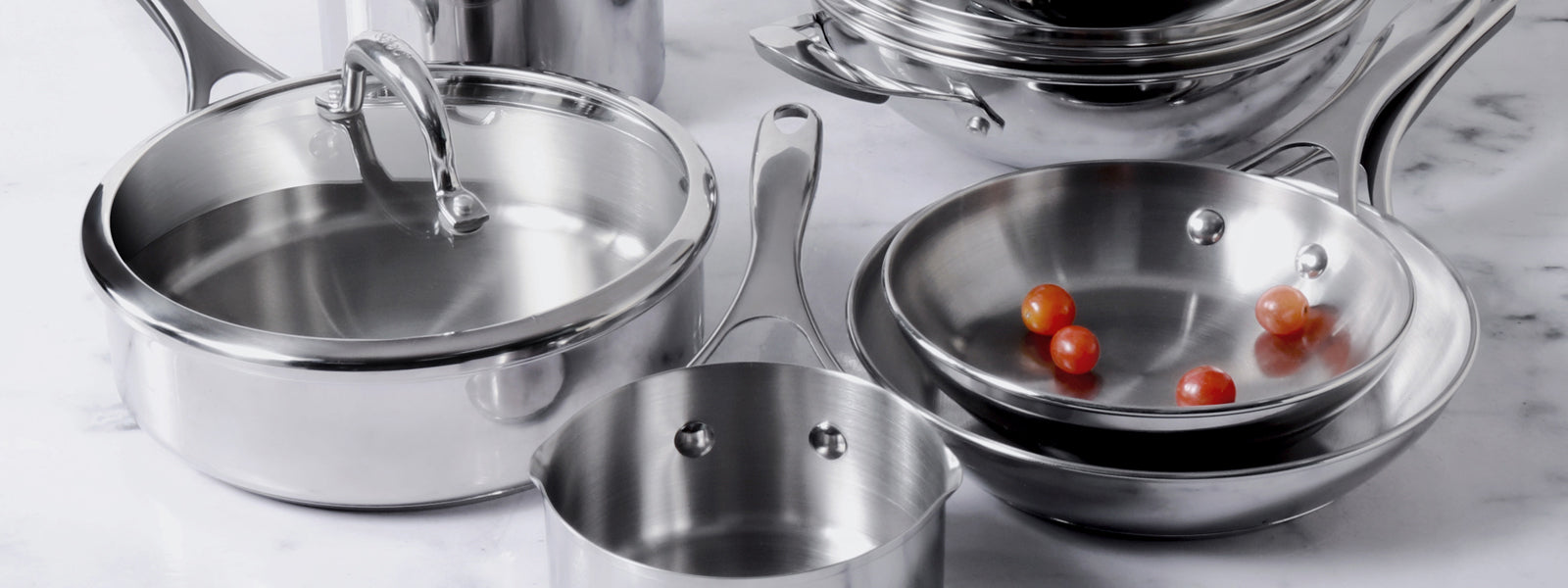
Best Stainless Steel Cookware in India - A Celebrity Chef's Favourites
2 Items
Easy way to turn Stainless Steel Pan into Nonstick
2 Items
Is Hard-Anodized Cookware Safer Than Stainless Steel?
2 Items


Leave a comment