



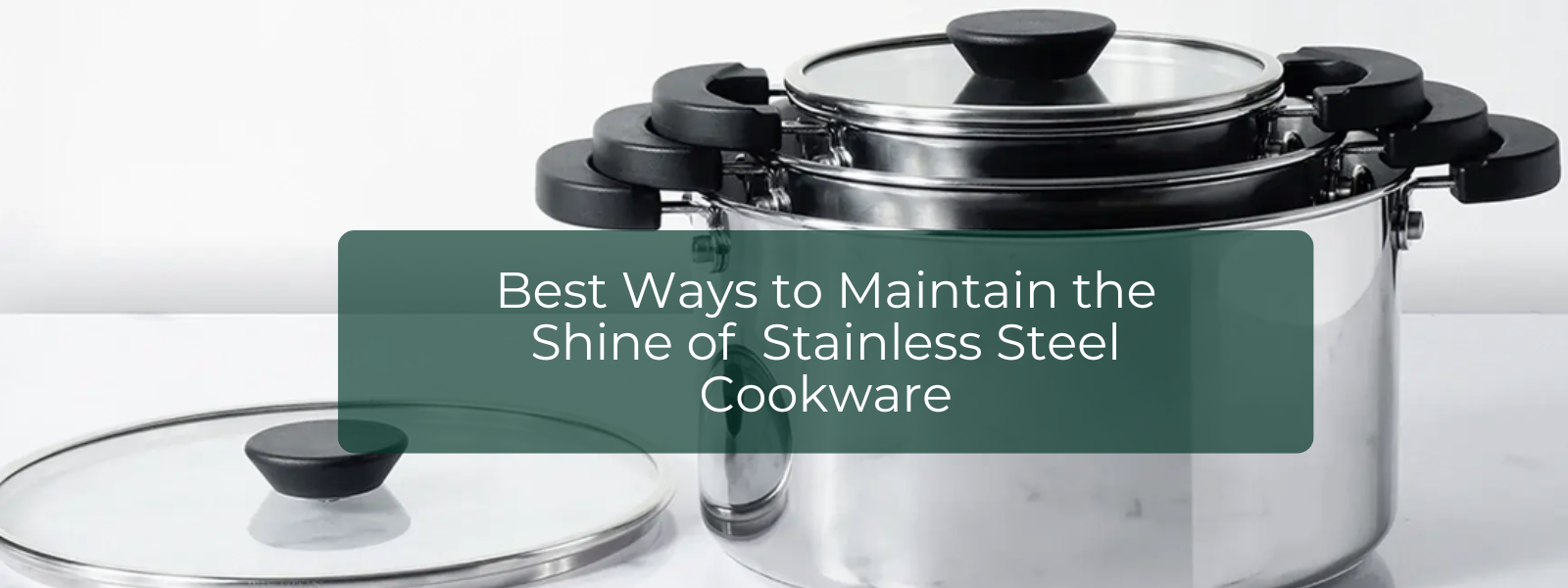
Stainless steel cookware is one of the most durable, hygienic, and reliable choices for everyday cooking. From preparing simple breakfasts to elaborate family meals, it offers exceptional performance, resists rust and corrosion, and can last for decades with proper care.
Even the highest-quality stainless steel cookware can occasionally develop burn marks. Burnt food residue, overheated oil, or cooking on excessively high heat can leave behind dark stains that may seem difficult to remove. Fortunately, these marks are usually surface stains rather than permanent damage.
With a few simple cleaning methods and proper cookware care, you can restore your cookware's shine and continue enjoying its superior cooking performance.
Whether you're using Meyer Select, Meyer TriVantage, or Meyer TriVantage Pro, following the right cleaning techniques helps maintain your cookware's beauty, efficiency, and longevity.
Table of Contents
- 1. Why Do Burn Marks Appear on Stainless Steel Cookware?
- 2. Are Burn Marks Harmful?
- 3. What Should You Avoid?
- 4. Why Quality Stainless Steel Cookware Is Easier to Clean
- 5. Meyer Select
- 6. Meyer TriVantage
- 7. Meyer TriVantage Pro
- 8. Tips to Prevent Burn Marks
- 9. Frequently Asked Questions
- 10. Final Thoughts
Why Do Burn Marks Appear on Stainless Steel Cookware?
Understanding why burn marks occur is the first step toward preventing them.
Common causes include:
-
Cooking on very high heat for prolonged periods
-
Leaving an empty pan on the stovetop
-
Burnt milk, sugar, rice, or sauces
-
Oil heated beyond its smoke point
-
Food sticking because the pan wasn't properly preheated
-
Carbon buildup after repeated cooking
-
Hard water mineral deposits
Fortunately, stainless steel is extremely resilient, and most burn marks can be removed without affecting the cookware's performance.

Are Burn Marks Harmful?
In most cases, no.
Burn marks mainly affect the appearance of your cookware rather than its functionality. However, if burnt residue continues to accumulate, it may:
-
Reduce even heat distribution
-
Increase food sticking
-
Make cleaning more difficult
-
Dull the cookware's polished finish
Regular cleaning helps maintain both appearance and cooking efficiency.
Method 1: Clean with Baking Soda
Baking soda is one of the safest and most effective natural cleaners for stainless steel cookware.
You'll need:
-
Baking soda
-
Water
-
Soft sponge
-
Microfiber cloth
Steps:
-
Mix baking soda with enough water to create a thick paste.
-
Apply the paste to the burnt areas.
-
Leave it for 20–30 minutes.
-
Gently scrub using a soft sponge.
-
Rinse thoroughly.
-
Dry immediately.
This method removes burnt residue without scratching the cookware.
Method 2: Use White Vinegar
White vinegar works especially well for stubborn stains and heat discoloration.
Steps:
-
Fill the cookware with one part vinegar and three parts water.
-
Bring the solution to a gentle boil.
-
Simmer for 5–10 minutes.
-
Remove from heat.
-
Allow it to cool.
-
Wash with warm water and dish soap.
The mild acidity dissolves burnt deposits while restoring the cookware's natural shine.
Method 3: Baking Soda and Vinegar Together
For heavily burnt cookware, combine both cleaning agents.
-
Pour enough vinegar to cover the burnt surface.
-
Heat gently.
-
Remove from heat.
-
Add two tablespoons of baking soda.
-
Allow the fizzing reaction to loosen burnt residue.
-
After cooling, scrub gently and rinse well.
Method 4: Lemon Cleaning
Lemon is a natural alternative that removes light stains while refreshing your cookware.
Steps:
-
Fill the cookware with water.
-
Add sliced lemons.
-
Bring to a boil for several minutes.
-
Let it cool.
-
Wash normally.
The citric acid helps loosen stains while eliminating cooking odours.
Method 5: Soak with Dish Soap
Sometimes soaking is all your cookware needs.
Fill the pan with warm water and a few drops of dishwashing liquid. Leave it overnight before gently scrubbing the softened residue.
This method works well for everyday burnt food stains.
Method 6: Stainless Steel Cleaner
If your cookware has developed years of discoloration, a stainless steel cleaner formulated specifically for cookware can help restore its original finish.
Always:
-
Follow the manufacturer's instructions.
-
Use only soft cleaning pads.
-
Rinse thoroughly.
-
Dry immediately after washing.
What Should You Avoid?
Avoid using harsh cleaning materials that may damage the polished surface.
Do not use:
-
Steel wool
-
Wire brushes
-
Sharp metal scrapers
-
Bleach
-
Oven cleaners
-
Chlorine-based cleaners
-
Highly abrasive powders
Gentle cleaning preserves both the appearance and longevity of stainless steel cookware.
Why Quality Stainless Steel Cookware Is Easier to Clean
The quality of your cookware plays a significant role in how easily it cleans.
Premium stainless steel cookware distributes heat more evenly, preventing food from burning in concentrated hotspots. Better heat control means less sticking, fewer burnt residues, and easier maintenance.
This is where thoughtfully engineered cookware collections like Meyer Select, Meyer TriVantage, and Meyer TriVantage Pro make a noticeable difference.
Meyer Select: Everyday Stainless Steel Performance
If you're looking for dependable cookware for daily cooking, Meyer Select offers an excellent balance of durability, performance, and convenience.
Crafted from high-quality nickel-free stainless steel, Meyer Select is designed for healthy everyday cooking while being resistant to rust, staining, and corrosion. Its durable construction allows it to handle regular use with ease, while the smooth stainless steel surface makes cleaning simple after every meal.
Whether you're preparing dal, vegetables, soups, rice, or curries, Meyer Select delivers reliable performance and is easy to maintain with regular cleaning practices. Following the right cooking techniques and avoiding excessive heat can significantly reduce the chances of burnt residue developing on the cookware.
Meyer TriVantage: Designed for Even Heating
Meyer TriVantage takes cooking performance a step further with advanced triply stainless steel construction.
Its three bonded layers combine:
-
Food-grade stainless steel interior
-
Thick aluminium core
-
Magnetic stainless steel exterior
This construction distributes heat evenly throughout the cookware, reducing hotspots that often cause food to burn.
Benefits include:
-
Faster and more even heating
-
Better heat retention
-
Reduced food sticking
-
Excellent browning
-
Energy-efficient cooking
-
Compatibility with gas, induction, ceramic, and electric cooktops
Because ingredients cook more uniformly, cleanup becomes easier after every meal.
Meyer TriVantage Pro: Premium Cooking Meets Easy Maintenance
For home chefs who want professional-level performance, Meyer TriVantage Pro delivers exceptional cooking precision and durability.
Its premium triply construction features:
-
304 food-grade stainless steel interior
-
Thick aluminium core for rapid and even heat distribution
-
Magnetic stainless steel exterior for induction compatibility
-
Strong riveted handles
-
Elegant mirror finish
-
10-year warranty
Whether you're simmering gravies, preparing rich curries, sautéing vegetables, deep frying, or slow-cooking recipes, Meyer TriVantage Pro provides superior temperature control that helps minimise scorching and burnt residue.
Its high-quality finish also makes routine cleaning remarkably effortless.
Tips to Prevent Burn Marks
Prevention is always easier than deep cleaning.
Follow these simple practices:
-
Preheat cookware over medium heat.
-
Avoid using the highest flame unless necessary.
-
Add oil only after the cookware reaches the correct temperature.
-
Stir food regularly.
-
Never leave an empty pan on the burner.
-
Lower the heat once cooking begins.
-
Wash cookware soon after use.
-
Dry thoroughly after cleaning.
-
Avoid sudden temperature changes.
These habits keep stainless steel cookware looking polished while extending its lifespan.
Frequently Asked Questions
Can burnt stainless steel cookware be restored?
Yes. Most burn marks can be removed using baking soda, vinegar, lemon, or cookware-safe stainless steel cleaners.
Why does my stainless steel cookware develop rainbow stains?
Rainbow stains are caused by heat oxidation and are completely harmless. White vinegar usually removes them easily.
Can I use steel wool to remove burn marks?
No. Steel wool can scratch the polished surface. Always use soft sponges or non-abrasive scrubbers.
Does burnt cookware affect cooking?
Light stains usually don't affect performance, but heavy carbon buildup may reduce even heating and increase food sticking over time.
How often should stainless steel cookware be deep cleaned?
A thorough cleaning every few weeks helps maintain its shine and prevents stubborn residue from accumulating.
Final Thoughts
Burn marks are a common part of cooking, but they don't have to become permanent. With simple household ingredients like baking soda, vinegar, lemon, and warm soapy water, you can safely remove most burnt stains and restore the shine of your cookware.
Equally important is choosing cookware that's designed to cook efficiently and clean easily. Whether it's the everyday durability of Meyer Select, the even heat distribution of Meyer TriVantage, or the premium triply performance of Meyer TriVantage Pro, investing in high-quality stainless steel cookware helps reduce hotspots, minimise food sticking, and simplify cleanup.
With proper cooking techniques and regular maintenance, your stainless steel cookware will continue to deliver outstanding performance and remain a trusted companion in your kitchen for years to come.
MORE FROM BLOG
Top Collections
Best Ways to Maintain the Shine of Your Stainless Steel Cookware
2 Items
Can I use stainless steel cookware in an electric oven?
2 Items
Can Stainless Steel Cookware Last for Decades?
2 Items
Can stainless steel pan be used for Deep Frying?
2 Items


Leave a comment