



ndian cooking is deeply rooted in heat-intensive techniques — crackling tadkas, deep bhuna masalas, pressure-cooked dals, and slow-simmered gravies. In such a dynamic cooking environment, cookware must be strong, stable, and safe under repeated exposure to high temperatures. This is precisely why stainless steel cookware has remained a trusted choice in Indian kitchens for generations.
Modern stainless steel cookware, especially with advanced constructions like tri-ply, has further enhanced its ability to handle high heat efficiently, making it ideal for everyday Indian cooking.
Table of Contents
- 1. Why High Heat Is Central to Indian Cooking
- 2. The Science Behind Stainless Steel’s Heat Resistance
- 3. The Role of Tri-Ply Construction in Heat Handling
- 4. Stainless Steel and High-Heat Tadka Cooking
- 5. Consistency During Long Cooking and Simmering
- 6. Handling High Heat in Pressure Cooking
- 7. Flame Responsiveness and Cooking Control
- 8. Stainless Steel Compared to Other Cookware at High Heat
- 9. Best Practices for Using Stainless Steel on High Heat
- 10. Why Stainless Steel Continues to Be a Kitchen Essential
- 11. Conclusion
Why High Heat Is Central to Indian Cooking
Indian recipes frequently demand:
-
High-flame tempering for spices
-
Extended cooking at medium to high heat
-
Sudden temperature changes during bhuna
-
Repeated pressure cooking
Cookware that cannot withstand these conditions may warp, develop hotspots, or degrade over time. Stainless steel is uniquely suited to meet these demands consistently.

The Science Behind Stainless Steel’s Heat Resistance
Stainless steel has a high melting point and strong structural integrity, which allows it to remain stable even when exposed to intense heat. It does not bend, warp, or crack easily, making it particularly suitable for gas stoves commonly used in Indian homes.
Equally important, stainless steel contains no chemical coatings. This means it does not release fumes or break down when overheated — a critical safety advantage for daily high-heat cooking.
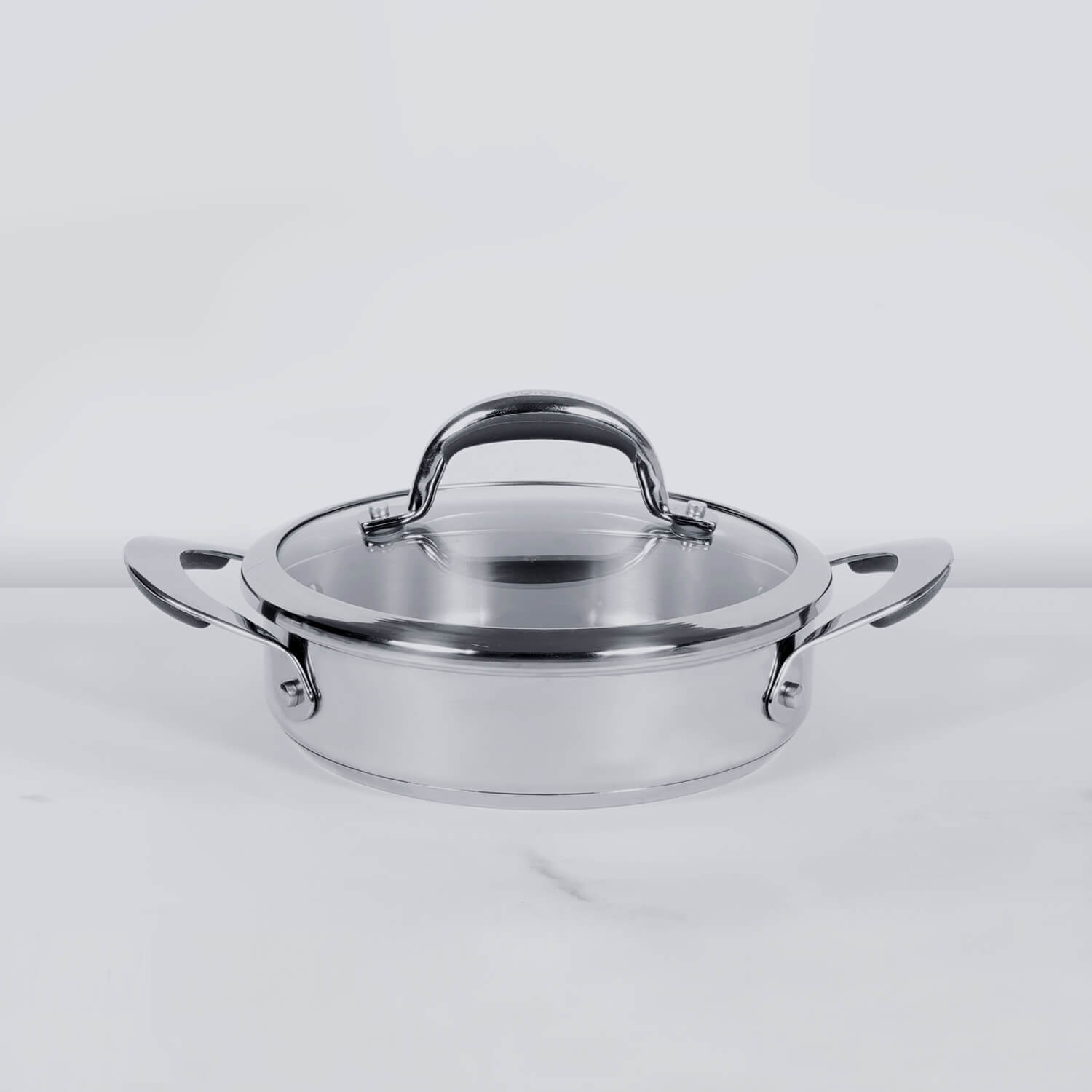
Meyer Trivantage Stainless Steel Triply Cookware Kadai/Wok with Lid, 22cm
The Role of Tri-Ply Construction in Heat Handling
Many modern stainless steel cookware ranges now feature tri-ply construction, where an aluminium core is sandwiched between layers of stainless steel. This significantly improves heat performance by:
- Spreading heat evenly across the base and sides
- Preventing hotspots that cause masala to burn
- Allowing faster response to flame changes
- Improving overall energy efficiency
Cookware such as Meyer Trivantage is designed with this layered technology, making it highly effective for Indian gravies, sautéed vegetables, and long-cooked dals.
Stainless Steel and High-Heat Tadka Cooking
Tadka involves heating oil until it reaches a high temperature before adding spices. Stainless steel handles this sudden heat surge exceptionally well. It allows oil to heat evenly and supports proper blooming of spices like cumin, mustard seeds, garlic, and dried red chillies without destabilising the pan.
With correct preheating and oil usage, stainless steel cookware ensures tadka is aromatic rather than burnt.
Consistency During Long Cooking and Simmering
Indian dishes such as rajma, chole, sambhar, and meat curries require prolonged cooking. Stainless steel cookware:
- Maintains consistent heat over long durations
- Resists base scorching when flame is controlled
- Retains structural strength even after hours of cooking
Tri-ply stainless steel further enhances this consistency by distributing heat along the sides, not just the base.
Handling High Heat in Pressure Cooking
Pressure cooking combines intense heat with internal pressure, making material choice critical. Stainless steel is widely preferred for pressure cookers because it:
- Withstands repeated pressure cycles safely
- Heats efficiently for faster cooking
- Maintains durability even with daily use
The Meyer Presta Tri-Ply Stainless Steel Pressure Cooker is specifically designed for Indian kitchens where pressure cooking is routine. Its tri-ply body ensures even heat distribution, reduced cooking time, and dependable performance under high heat and pressure.
Flame Responsiveness and Cooking Control
Indian cooking often involves adjusting heat levels mid-cooking. Stainless steel responds quickly to these changes, allowing cooks to:
-
Increase heat during bhuna stages
-
Reduce flame for simmering
-
Prevent spices or gravies from burning
Ranges like Meyer Select offer dependable everyday performance, while Meyer Centennial combines refined aesthetics with excellent heat control for modern kitchens.
Stainless Steel Compared to Other Cookware at High Heat
When compared to non-stick or ceramic cookware, stainless steel stands out for high-heat Indian cooking. Non-stick cookware often has temperature limits beyond which coatings can degrade, making it unsuitable for intense tadka or bhuna. Ceramic cookware performs better at moderate heat but may not be ideal for prolonged high-flame cooking or pressure cooking.
Stainless steel, on the other hand, remains chemically stable, structurally strong, and consistently reliable across the full range of Indian cooking techniques.
Best Practices for Using Stainless Steel on High Heat
To maximise performance:
-
Preheat cookware gradually
-
Add oil before ingredients
-
Avoid using unnecessarily high flame
-
Deglaze the pan if masala sticks
-
Let cookware cool slightly before washing
These simple habits help maintain cooking efficiency and extend the life of stainless steel cookware.
Why Stainless Steel Continues to Be a Kitchen Essential
From traditional homes to contemporary kitchens, stainless steel adapts effortlessly. Its ability to handle high heat safely, respond quickly to flame changes, and withstand years of daily use makes it indispensable.
With thoughtfully engineered ranges such as:
- Meyer Trivantage for even heat cooking
- Meyer Presta Tri-Ply Stainless Steel Pressure Cooker for daily pressure cooking
- Meyer Select for reliable everyday use
- Meyer Centennial for premium daily performance
stainless steel cookware proves it is not just a traditional choice, but a future-ready solution for Indian kitchens.
Conclusion
Stainless steel cookware handles high heat with remarkable stability and safety, making it ideal for the demands of Indian cooking. Whether it is intense tadka, extended simmering, or repeated pressure cooking, stainless steel delivers consistent results without compromising durability or food quality. This enduring performance is why stainless steel remains a cornerstone of everyday Indian cooking.
MORE FROM BLOG
Top Collections

1 Litre Steel Cookers: A Guide to Mini Meals
2 Items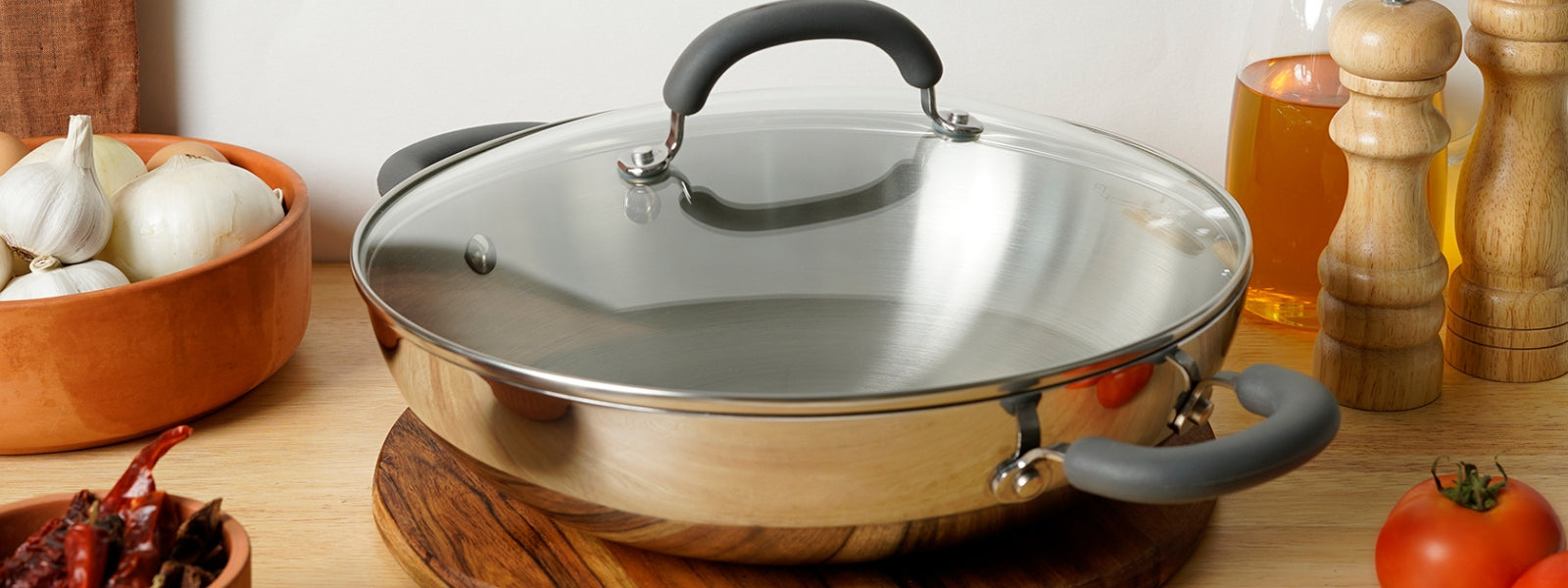
Benefits of using stainless steel cookware in India
2 Items
Cast iron pan vs. stainless steel pan — which should I buy?
2 Items
Cast Iron Vs Stainless Steel: Which Is Right For You?
2 Items
Is Hard-Anodized Cookware Safer Than Stainless Steel?
2 Items


Leave a comment