



Indian cooking is rich, layered, and technique-driven. From frying spices in hot oil to slow-simmering dals and cooking dry sabzis, most Indian dishes involve stages where food comes into direct contact with the base of the pan. This makes sticking one of the most common kitchen challenges in Indian homes.
Sticking is not just inconvenient—it can burn spices, spoil textures, alter flavours, and make cleaning difficult. Many home cooks assume that sticking happens only because of “wrong cookware,” while others believe it’s purely a skill issue. In reality, sticking is caused by a combination of cookware choice and cooking technique.
Understanding how cookware behaves with heat, oil, and moisture—along with mastering a few core cooking practices—can dramatically reduce sticking and make everyday Indian cooking smoother and more enjoyable.
Table of Contents
Understanding Why Food Sticks in the First Place
Before learning how to prevent sticking, it’s important to understand why it happens.
Food sticks when:
-
the pan surface is not evenly heated
-
there is insufficient oil or fat
-
moisture evaporates too quickly
-
ingredients are stirred too early
-
cookware develops hot spots
Indian ingredients like onions, tomatoes, lentils, and spices contain natural sugars and starches. When exposed to high heat without proper oil or moisture, these compounds bond to the pan’s surface, leading to sticking.
This is why both how you cook and what you cook in matter.

The Role of Cookware in Preventing Sticking
Different cookware materials behave differently under heat. Choosing the right type for your cooking style plays a significant role in how much food sticks.
1. Heat Distribution and Pan Thickness
Cookware with uneven heat distribution develops hot spots. These areas cause ingredients to burn and stick even when the rest of the pan seems fine.
-
Thin pans heat quickly but unevenly
-
Thick-bottomed pans distribute heat more evenly
-
Heavy cookware retains heat longer, reducing temperature fluctuations
Even heat distribution is especially important for Indian dishes that require slow sautéing or long simmering, such as dal, gravies, and sabzi.
2. Surface Texture and Cooking Comfort
Smooth cooking surfaces naturally reduce friction between food and the pan.
-
Smooth surfaces help food release more easily
-
Rough or damaged surfaces increase sticking
-
Well-maintained cookware performs better over time
Non-stick surfaces offer the easiest release, especially for low-oil cooking. Stainless steel, cast iron, and other traditional materials require correct heat and oil management but offer excellent durability and versatility.
3. Moisture Compatibility
Indian cooking often involves liquids—water, stock, tomato puree, curd, or coconut milk.
Some cookware:
-
handles liquid-heavy cooking better
-
allows deglazing without damage
-
supports slow evaporation without scorching
This is why heavier cookware is often preferred for dal, curries, and gravies.
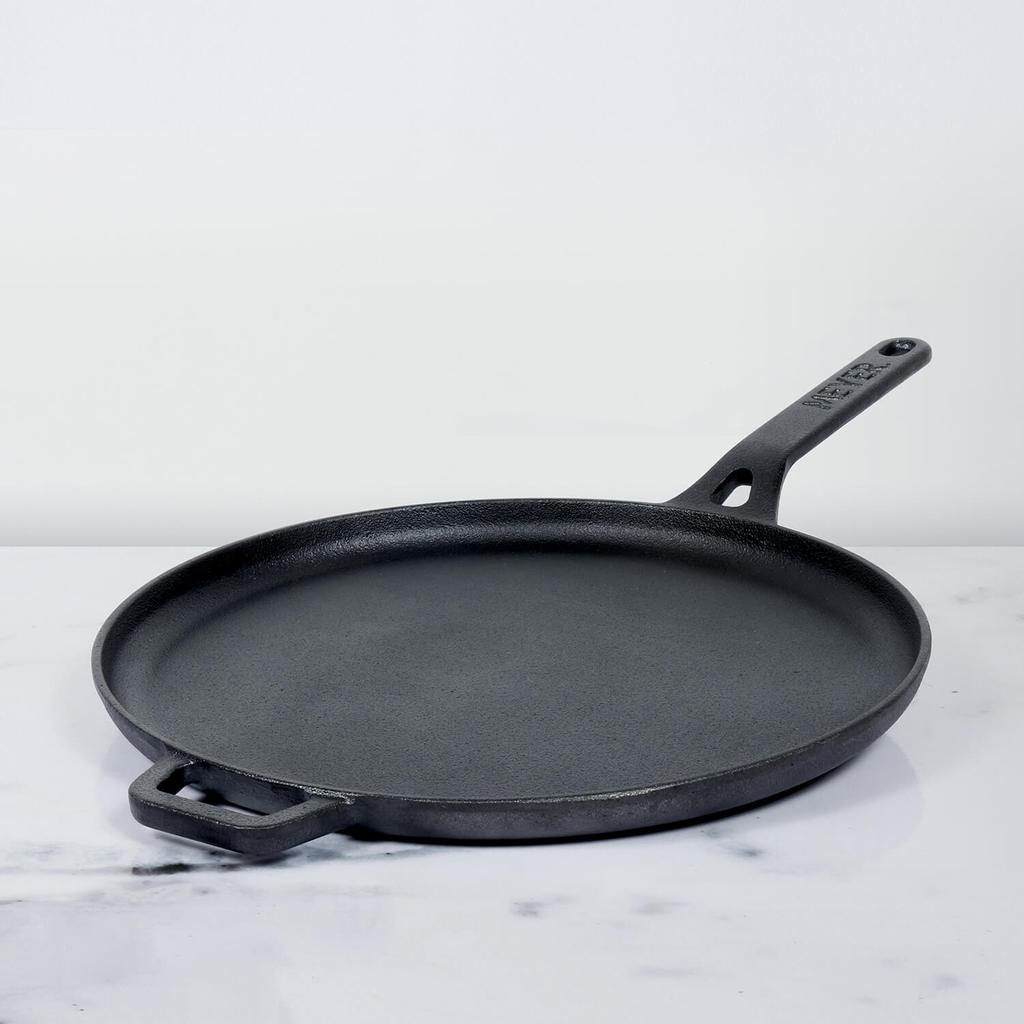
Meyer Flat Tawa Induction, 28cm/3mm Thick, Orange
Technique Matters: How to Cook Without Sticking
Even the best cookware cannot compensate for poor technique. The following practices are essential regardless of the pan you use.
1. Proper Preheating Is Non-Negotiable
Adding food to a cold or unevenly heated pan is one of the biggest causes of sticking.
When a pan is properly preheated:
-
oil spreads evenly
-
moisture evaporates instantly
-
food begins cooking immediately instead of bonding to the surface
A simple water-drop test helps—if drops sizzle and evaporate quickly, the pan is ready.
This step is crucial for:
-
sautéing onions and garlic
-
tempering spices
-
frying vegetables
2. Add Oil at the Right Time
Oil acts as a protective barrier between food and cookware. However, timing is critical.
Best practice:
- Heat the pan
- Add oil or ghee
- Allow it to heat slightly
- Add ingredients
Adding oil too early or too late reduces its effectiveness and increases sticking.
For Indian cooking, oils like mustard oil, groundnut oil, or ghee perform best when heated properly before ingredients are added.
3. Avoid Overcrowding the Pan
Overcrowding lowers the pan’s temperature and traps moisture. Instead of browning, ingredients begin steaming, then stick once moisture evaporates.
This is especially common while cooking:
-
sabzi
-
paneer dishes
-
shallow-fried snacks
Using a pan that matches the quantity of food ensures even cooking and better release.
4. Control Heat Throughout the Cooking Process
Indian cooking often starts on high heat, but maintaining high heat throughout leads to burning and sticking.
Heat control guidelines:
-
High heat: tadka and initial spice blooming
-
Medium heat: onions, vegetables, masala cooking
-
Low heat: dal, gravies, and slow cooking
Reducing heat at the right moment prevents sugars and starches from sticking to the base.
5. Stir Less, Not More
Constant stirring prevents food from forming a natural crust that allows it to release.
Allow ingredients time to:
-
brown slightly
-
caramelise naturally
-
release from the surface
This is especially important for onions, paneer, and shallow-fried items.
6. Moisture Management Is Key
Indian dishes frequently transition from dry to semi-gravy stages. If moisture evaporates completely, sticking increases.
Smart moisture management includes:
- sprinkling water during bhunao
- covering vegetables briefly to release steam
- adding liquid gradually during dal cooking
Deglazing with water, stock, or tomato puree also helps lift stuck bits and enhance flavour.
7. Use the Right Utensils
Incorrect utensils can worsen sticking and damage cookware surfaces.
General guidelines:
-
flat-edged spatulas help lift food cleanly
-
wooden or silicone tools protect surfaces
-
gentle scraping is more effective than forceful pressing
Proper utensils extend cookware life and reduce sticking over time.
Matching Cookware to Indian Dishes
Different Indian dishes benefit from different cookware styles:
- Daily sabzi: pans that allow even sautéing and controlled browning
- Dal and curries: heavy cookware that supports slow simmering
- Tadka: small, heat-responsive pans for quick tempering
- Shallow frying: pans with stable bases and consistent heat
Choosing cookware based on the dish—not convenience—dramatically improves cooking results.
Clean Cookware Performs Better
Residue from previous cooking increases friction and sticking.
Maintenance tips:
-
soak burnt pans before scrubbing
-
avoid harsh abrasives
-
dry cookware thoroughly after washing
Well-maintained cookware remains smoother, more responsive, and easier to cook with.
The Balance Between Cookware and Skill
No cookware is completely stick-proof, and no technique works in isolation. The best results come from combining:
-
good heat control
-
correct oil usage
-
patience and timing
-
cookware suited to Indian cooking styles
Over time, as familiarity with cookware increases, sticking reduces naturally.
Conclusion: Cooking Indian Food Without Sticking Is a Learnable Skill
Sticking is not a failure—it’s feedback. It tells you about heat, moisture, timing, and cookware compatibility.
By choosing cookware that distributes heat evenly and supports Indian cooking methods, and by refining everyday techniques like preheating, oil timing, and moisture control, sticking becomes rare and manageable.
MORE FROM BLOG
Top Collections

Benefits of Using Nonstick Cookware for Weight Management
2 Items
Cast Iron Dosa Tawa Vs Nonstick Tawa: Best Dosa Tawa in India
2 Items
Creating Balanced Meals with Nonstick Cookware for Sustainable Weight Loss
2 Items
Difference Between Nonstick and Stainless Steel Kitchen Cookware
2 Items
Easy way to turn Stainless Steel Pan into Nonstick
2 Items
Exploring Global Cuisines with Nonstick Cookware for Weight Loss
2 Items


Leave a comment