



Milk boiling over is one of the most common—and most annoying—problems in Indian kitchens. Whether it’s morning chai, evening coffee, or daily curd setting, milk spillovers waste time, soil the stove, and create unnecessary mess.
What many people don’t realise is that milk boiling over is less about carelessness and more about incorrect pot selection. With the right cookware, proper heat distribution, and a few smart techniques, this problem can be almost completely eliminated.
This guide explains why milk boils over, how cookware construction directly affects milk behaviour, and how choosing the right pot for Indian cooking makes all the difference.
Table of Contents
- 1. Why Milk Boils Over So Quickly
- 2. Why Pot Selection Is Crucial for Milk Boiling
- 3. Key Pot Features That Prevent Milk from Boiling Over
- 4. Thick, Heavy Bottom Construction
- 5. Best Cookware Materials for Boiling Milk
- 6. Materials Best Avoided for Milk Boiling
- 7. Correct Pot Size Makes a Big Difference
- 8. Flame Control Still Matters—But the Pot Does the Heavy Lifting
- 9. Common Mistakes That Cause Milk to Boil Over
- 10. Practical Indian Kitchen Tips That Actually Work
- 11. Why Premium Cookware Performs Better for Milk
- 12. Conclusion
Why Milk Boils Over So Quickly
Milk behaves very differently from water when heated.
Milk contains proteins and fats that rise to the surface and form a thin skin (malai). As heat builds underneath, steam gets trapped below this layer. When pressure increases suddenly, the milk rises rapidly and spills over.
In Indian kitchens, this effect is intensified due to:
-
High flame cooking
-
Thin or uneven cookware
-
Narrow or shallow vessels
-
Rapid temperature changes
Understanding this behaviour is key to choosing the right pot.

Why Pot Selection Is Crucial for Milk Boiling
Flame control helps, but cookware quality controls the outcome.
The right pot:
-
Distributes heat evenly across the base
-
Prevents sudden overheating at the bottom
-
Allows steam to escape gradually
-
Gives milk enough room to rise safely
High-quality cookware significantly reduces boil-overs even during busy kitchen routines.
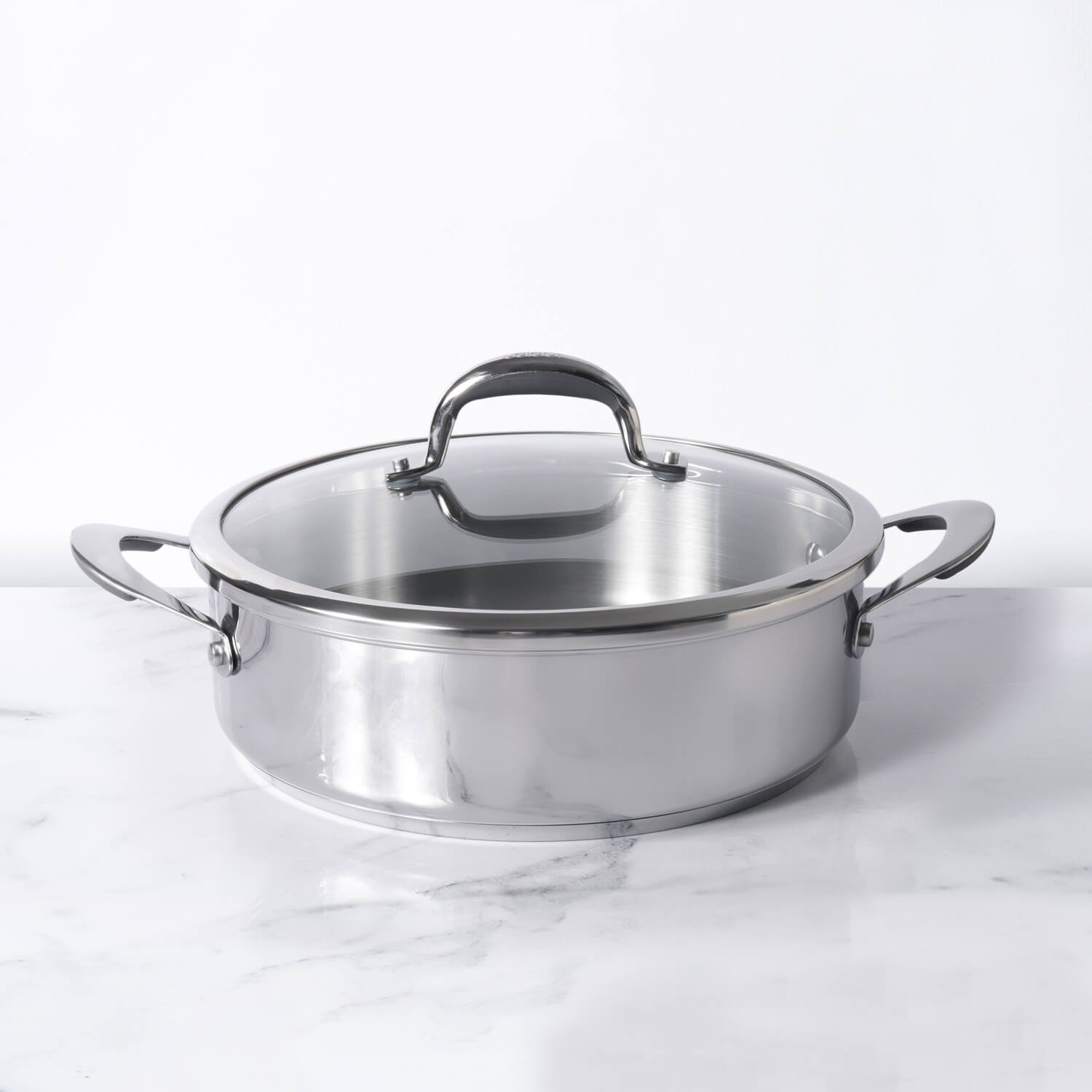
Meyer Select Stainless Steel Milkpan 14cm
Key Pot Features That Prevent Milk from Boiling Over
Wide Mouth Design
Pots with a wider opening allow steam to escape steadily, reducing pressure buildup beneath the milk surface. Narrow utensils trap steam and cause sudden spillovers.
Wide-mouth milk pots are ideal for:
- Daily milk boiling
- Tea and coffee preparation
- Setting curd
- Slow heating applications
Thick, Heavy Bottom Construction
Thin cookware heats unevenly, causing milk to scorch at the base while remaining cooler on top. This imbalance leads to aggressive bubbling and overflow.
A thick base ensures:
-
Controlled heating
-
Reduced scorching
-
Better temperature stability
Premium cookware with reinforced or layered bases performs especially well for milk.
Best Cookware Materials for Boiling Milk
High-quality stainless steel is the most reliable material for boiling milk in Indian homes.
It offers:
-
Even heat distribution
-
Non-reactive surface
-
Easy cleaning
-
Long-term durability
Tri-ply stainless steel cookware, with aluminium sandwiched between steel layers, provides superior heat control and is particularly effective for milk and dairy applications.
Hard Anodized Aluminium
Hard anodized cookware heats evenly and reduces the chances of burning milk at the bottom. It works best when used on medium flame and with attentive heating.
Materials Best Avoided for Milk Boiling
Thin aluminium utensils heat too quickly and unevenly. Non-stick cookware can degrade over time due to milk proteins and repeated high-heat exposure. Glass vessels often heat unevenly and are prone to thermal stress.
Correct Pot Size Makes a Big Difference
Overfilling is a common mistake. Milk should never exceed around half the pot’s capacity. Adequate headspace allows milk to rise gently without spilling over.
Choosing the right size pot based on household consumption significantly reduces overflow incidents.
Flame Control Still Matters—But the Pot Does the Heavy Lifting
Even the best cookware performs optimally with correct flame usage.
Start heating milk on medium flame. Stir once or twice initially to prevent sticking. As the milk begins to rise, lower the flame instead of turning it off abruptly. With a well-designed pot, you’ll have enough reaction time before spillover.
Common Mistakes That Cause Milk to Boil Over
- Using narrow or shallow pans
- Starting on high flame
- Filling milk to the brim
- Using warped or lightweight cookware
- Leaving milk unattended during heating
Most of these issues disappear with proper pot selection.
Practical Indian Kitchen Tips That Actually Work
Lightly greasing the rim of the pot with oil or ghee helps prevent milk from climbing over the edge. Occasional stirring breaks the surface layer and releases trapped steam. Choosing tall-sided, wide-mouth cookware further reduces the risk.
These methods work best when paired with well-constructed cookware.
Why Premium Cookware Performs Better for Milk
In Indian households, milk is boiled daily—often multiple times. Cookware must handle repeated heating without warping or developing hot spots.
Premium stainless steel cookware, especially tri-ply constructions, offers:
-
Consistent performance
-
Better heat responsiveness
-
Compatibility with gas and induction
-
Long-term reliability
This is why high-quality cookware brands design specific milk pots and saucepans optimised for daily Indian cooking needs.
Conclusion
Milk boiling over is not a cooking mistake—it’s a cookware issue.
By choosing:
- A wide-mouth pot
- Thick, heavy-base construction
- High-quality stainless steel or hard anodized material
You can significantly reduce milk spillovers, save time, and maintain a cleaner kitchen.
In Indian homes where milk is an everyday essential, the right pot isn’t optional—it’s essential.
MORE FROM BLOG
Top Collections
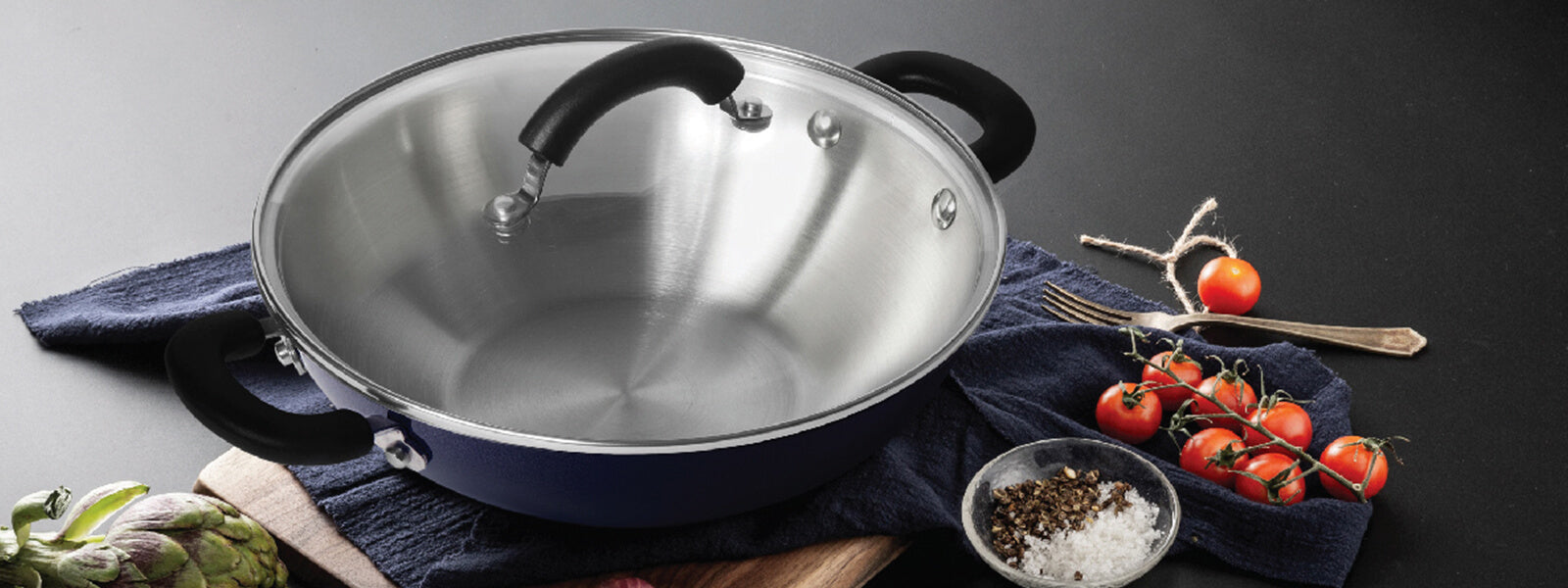
4 must-have pots and pans every Indian kitchen needs
2 Items
5 Reasons Why Every Home Cook Needs Stainless Steel Pots
2 Items
Easy way to turn Stainless Steel Pan into Nonstick
2 Items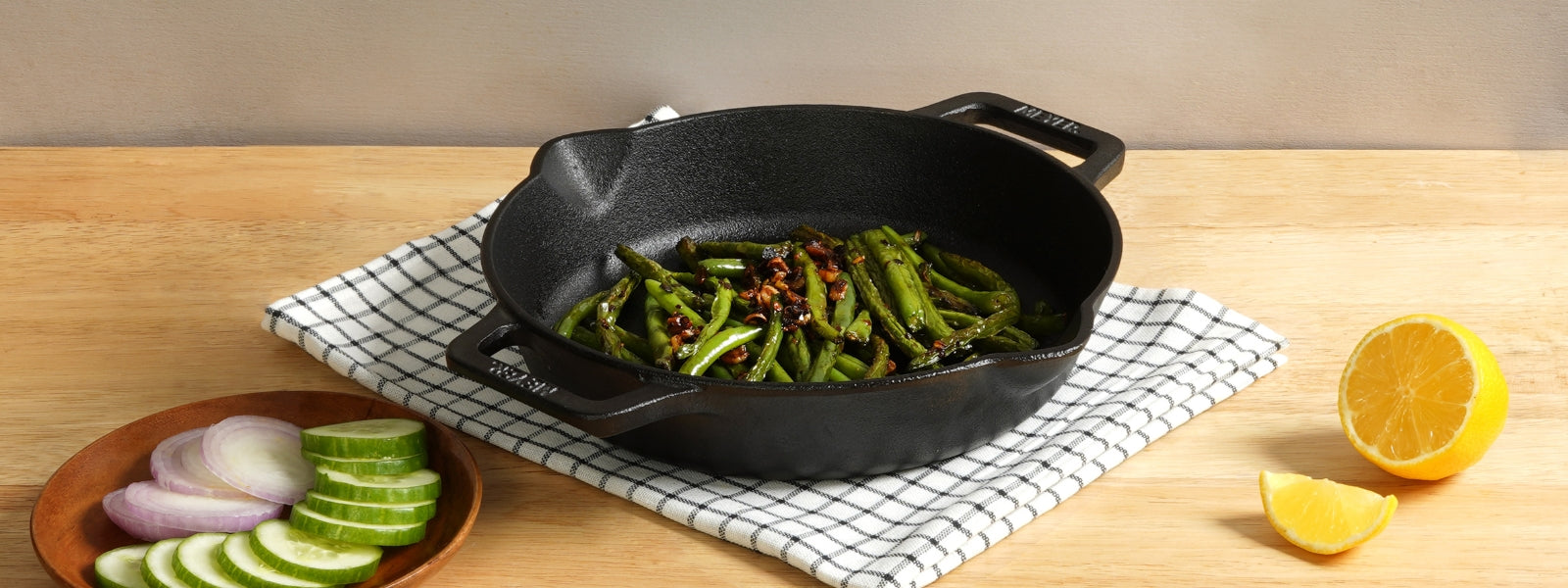
Meyer Cast Iron Skillet pan | The Ultimate Pan for Any Home Cook | Pots and Pans India
2 Items
Most Durable Saucepans & Milk Pans
2 Items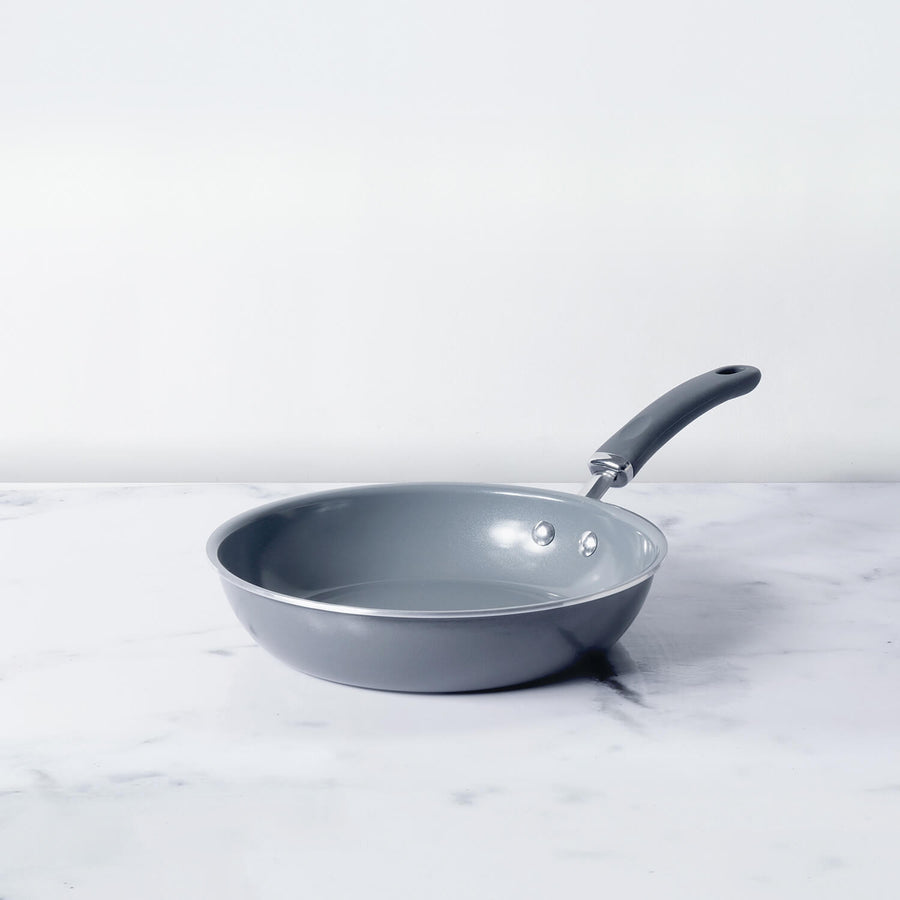


Leave a comment