



In today’s evolving Indian kitchens, cookware is no longer just a utility—it’s a health decision, a performance tool, and a long-term investment. Among the most debated choices is non-stick vs ceramic cookware—two options that promise convenience, low-oil cooking, and ease of use.
But when it comes to what truly matters—safety and durability—the differences are more nuanced than most buyers realize.
If you’ve ever wondered which cookware is better for everyday Indian cooking, this detailed guide will help you make an informed, practical choice—while also exploring how modern innovations from brands like Meyer are redefining expectations.
Table of Contents
What Is Non-Stick Cookware?
Non-stick cookware typically features a coating made from PTFE (Polytetrafluoroethylene), designed to prevent food from sticking to the surface. Over the years, this category has undergone significant improvements, especially in premium cookware ranges.
Modern non-stick cookware—like the Meyer Accent Series or Circulon Scratch Defense—is now:
-
PFOA-free
-
Built with multi-layer coatings for durability
-
Engineered for even heat distribution
-
Designed for low to medium heat cooking
Why Non-Stick Is So Popular
Non-stick cookware has become a staple in Indian homes because it simplifies everyday cooking:
-
Requires minimal oil, ideal for healthier meals
-
Perfect for delicate foods like eggs, dosas, and pancakes
-
Easy to clean, even after sticky preparations
For busy households and beginner cooks, non-stick cookware offers unmatched convenience without compromising on taste.

What Is Ceramic Cookware?
Ceramic cookware is often marketed as a cleaner, greener alternative to traditional non-stick. Instead of synthetic coatings, it uses a silica-based (sand-derived) coating.
Key characteristics include:
-
Free from PTFE and PFOA
-
Smooth, naturally slick surface
-
Often associated with eco-conscious cooking
Ranges like Meyer Anzen Ceramic Cookware represent this category with a focus on toxin-free cooking and aesthetic appeal.
Safety Comparison: What Should You Really Trust?
1. Chemical Composition and Health Impact
Non-Stick Cookware
Modern non-stick cookware is widely considered safe when used correctly.
High-quality options from trusted brands like Meyer and Circulon are:
-
Free from harmful chemicals like PFOA
-
Stable at standard cooking temperatures
-
Designed to resist peeling and flaking
However, misuse can compromise safety:
-
Overheating at very high temperatures
-
Using metal utensils that damage the coating
-
Continued use after visible wear
The key takeaway: Non-stick is safe—but only when maintained properly.
Ceramic Cookware
Ceramic cookware is often preferred for its “chemical-free” perception:
-
No PTFE, PFOA, or PFAS
-
Made from inorganic, mineral-based coatings
This makes it appealing for health-conscious consumers seeking peace of mind.
However, there’s an important reality:
While ceramic coatings are chemically inert, their performance degrades faster, which can indirectly affect safety over time as the surface loses effectiveness.
2. Heat Behavior and Cooking Safety
Indian cooking frequently involves high heat techniques—from tadka to bhuna masalas.
-
Non-stick cookware performs best on low to medium heat
-
Ceramic cookware can tolerate slightly higher heat—but not indefinitely
Repeated exposure to high heat can:
-
Reduce the lifespan of non-stick coatings
-
Cause ceramic coatings to lose their smooth finish
Neither option is ideal for prolonged high-heat cooking—this is where materials like stainless steel outperform both.
Durability: Which Cookware Lasts Longer?
Durability is where the distinction becomes clearer.
Non-Stick Cookware Lifespan
-
Average lifespan: 2–5 years
-
Premium variants last longer with proper care
High-end options like Meyer Accent Series and Circulon Scratch Defense are built with:
-
Reinforced coating layers
-
Enhanced scratch resistance
-
Better heat stability
With careful use—wooden spatulas, moderate heat, gentle cleaning—non-stick cookware can deliver consistent performance over several years.
Ceramic Cookware Lifespan
-
Average lifespan: 1–3 years
Ceramic cookware tends to:
-
Lose its non-stick properties faster
-
Become sticky over time
-
Be more sensitive to oil buildup and overheating
Even premium ceramic cookware, including Meyer Anzen, is best suited for light to moderate use rather than heavy daily cooking.
Real-World Performance in Indian Kitchens
Let’s evaluate both cookware types based on everyday Indian cooking needs.
1. Tadka (Tempering Spices)
-
Non-stick: Works well at controlled heat
-
Ceramic: Handles heat initially but wears faster
Better choice: Non-stick (with heat control)
2. Low-Oil Cooking
-
Non-stick: Excellent long-term performance
-
Ceramic: Good initially, declines over time
Winner: Non-stick
3. Sticky Foods (Dosa, Eggs, Cheela)
-
Non-stick: Superior release
-
Ceramic: Works well in the beginning
Winner: Non-stick
4. Daily Heavy Use
-
Non-stick: More durable in premium ranges
-
Ceramic: Requires earlier replacement
Winner: Non-stick
Where Premium Cookware Makes the Difference
The real comparison isn’t just non-stick vs ceramic—it’s basic vs advanced cookware technology.
Non-Stick Innovation: Meyer Accent & Circulon
-
Advanced multi-layer coating systems
-
Long-lasting food release
-
Designed specifically for Indian cooking styles
These ranges overcome traditional non-stick limitations by improving durability and scratch resistance.
Ceramic Innovation: Meyer Anzen
-
Clean, toxin-free coating
-
Smooth, elegant finish
-
Ideal for light, mindful cooking
This range caters to users prioritizing chemical safety and aesthetics.
The Smart Upgrade: Meyer Select Stainless Steel
While comparing coatings, many experienced cooks shift toward uncoated cookware like:
-
Meyer Select Nickel-Free Stainless Steel
Why?
-
No coating = no wear and tear issues
-
Safe for high-heat cooking
-
Extremely durable—often lasting years or even decades
Final Verdict: Non-Stick vs Ceramic Cookware
Safety
-
Ceramic wins on perception (chemical-free composition)
-
Non-stick wins in practice (more stable over time when used correctly)
Durability
-
Non-stick clearly lasts longer, especially in premium ranges
-
Ceramic coatings degrade faster and need earlier replacement
Performance
-
Non-stick delivers consistent, reliable cooking results
-
Ceramic performs well initially but declines with use
What Should You Choose?
The best approach isn’t choosing one—it’s choosing smartly.
Go for Non-Stick if you:
-
Cook daily
-
Want durability
-
Prefer low-oil cooking
Go for Ceramic if you:
-
Cook occasionally
-
Prioritize chemical-free materials
-
Prefer lightweight cookware
Add Stainless Steel if you:
-
Cook at high heat
-
Want long-term value
-
Need versatile cookware
Conclusion
When comparing non-stick vs ceramic cookware, the answer isn’t black and white—it’s practical.
-
Non-stick offers better durability and consistent performance
-
Ceramic offers cleaner composition but shorter lifespan
If you’re looking for cookware that balances safety with longevity, investing in high-quality, brand-backed options like Meyer’s cookware ranges ensures you get the best of both worlds.
Because in the end, great cooking isn’t just about ingredients—it’s about what you cook them in.
MORE FROM BLOG
Top Collections

Can Ceramic Cookware Be Used for Breakfast and Light Meals?
2 Items
Can Ceramic Cookware Be Used for Tadka and Tempering?
2 Items
Can Ceramic Cookware Handle Everyday Indian Meals?
2 Items
Can Ceramic Cookware Handle Indian Spices Gently?
2 Items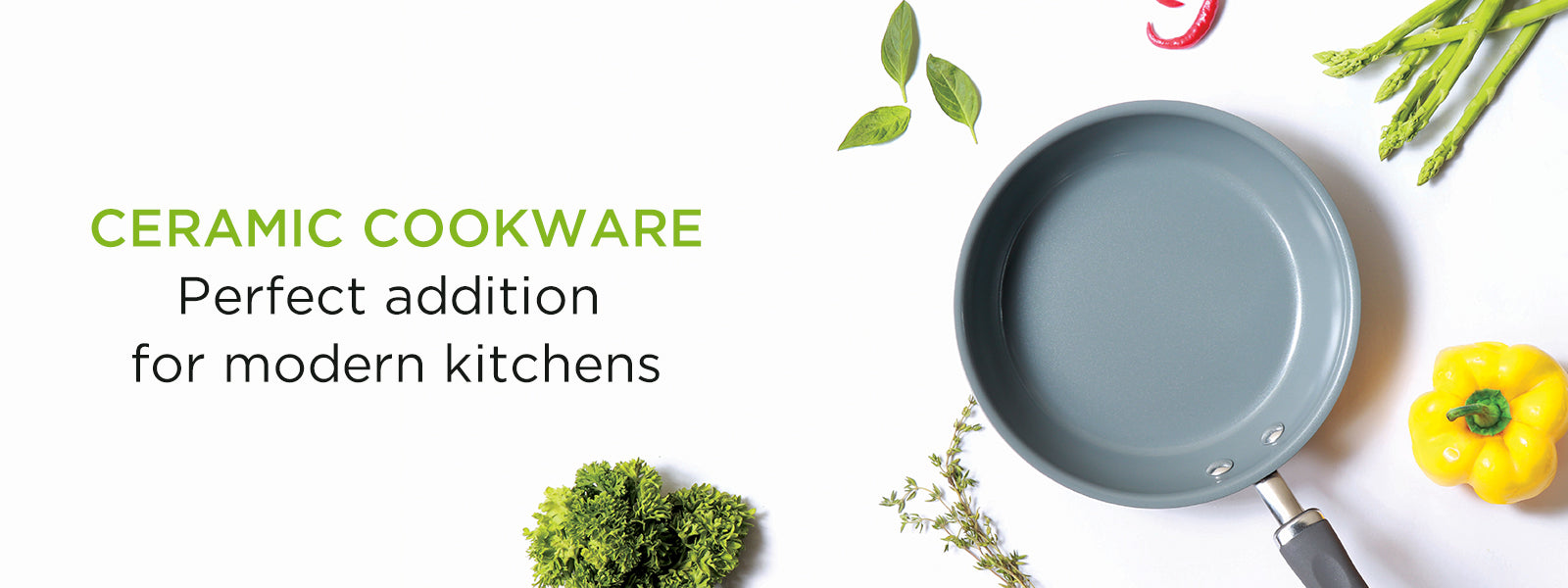
Health Benefits Of Cooking In Ceramic Cookware
2 Items


Leave a comment