



Tadka—also known as tempering or chaunk—is the soul of Indian cooking. That aromatic burst of cumin, mustard seeds, curry leaves, garlic, and dried red chillies sizzling in hot fat transforms a simple dal, sabzi, or raita into something unforgettable. Yet, many home cooks struggle with burnt spices, uneven tempering, or oil that overheats too fast.
The secret to perfect tadka isn’t just timing—it’s choosing the right pan. Since tadka happens in seconds, the cookware material, heat responsiveness, and surface finish matter more than almost any other cooking step.
Table of Contents
Why Pan Selection Matters for Tadka
Tadka involves:
-
Very high heat
-
Small quantities of oil or ghee
-
Rapid spice blooming
-
Immediate pouring over food
A poor-quality pan can cause spices to burn before releasing their essential oils, leaving bitterness instead of aroma. The right pan gives you control, speed, and even heat, allowing spices to bloom—not scorch.

Best Cookware Materials for Tempering Spices
Stainless Steel: Precision and Control
High-quality stainless steel pans are ideal for tadka because they heat quickly and cool down just as fast. This responsiveness is critical when working with spices that can burn in seconds.
Triply stainless steel cookware offers even heat distribution, preventing hotspots and allowing uniform spice blooming.
Best for:
Dal tadka, ghee tempering, garlic and cumin-based chaunk
Hard Anodised Cookware: Fast and Efficient
Hard anodised cookware heats evenly and retains warmth without sudden spikes. Its smooth surface helps prevent spices from sticking, especially when working with minimal oil.
This material is excellent for everyday tadka preparation, especially in busy kitchens.
Best for:
Mustard seeds, curry leaves, hing, green chillies
Cast Iron: Deep, Robust Flavours
Cast iron retains heat exceptionally well, making it suitable for traditional tempering styles. Once hot, it maintains consistent temperature, allowing spices to bloom deeply.
However, cast iron requires careful heat control, as it doesn’t cool quickly.
Best for:
Rustic dals, slow-cooked curries, traditional regional tadkas
Ceramic-Coated Cookware: Gentle and Clean
Ceramic-coated pans are non-reactive and offer smooth heat distribution. They’re useful for lighter tempering where you want clean flavours without oil absorption.
Best for:
Delicate spice blends, tempering for yogurt-based dishes
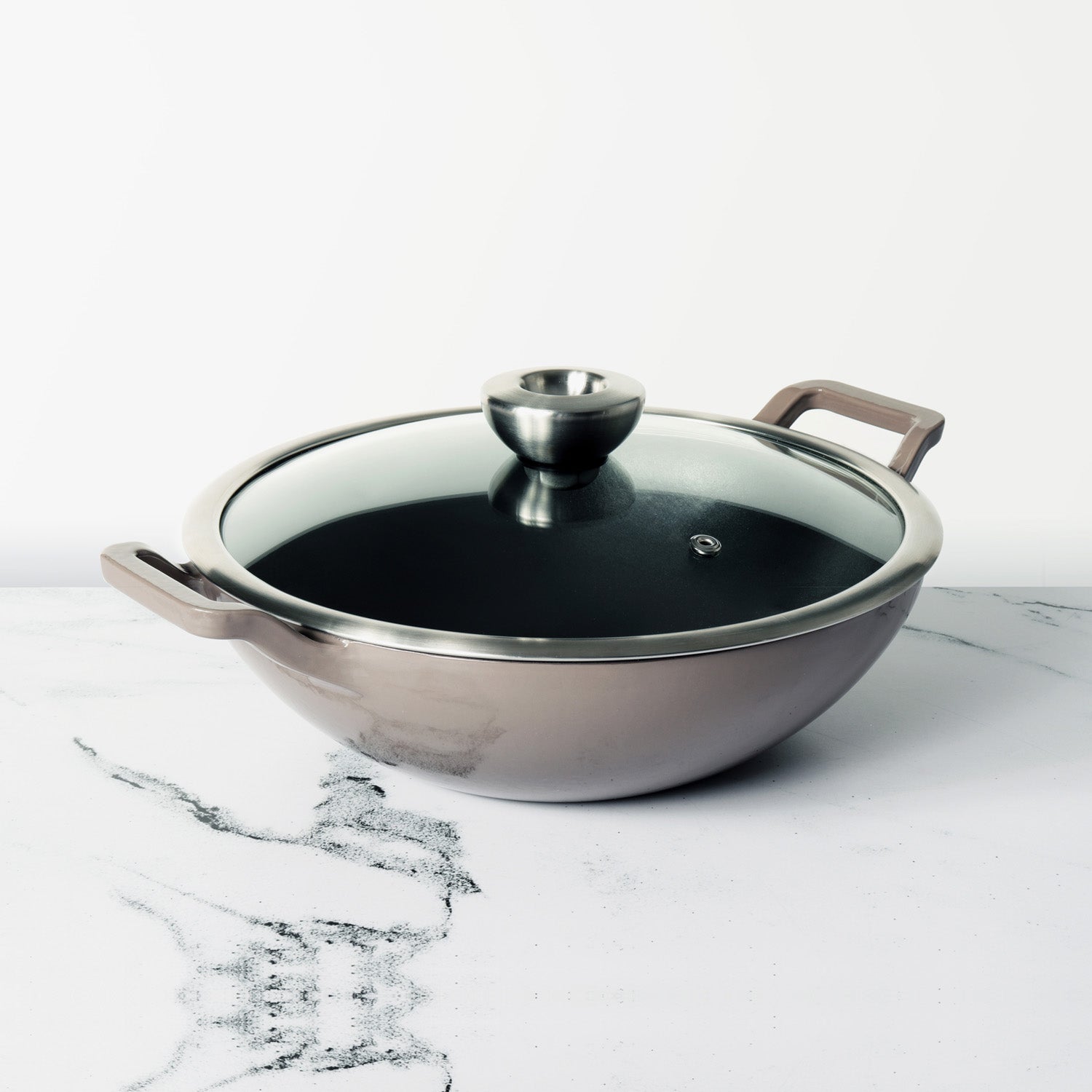
Meyer Anzen Ceramic Coated Cookware 24cm Frypan
Ideal Pan Shape for Tadka
A small kadai or shallow saucepan works best. It allows oil to pool evenly, ensuring all spices come into direct contact with heat. Sloped sides help with quick pouring and reduce spillage.
Avoid very large pans—oil spreads too thin and overheats quickly.
Tadka Timing: Pan + Heat Go Hand in Hand
Even the best pan needs correct heat handling:
- Heat oil or ghee until just shimmering
- Add whole spices first (cumin, mustard)
- Once they crackle, add aromatics
- Switch off heat immediately before pouring
- The right pan gives you those few crucial seconds of control.
Common Tadka Mistakes to Avoid
-
Using thin, lightweight pans
-
Overheating oil before adding spices
-
Adding powdered spices directly to very hot oil
-
Delaying the pour after tempering
Why Premium Cookware Makes a Difference
Quality cookware ensures:
-
Faster spice blooming
-
No burning or bitterness
-
Better aroma release
-
Consistent results every time
Whether you’re tempering dal, finishing a curry, or elevating curd rice, the right pan turns tadka into a precise, repeatable art.
Conclusion
Tadka may take only seconds, but its impact lasts through the entire dish. Choosing the right pan—one that heats evenly, responds quickly, and offers control—ensures your spices release flavour, not smoke.
With the right cookware and mindful heat management, every tadka becomes aromatic, balanced, and restaurant-worthy—right in your home kitchen.
MORE FROM BLOG
Top Collections
Best Stainless Steel Kadai for Deep Frying
2 Items
Can stainless steel pan be used for Deep Frying?
2 Items
Cast Iron Frying Pans: Benefits, Uses & Maintenance Tips in India | Pots and Pans India
2 Items
Choosing Between Stainless Steel and Non-Stick Frying Pans
2 Items
How to Use Non-Stick Cookware for Baking and Frying
2 ItemsFrom Our Shop


Leave a comment