



Walk into any professional Indian kitchen — whether it’s a five-star hotel, a bustling restaurant, a catering unit, or a cloud kitchen — and one thing is immediately evident: stainless steel cookware dominates the workspace. From large stockpots and kadais to pressure cookers and saucepans, stainless steel is the backbone of commercial Indian cooking.
This is not a matter of tradition alone. Professional kitchens choose stainless steel because it meets the intense demands of Indian cooking, offering unmatched performance under high heat, long cooking hours, strict hygiene standards, and constant use. Let’s explore why stainless steel continues to be the preferred cookware material in professional Indian kitchens — and why these same qualities make it ideal for serious home cooks as well.
Table of Contents
- 1. The Demands of a Professional Indian Kitchen
- 2. Exceptional High-Heat Tolerance
- 3. No Coatings, No Compromise on Safety
- 4. Superior Hygiene and Food Safety Standards
- 5. Designed for Long Cooking and Bulk Preparation
- 6. Ideal for Pressure Cooking at Scale
- 7. Quick Response to Flame Changes
- 8. Durability Under Heavy Utensil Use
- 9. Easy Maintenance and Fast Cleaning
- 10. Cost Efficiency Over Time
- 11. Versatility Across Indian Menus
- 12. Professional Choice, Home Kitchen Advantage
- 13. Conclusion
The Demands of a Professional Indian Kitchen
Indian professional kitchens operate under conditions far more demanding than home kitchens:
-
Continuous cooking for long hours
-
High flames and large burners
-
Bulk quantities of food
-
Repeated pressure cooking cycles
-
Frequent washing and sanitisation
Cookware in such environments must be extremely durable, safe, versatile, and easy to maintain. Stainless steel checks all these boxes.

Exceptional High-Heat Tolerance
Indian cooking relies heavily on high heat — from tempering spices to deep bhuna masalas. Stainless steel has a high melting point and excellent thermal stability, allowing it to withstand:
-
Direct flame exposure
-
Sudden temperature changes
-
Long hours on high burners
Unlike coated cookware, stainless steel does not degrade, peel, or release fumes when overheated. This makes it ideal for professional kitchens where precise temperature control is not always possible during peak hours.
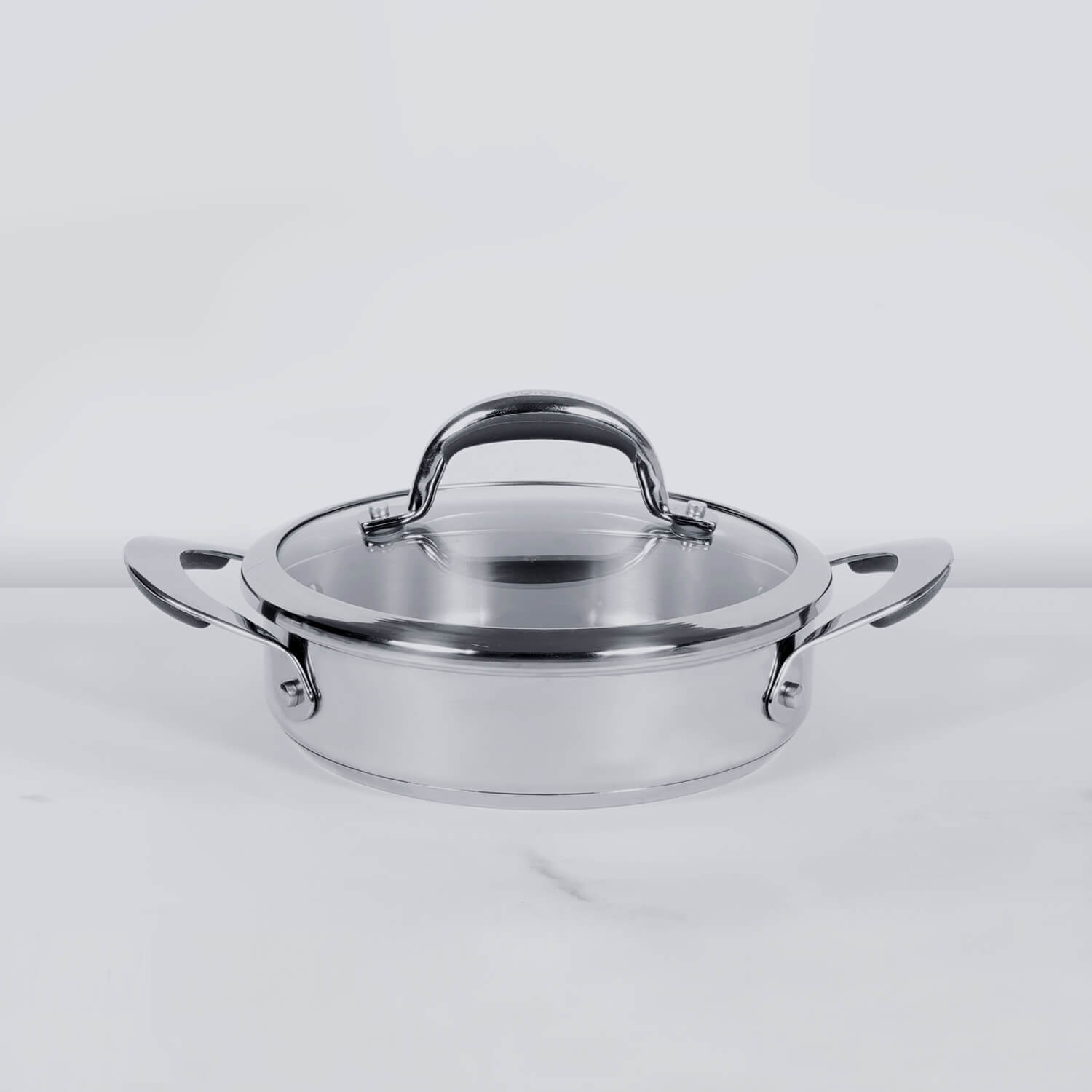
Meyer Select Stainless Steel Kadai 24cm
No Coatings, No Compromise on Safety
One of the biggest reasons professionals prefer stainless steel is its uncoated, non-reactive surface. In commercial kitchens:
- Cookware is frequently overheated
- Metal ladles and spoons are used
- Dishes are cooked back-to-back
Stainless steel does not rely on synthetic coatings, which means:
-
No risk of coating damage
-
No chemical breakdown at high temperatures
-
Long-term food safety
This reliability is critical in environments where cookware must perform consistently under pressure.
Superior Hygiene and Food Safety Standards
Hygiene is non-negotiable in professional kitchens. Stainless steel is:
- Non-porous
- Resistant to bacterial growth
- Easy to sanitise at high temperatures
It does not absorb oils, spices, or odours — an important advantage when preparing diverse Indian dishes such as onion-tomato gravies, dairy-based curries, and spice-heavy masalas in the same cookware.
This is why stainless steel is widely accepted and recommended in kitchens that must comply with food safety regulations.
Designed for Long Cooking and Bulk Preparation
Indian professional kitchens often prepare:
- Large batches of dal, sambhar, and gravies
- Slow-cooked curries and biryanis
- Stocks and broths simmered for hours
Stainless steel cookware maintains consistent heat over long durations without weakening or warping. Modern multi-layer constructions enhance this further.
Cookware ranges such as Meyer Tri-vantage, with advanced layered stainless steel construction, are designed to distribute heat evenly across the base and sides — essential for bulk cooking without scorching or uneven results.
Ideal for Pressure Cooking at Scale
Pressure cooking is central to Indian professional cooking — for dals, legumes, meats, and rice preparations. Stainless steel is the material of choice for pressure cookers because it:
- Withstands repeated pressure cycles
- Handles high heat efficiently
- Retains strength over years of use
The Meyer Presta Tri-Ply Stainless Steel Pressure Cooker reflects this professional-grade requirement. Its tri-ply body ensures faster, even heat distribution, reducing cooking time while maintaining safety and durability — qualities that are highly valued in both commercial and serious home kitchens.
Quick Response to Flame Changes
Professional Indian cooking requires constant heat adjustments — increasing flame during bhuna, reducing it for simmering, or switching burners quickly. Stainless steel responds rapidly to these changes, allowing chefs to:
- Control cooking stages precisely
- Avoid burning masalas
- Maintain consistency across batches
This responsiveness is especially important in busy kitchens where timing and precision directly impact food quality.
Durability Under Heavy Utensil Use
In professional kitchens, cookware is used with:
-
Large metal ladles
-
Heavy stirring
-
Frequent scraping
Stainless steel handles this physical wear effortlessly. Unlike non-stick or ceramic cookware, it does not scratch in a way that affects performance or safety, making it ideal for high-volume cooking.
Easy Maintenance and Fast Cleaning
Speed matters in professional kitchens. Stainless steel cookware:
- Can be scrubbed vigorously
- Withstands industrial dishwashers
- Recovers its finish with simple cleaning
This ensures quick turnaround between batches and reduces downtime during peak service hours.
Cost Efficiency Over Time
While stainless steel cookware may have a higher upfront cost, professional kitchens prioritise long-term value. Stainless steel offers:
-
Extended lifespan
-
Minimal replacement frequency
-
Consistent performance over years
This makes it far more cost-effective than cookware that needs frequent replacement due to coating wear or structural damage.
Versatility Across Indian Menus
From North Indian gravies to South Indian sambhar, from rice preparations to milk-based desserts, stainless steel cookware handles it all. Its non-reactive nature makes it safe for:
- Acidic tomato-based dishes
- Dairy-heavy preparations
- Spice-rich recipes
This versatility is one of the main reasons it remains indispensable in professional Indian kitchens.
Professional Choice, Home Kitchen Advantage
The same qualities that make stainless steel ideal for professional kitchens — durability, heat tolerance, hygiene, and control — also benefit Indian home cooks. Ranges like:
- Meyer Trivantage for even heat cooking
- Meyer Presta Tri-Ply Stainless Steel Pressure Cooker for daily pressure cooking
- Meyer Select for dependable everyday use
- Meyer Centennial for premium daily performance
bring professional-grade reliability into modern Indian homes.
Conclusion
Professional Indian kitchens rely on stainless steel cookware because it performs consistently under the most demanding conditions. Its ability to handle high heat, long cooking hours, heavy use, and strict hygiene requirements makes it unmatched in commercial environments. This proven performance is why stainless steel is not just a professional standard, but also a wise, future-ready choice for everyday Indian cooking.
MORE FROM BLOG
Top Collections

1 Litre Steel Cookers: A Guide to Mini Meals
2 Items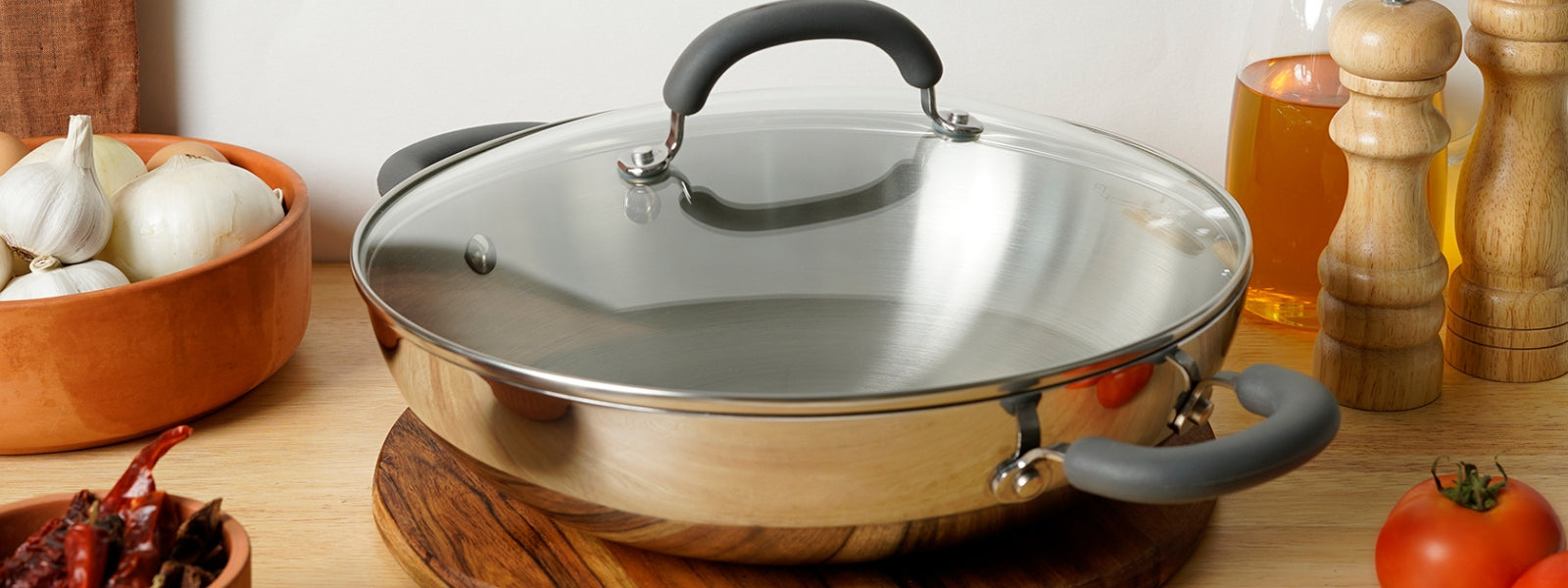
Benefits of using stainless steel cookware in India
2 Items
Cast Iron Vs Stainless Steel Cookware: Which one should you pick?
2 Items
Cast Iron vs. Stainless Steel: Which is Better for Your Kitchen?
2 Items
Is Hard-Anodized Cookware Safer Than Stainless Steel?
2 Items


Leave a comment