



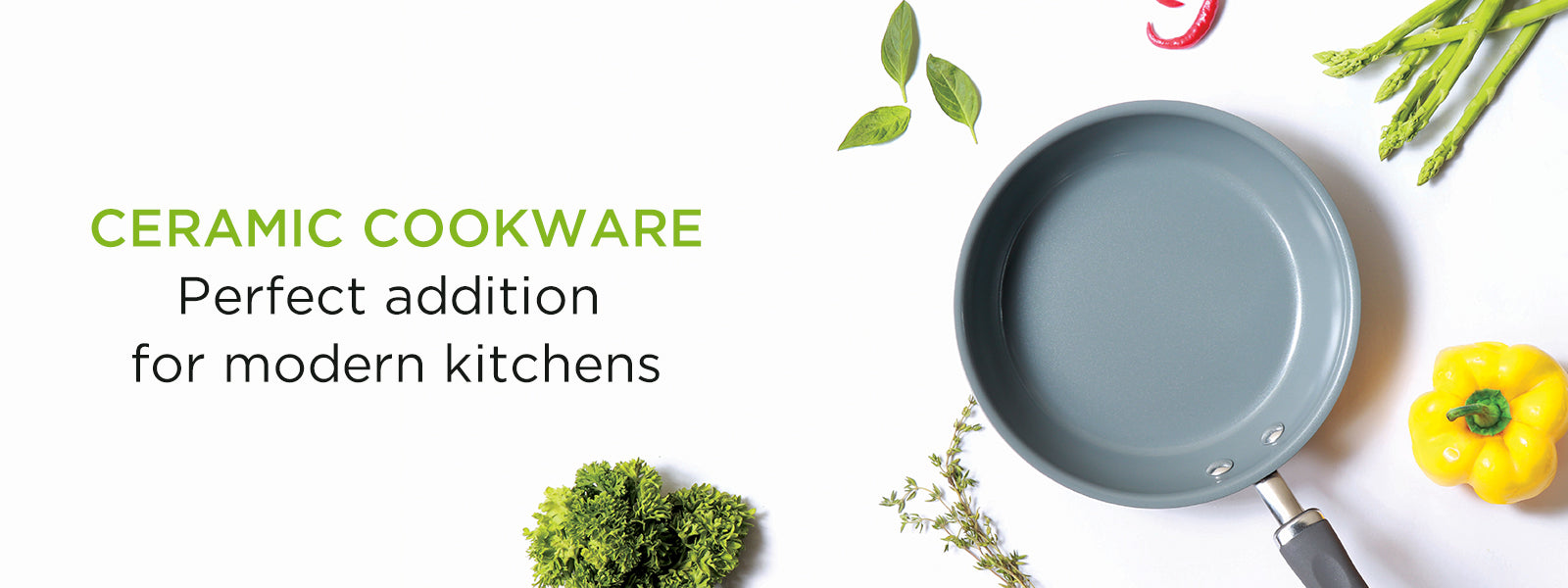
Ceramic cookware has become a preferred choice in contemporary Indian kitchens for its clean cooking surface, smooth finish, and toxin-free appeal. Whether you use it daily for sabzi, dosa, gravies, or light sautéing, ceramic cookware offers convenience and aesthetic elegance. However, like all coated cookware, it requires mindful handling — especially during storage.
One of the most common concerns homeowners have is chipping. Even high-quality ceramic cookware can develop edge chips or surface damage if stacked carelessly or stored without protection. Proper storage not only prevents chipping but also extends coating performance, cooking efficiency, and overall durability.
Table of Contents
- 1. Why Does Ceramic Cookware Chip?
- 2. Why Proper Storage Matters
- 3. Best Practices for Storing Ceramic Cookware
- 4. Special Care for Ceramic Cookware Edges
- 5. Does Chipping Affect Safety?
- 6. How Premium Ceramic Cookware Responds to Proper Storage
- 7. Organizing Your Kitchen for Ceramic Longevity
- 8. Seasonal Storage Tips
- 9. Final Thoughts
Why Does Ceramic Cookware Chip?
Before discussing storage solutions, it’s important to understand why chipping happens.
Ceramic cookware typically features a metal base (often aluminum) coated with a mineral-based ceramic layer. This coating creates the smooth, non-reactive cooking surface people appreciate. However, ceramic coatings, while durable, are not indestructible.
Chipping usually occurs due to:
-
Hard impact against other cookware
-
Stacking without protective layers
-
Sliding pans across each other
-
Metal-to-metal contact at the rim
-
Dropping lids on pan edges
-
Overcrowded cabinets
The edges of pans and the rim area are particularly vulnerable because they receive the most contact during stacking.

Why Proper Storage Matters
Ceramic cookware is an investment. Premium lines like Meyer Anzen ceramic cookware are designed for everyday Indian cooking — including tadka, sautéing, and shallow frying — but performance longevity depends significantly on care practices.
Improper storage can lead to:
-
Surface scratches
-
Coating chips
-
Reduced smoothness
-
Premature wear
-
Compromised food release
Correct storage preserves not only appearance but also cooking efficiency.
Best Practices for Storing Ceramic Cookware
1. Avoid Direct Stacking Without Protection
Stacking ceramic pans directly on top of one another is the most common cause of chipping.
If stacking is unavoidable, always place a soft barrier between pieces. Suitable options include:
- Cotton cloth
- Microfiber towel
- Paper towel
- Silicone pan protectors
- Felt separators
These create cushioning that prevents rim-to-rim friction.
2. Use Pan Protectors
Pan protectors are inexpensive yet highly effective tools. They are typically soft, star-shaped fabric pads designed to sit between stacked cookware.
For households using multiple ceramic pans from the Meyer Anzen ceramic cookware range, pan protectors are especially helpful because they prevent coating abrasion during everyday cabinet access.
3. Store Lids Separately
Lids often cause more damage than pans themselves.
Avoid placing heavy glass lids directly inside pans. Instead:
- Store lids vertically in a rack
- Use a cabinet lid organizer
- Hang lids on wall-mounted racks if possible
If storing lids on top of pans, insert a cloth barrier first.
4. Do Not Slide Pans
When removing a pan from a stack, lift it completely instead of sliding it out. Sliding creates friction that damages edges and coatings over time.
Even high-quality ceramic surfaces can develop micro-abrasions from repeated sliding.
5. Use Drawer Storage Carefully
Deep kitchen drawers are popular for cookware storage. If you store ceramic pans in drawers:
- Ensure drawer interiors are padded
- Avoid overcrowding
- Use non-slip liners
- Keep handles aligned to prevent impact
Drawer storage works well when organized properly.
6. Hang When Possible
If your kitchen layout allows, hanging ceramic cookware is one of the safest storage methods.
Wall-mounted racks:
- Prevent stacking damage
- Allow airflow
- Reduce impact risk
- Keep cookware easily accessible
This method works especially well for frequently used frypans.
7. Allow Cookware to Cool Before Storing
Never stack or store ceramic cookware while still warm.
Sudden stacking when hot can:
- Trap moisture
- Cause condensation
- Create thermal stress
- Weaken coating adhesion
Always let pans cool completely and dry thoroughly before placing them back in cabinets.
8. Clean and Dry Thoroughly
Residual moisture can lead to:
- Water spots
- Mineral deposits
- Coating dullness
After washing:
-
Dry immediately with a soft cloth
-
Ensure rims are moisture-free
-
Store in a dry cabinet
Proper drying protects both coating and base material.
Special Care for Ceramic Cookware Edges
The rim area is the most chip-prone section.
To protect edges:
- Avoid tapping utensils on rim
- Do not place heavy pots directly against edges
- Use gentle placement when storing
- Avoid overcrowding shelves
Even durable ranges like Meyer Anzen ceramic cookware benefit from careful rim protection.
Mistakes to Avoid
Certain habits dramatically increase the risk of chipping:
- Storing ceramic pans under heavy cast iron cookware
- Mixing metal utensils loosely in the same drawer
- Overloading cabinets
- Dropping lids inside pans
- Using abrasive scrubbers before storage
Long-term durability depends more on daily handling than occasional deep cleaning.
Does Chipping Affect Safety?
Minor rim chipping typically does not pose immediate health concerns, especially if the cooking surface remains intact. However:
-
Surface chips inside the cooking area can reduce non-stick performance
-
Repeated damage can shorten cookware lifespan
-
Exposed base material may affect aesthetics
Preventive storage is always preferable to repair.
How Premium Ceramic Cookware Responds to Proper Storage
High-quality ceramic cookware is engineered for durability. For instance, the Meyer Anzen ceramic cookware range features:
-
Heavy-gauge construction for stability
-
Even heat distribution
-
Durable ceramic coating
-
PTFE-free and PFOA-free materials
While built for everyday use, mindful storage significantly extends coating longevity and maintains cooking performance.
Organizing Your Kitchen for Ceramic Longevity
A simple storage system can make a major difference.
Ideal ceramic storage setup:
- Lower cabinet shelf for heavier pieces
- Separate lid organizer
- Soft pan protectors between stacked pans
- Dedicated drawer for utensils
- Measured stacking height (no over-piling)
Kitchen organization is not just aesthetic — it directly affects cookware lifespan.
Seasonal Storage Tips
If you rotate cookware seasonally:
-
Wrap each piece individually in soft cloth
-
Store in dry, moisture-free areas
-
Avoid plastic wrapping that traps condensation
-
Keep away from heavy stacked items
Proper long-term storage ensures ceramic surfaces remain smooth and intact.
Final Thoughts
Ceramic cookware is designed to combine performance with elegance. However, even premium cookware requires thoughtful storage to maintain its integrity. Preventing chipping is less about complicated care routines and more about consistent, gentle handling. Using protective layers, avoiding metal contact, storing lids separately, and keeping cabinets organized are simple habits that significantly extend lifespan.
Quality ranges such as Meyer Anzen ceramic cookware are built to support everyday Indian cooking — from tadka to sautéing — but mindful storage ensures that smooth surface, even heat performance, and refined finish remain intact for years.
When you treat ceramic cookware not just as a kitchen tool but as a long-term investment, proper storage becomes second nature. Protect the coating, safeguard the edges, and your cookware will continue delivering efficient, clean, and enjoyable cooking experiences well into the future.
MORE FROM BLOG
Top Collections
Health Benefits Of Cooking In Ceramic Cookware
2 Items
How Does Ceramic Cookware Help With Even Cooking in Indian Kitchens?
2 Items
How Does Ceramic Cookware Prevent Food from Sticking Naturally?
2 Items
Is ceramic cookware good for health-conscious Indian families?
2 Items
Is Ceramic Cookware Good for Low-Oil Indian Cooking?
2 Items


Leave a comment