



Indian cuisine is known for its rich flavors, aromatic spices, and deeply satisfying textures. However, it is often misunderstood as being heavy or oil-laden. The truth is that traditional Indian food does not require excessive oil — it requires the right technique.
With growing awareness around heart health, weight management, and clean eating, more households are embracing low oil Indian cooking. The goal is not to eliminate oil completely, but to use it mindfully while preserving authentic taste and texture.
In this guide, we explore how to practice low oil Indian cooking effectively, what role cookware plays, and how to reduce oil without sacrificing flavor.
Table of Contents
- 1. What Is Low Oil Indian Cooking?
- 2. Why Reduce Oil in Indian Cooking?
- 3. The Role of Cookware in Low Oil Indian Cooking
- 4. How Much Oil Is Actually Needed?
- 5. Techniques for Successful Low Oil Indian Cooking
- 6. Common Indian Dishes That Work Well with Low Oil Cooking
- 7. Does Low Oil Indian Cooking Affect Taste?
- 8. Health Benefits of Low Oil Indian Cooking
- 9. Mistakes to Avoid in Low Oil Cooking
- 10. Creating a Sustainable Low Oil Kitchen
- 11. The Future of Low Oil Indian Cooking
- 12. Final Thoughts
What Is Low Oil Indian Cooking?
Low oil Indian cooking is the practice of preparing traditional Indian meals using significantly less oil than conventional methods, while maintaining flavor, aroma, and texture.
It focuses on:
-
Using oil as a flavor enhancer rather than a cooking necessity
-
Relying on spices, herbs, and natural moisture for depth
-
Choosing cookware that prevents sticking
-
Cooking at controlled temperatures
Low oil Indian cooking is not about dry, bland food. It is about smarter cooking methods.

Why Reduce Oil in Indian Cooking?
Oil is calorie-dense. One tablespoon of oil contains roughly 120 calories. In many households, two to three tablespoons may be used in a single dish, sometimes without realizing it.
Reducing oil intake can support:
- Better heart health
- Improved cholesterol levels
- Weight management
- Balanced calorie intake
- Long-term wellness
Low oil Indian cooking helps you enjoy traditional meals while aligning with modern health goals.
The Role of Cookware in Low Oil Indian Cooking
One of the biggest challenges in reducing oil is sticking and burning. Traditional thin steel pans often require more oil to prevent ingredients from sticking.
This is where high-quality non-stick cookware makes a difference.
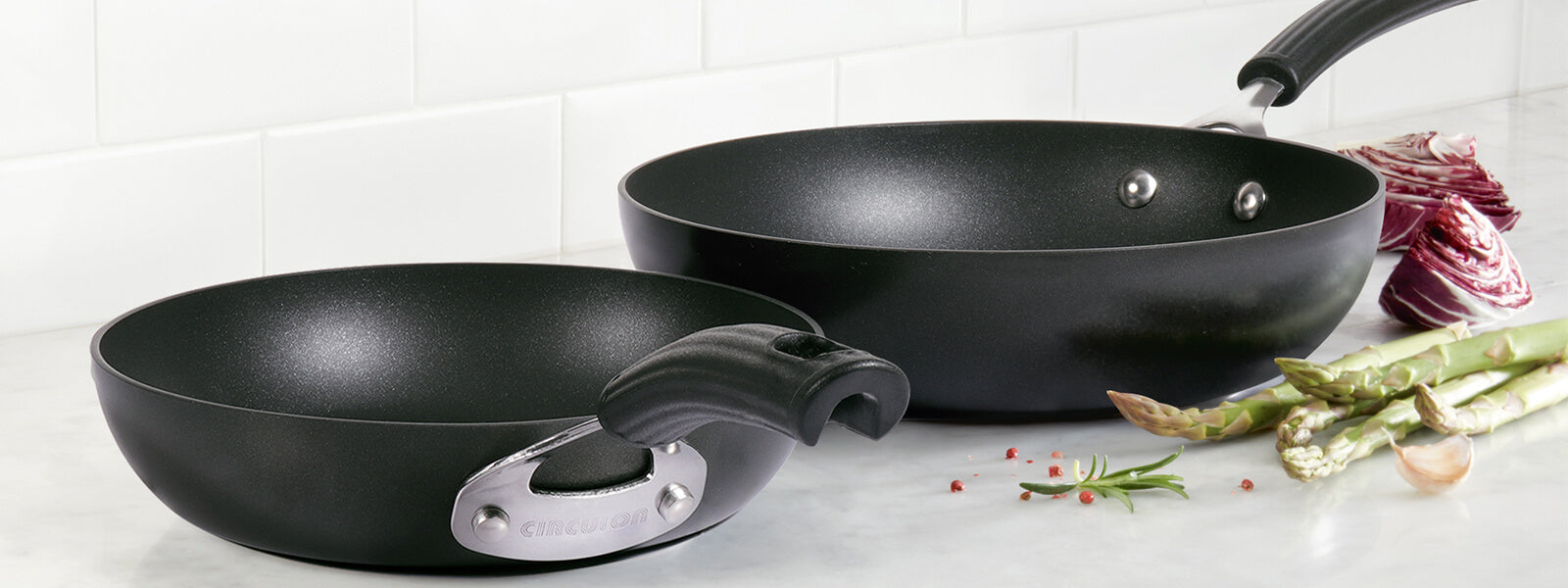
Modern non-stick pans, such as Meyer Anzen, are engineered to allow food to cook evenly with minimal oil. Because ingredients do not adhere aggressively to the surface, oil becomes optional rather than mandatory for protection.
In low oil Indian cooking, cookware choice directly affects oil usage.
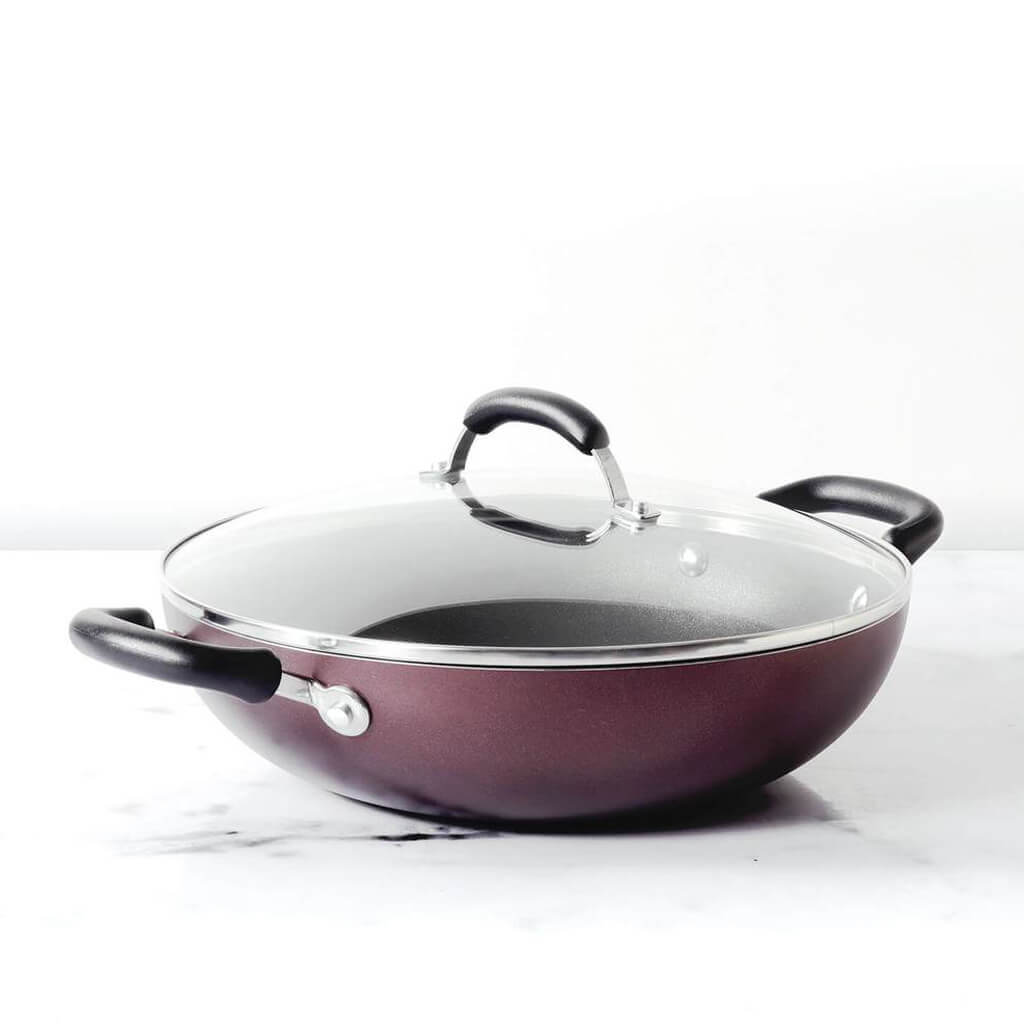
Meyer Merlot Non-Stick Open Frypan, 26cm
How Much Oil Is Actually Needed?
For most everyday Indian recipes, one to two teaspoons of oil is sufficient when using a good non-stick pan.
For example:
A dry vegetable sabzi typically requires just one to two teaspoons of oil for sautéing spices and coating vegetables.
Dal requires minimal oil during simmering. Only one to two teaspoons are needed for tadka.
Even paneer or mushroom stir-fries can cook beautifully with minimal oil if the pan is heated properly and not overcrowded.
In many cases, oil usage can be reduced by 30 to 50 percent without affecting flavor.
Techniques for Successful Low Oil Indian Cooking
1. Control the Heat
High heat is often unnecessary. Cooking at medium temperature allows spices to bloom and vegetables to soften without burning. Excessive heat can cause sticking, which leads people to add more oil unnecessarily.
2. Do Not Overcrowd the Pan
Overcrowding traps moisture unevenly and increases the chance of sticking. Give vegetables space to cook properly.
3. Use Natural Moisture
Many vegetables release water during cooking. Covering the pan for a few minutes allows steam to assist in cooking, reducing the need for oil.
4. Bloom Spices Efficiently
For tadka, heat oil gently before adding mustard seeds, cumin, garlic, or curry leaves. Proper blooming extracts flavor even in small quantities of oil.
5. Stir Smartly
Gentle stirring prevents sticking without scraping aggressively. Non-stick surfaces allow easy movement of ingredients.
Common Indian Dishes That Work Well with Low Oil Cooking
Low oil Indian cooking works exceptionally well for everyday home meals.
Dry sabzis like bhindi, beans, cabbage, carrot peas, and aloo gobi require minimal oil in non-stick cookware.
Lentil dishes such as moong dal, masoor dal, and toor dal need only a small quantity of oil for tempering.
Upma, poha, and vegetable pulao can also be prepared with significantly less oil by sautéing ingredients gently and allowing steam to finish cooking.
Even parathas can be made with controlled oil application instead of heavy greasing.
Does Low Oil Indian Cooking Affect Taste?
One of the biggest myths is that less oil means less flavor.
In reality, flavor in Indian cuisine primarily comes from spices, herbs, onions, ginger, garlic, and proper cooking technique. Oil helps carry these flavors, but excessive oil does not increase taste proportionally.
When spices are heated correctly, even in a small amount of oil, they release their essential oils and aroma effectively.
Low oil Indian cooking actually allows the natural flavors of ingredients to shine without being masked by greasiness.
Health Benefits of Low Oil Indian Cooking
Reducing oil consumption can have measurable health benefits over time.
Lower fat intake contributes to improved cardiovascular health. It helps manage cholesterol levels and reduces unnecessary calorie consumption. For those aiming for weight loss or metabolic balance, controlling oil intake makes a meaningful difference.
Low oil Indian cooking also promotes mindful eating. Instead of focusing on richness, it encourages appreciation of authentic spice blends and ingredient quality.
Mistakes to Avoid in Low Oil Cooking
Trying to eliminate oil completely can make food dry and unappetizing. Oil is still essential for blooming spices and enhancing mouthfeel. The goal is reduction, not elimination.
Another mistake is cooking on very high heat. High temperatures cause sticking and burning, which tempts cooks to add more oil.
Using poor-quality cookware can also make low oil Indian cooking difficult. If food sticks frequently, oil usage naturally increases.
Finally, neglecting proper cleaning and maintenance of cookware reduces its performance, making low oil cooking harder over time.
Creating a Sustainable Low Oil Kitchen
Low oil Indian cooking works best when it becomes a habit rather than a temporary diet strategy.
Start by measuring oil instead of pouring directly from the bottle. Use teaspoons to stay mindful.
Choose cookware designed for low-oil performance.
Cook at moderate heat.
Focus on technique instead of quantity.
Over time, your palate adjusts, and heavily oiled food may start to feel unnecessarily rich.
The Future of Low Oil Indian Cooking
As health awareness grows, low oil Indian cooking is becoming more mainstream rather than niche. With advancements in cookware technology and better understanding of nutrition, households are finding it easier to maintain traditional flavors while reducing fat intake.
Modern kitchens are evolving to support smarter, cleaner cooking methods without sacrificing cultural authenticity.
Final Thoughts
Low oil Indian cooking is not about compromising tradition. It is about refining technique, choosing the right cookware, and being intentional with ingredients.
With proper heat control, mindful oil usage, and quality non-stick cookware, most everyday Indian dishes can be prepared with one to two teaspoons of oil.
The result is food that tastes authentic, feels lighter, and supports long-term health.
Low oil Indian cooking is not a trend. It is a practical, sustainable approach to enjoying the richness of Indian cuisine in a healthier way.
MORE FROM BLOG
Top Collections
Best Non-Stick Cookware Sets For Your Kitchen
2 Items
Best Non Stick Dosa Tawa For Daily Cooking
2 Items
Best Non Stick Roti Tawa Price: Cookware For Everyone
2 Items
Can Cast Iron cookware surface become Non-stick?
2 Items
Choosing Between Stainless Steel and Non-Stick Frying Pans
2 ItemsFrom Our Shop


Leave a comment