



Gas stoves are the backbone of most Indian kitchens — valued for instant flame control, quick temperature changes, and flexibility across a wide range of cooking styles. From high-heat tadka and stir-fry to slow-simmered curries and dals, gas burners accommodate the full spectrum of Indian cooking techniques.
However, not all cookware performs equally well on a gas stove. The open flame, high temperatures, and frequent temperature changes mean that cookware must be:
- Thermally responsive
- Even-heating
- Durable
- Stable on the burner
- Heat resistant without warping
Choosing the right cookware optimises heat transfer, preserves flavor, improves energy efficiency, and even reduces overall cooking time — especially in busy households where meals are prepared daily.
Table of Contents
- 1. Tri-Ply/ Multi-Layer Cookware
- 2. Cast Iron
- 3.Aluminium Cookware
- 4. Stainless Steel Cookware
- 5. Non-Stick Cookware
- 6. Handles, Lids, and Ergonomics for Gas Cooking
- 7. Avoiding Common Mistakes With Gas Cookware
- 8. How to Maintain Cookware for Longer Life on Gas Stoves
- 9. Quick Buying Checklist for Gas Stove Cookware
- 10. Conclusion
Tri-Ply/ Multi-Layer Cookware: The All-Round Gas Stove Champion
Why It Works Well on Gas
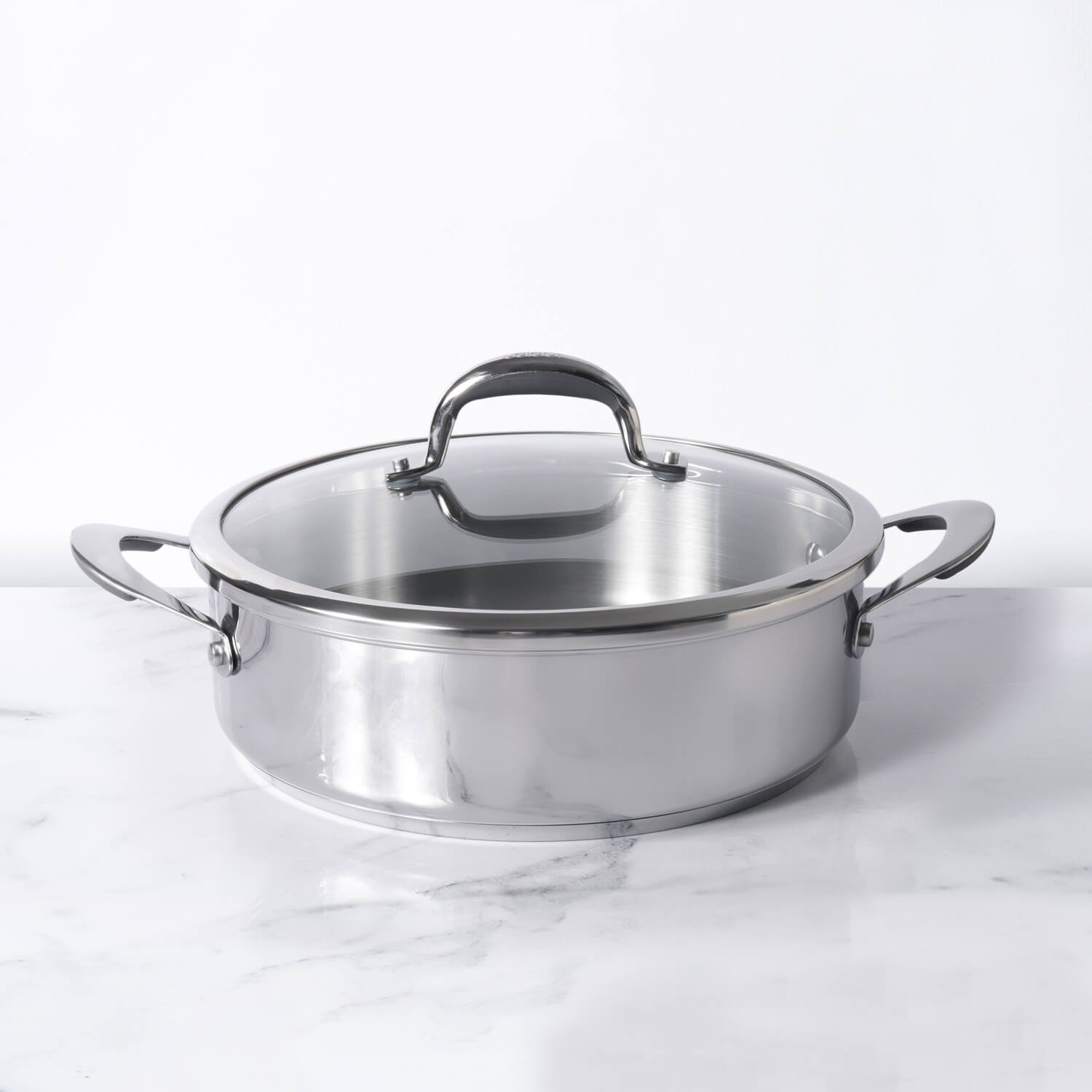
Tri-ply or multi-layer cookware is widely regarded as the best choice for gas stoves.
How it’s constructed:
- Aluminium or copper core for excellent heat conduction
- Sandwiched between stainless steel layers for durability and non-reactivity
This layered design ensures:
-
Fast and even heat distribution
-
Minimal hot spots
-
Stable temperatures even when flames fluctuate
-
Efficient fuel usage
For Indian cooking — where starters often begin with a hot tadka and quickly simmer into curries — this responsiveness is essential.
Common Gas Stove Applications
Tri-ply cookware is great for:
-
Everyday sabzi and curries
-
Boiling rice or dal
-
Shallow frying
-
One-pot meals
Its versatility makes it a smart choice for small and large households alike.

Cast Iron: Excellent for Slow Cooking and Heat Retention
Benefits on Gas Burners
Cast iron may be heavier than other materials, but it offers:
- Outstanding heat retention
- Deep, even cooking once it’s heated
- Ideal for dishes that benefit from gentle, sustained heat
When cooking Indian dishes like:
- Slow-cooked curries
- Biryanis
- Dal makhani
- Braised vegetables
Cast iron ensures consistent results, even with long cooking durations.
Seasoned Vs. Enamelled Cast Iron
-
Pre-seasoned cast iron develops a natural non-stick layer over time
-
Enamelled cast iron provides a smooth, non-reactive surface that resists rust and is easier to maintain
Both versions perform well on gas, though enameled cast iron is slightly easier for daily maintenance.
Meyer Non Stick Edge-less Flat Tawa, 30 cm
Aluminium Cookware: Fast Heating but Choose Quality
Pure aluminium heats rapidly — faster than most metals — which can be beneficial for quick cooking.
Pros
- Quick heat conduction
- Lightweight
- Affordable
Cons on Gas
-
Tends to warp under high flame
-
Can react with acidic foods unless anodised or coated
Best Practice
Opt for hard-anodised aluminium or aluminium core within layered cookware rather than bare aluminium. Hard-anodised aluminium resists corrosion and surface degradation better under frequent gas flame exposure.
Stainless Steel Cookware: Safe, Non-Reactive, and Durable
Why It’s a Good Choice
Stainless steel itself is not the most efficient heat conductor, but when combined with a thick base or bonded layers, it performs very well on gas.
Advantages:
-
Non-reactive with acidic foods (tomato, tamarind)
-
Doesn’t rust easily
-
Easy to clean and maintain
-
Durable and long-lasting
Limitations
- Can develop hot spots if the base is too thin
- Requires pre-heating and proper oiling to prevent sticking
This makes multi-layer stainless steel cookware (with aluminium or copper core) a better choice than single-layer stainless steel for gas cooking.
Non-Stick Cookware: Useful, But With Caution
When It Works
Modern non-stick cookware (especially PFOA-free and high-quality ranges) performs well for:
- Low to moderate heat cooking
- Quick sautéing
- Light frying
- Reheating leftovers
Non-stick surfaces make stir-frying and shallow frying easier with less oil and faster cleanup.
Cautions on Gas
-
Aluminum non-stick pans that are thin can warp
-
Non-stick coatings can degrade at very high heat
-
Overheating empty pans shortens their life
Best Practice
Choose heavy-gauge non-stick cookware with strong bases designed to handle gas stove flame, and always use medium to low flame with non-stick cookware.
Handles, Lids, and Ergonomics for Gas Cooking
When choosing cookware for gas, don’t forget:
- Heat-resistant handles: Stay cool longer and prevent burns
- Large, sturdy lids: Trap heat and moisture for faster cooking
- Flat, stable bases: Ensure good contact with burners
- Stackable design: Saves space in small kitchens
Cookware that sits evenly on the burner transfers heat more efficiently and avoids uneven cooking or long waiting times.
Avoiding Common Mistakes With Gas Cookware
Not all cookware performs equally on open flame. Here’s what to avoid:
Don’t Choose Very Thin Pans
Thin metal warps easily on high flame and heats unevenly.
Beware of Low-Quality Coatings
Cheap non-stick or poorly applied layers can peel or degrade quickly.
Avoid Reactive Metals
Bare aluminum or copper without lining can react with acidic foods.
Don’t Ignore Flat Bases
Rounded or warped bottoms waste heat and prolong cooking time.
How to Maintain Cookware for Longer Life on Gas Stoves
Proper care helps cookware last longer and perform better:
-
Preheat properly before adding ingredients
-
Season carbon steel or cast iron regularly
-
Avoid thermal shock (don’t add cold water to a hot pan)
-
Use appropriate utensils (wood, silicone, or gentle metal)
-
Clean promptly after use rather than letting residue bake on
Regular maintenance keeps cookware responsive and safe under frequent gas flame use.
Quick Buying Checklist for Gas Stove Cookware
Use this checklist to choose wisely:
-
Material: Prefer tri-ply stainless steel, cast iron, or heavy non-stick
-
Base: Thick, flat, contact-optimised base
-
Handles: Cool-touch or sturdy riveted handles
-
Lid: Tight-fitting and heat-resistant
-
Size: Match cookware size to burner size
-
Maintenance: Easy to clean and durable construction
-
Brand Quality: Trusted manufacturing standards
Cookware that ticks these boxes works efficiently with gas stoves and supports everyday cooking.
Conclusion
Gas stoves remain a favourite in Indian homes due to instant flame control, adaptability, and familiarity. However, not all cookware suits this environment equally. The best cookware for gas stoves must:
- Transfer heat quickly and evenly
- Maintain temperature with minimal fuel
- Resist warping and corrosion
- Be safe with acidic and spice-rich foods
- Fit the burner and your cooking style
Tri-ply stainless steel, well-made cast iron, enamelled cookware, quality non-stick, and traditional carbon steel tools are among the most suitable options. Each brings unique advantages — from everyday versatility to enhanced flavor development and durable performance.
Choosing the right cookware ensures:
-
Faster cooking
-
Better taste
-
Less fuel use
-
Longer product life
-
Easier maintenance
In essence, cookware for gas stoves should work with the flame — not just sit on it. With thoughtful selection, smart cooking techniques, and good maintenance, your gas stove can become a reliable, efficient centre of delicious home cooking for years to come.
MORE FROM BLOG
Top Collections
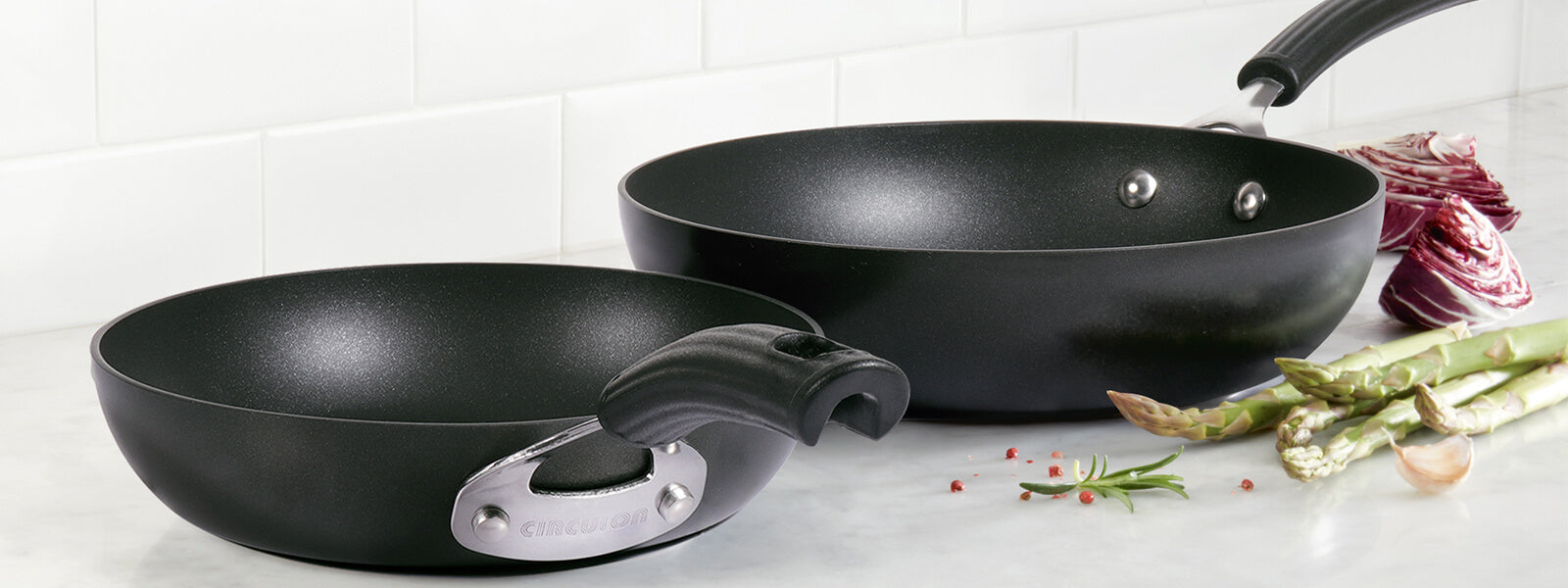
Best Non-Stick Cookware Sets For Your Kitchen
2 Items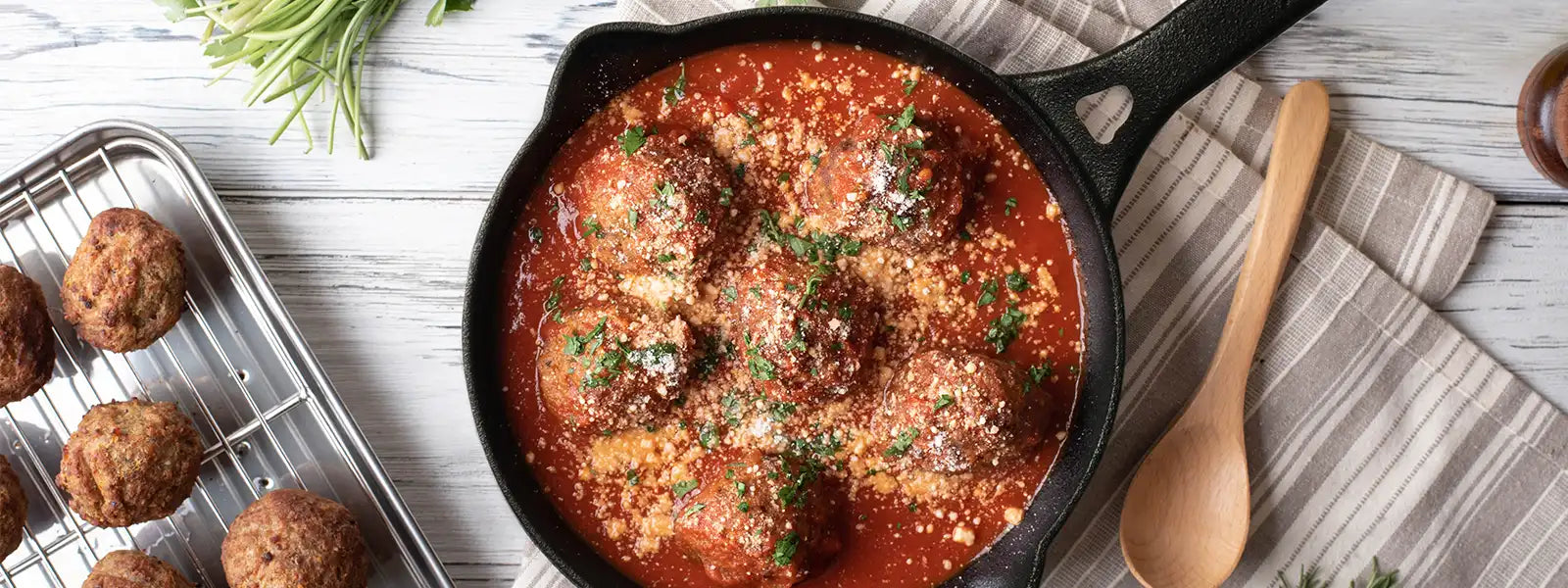
Cast iron cookware for Indian Curries
2 Items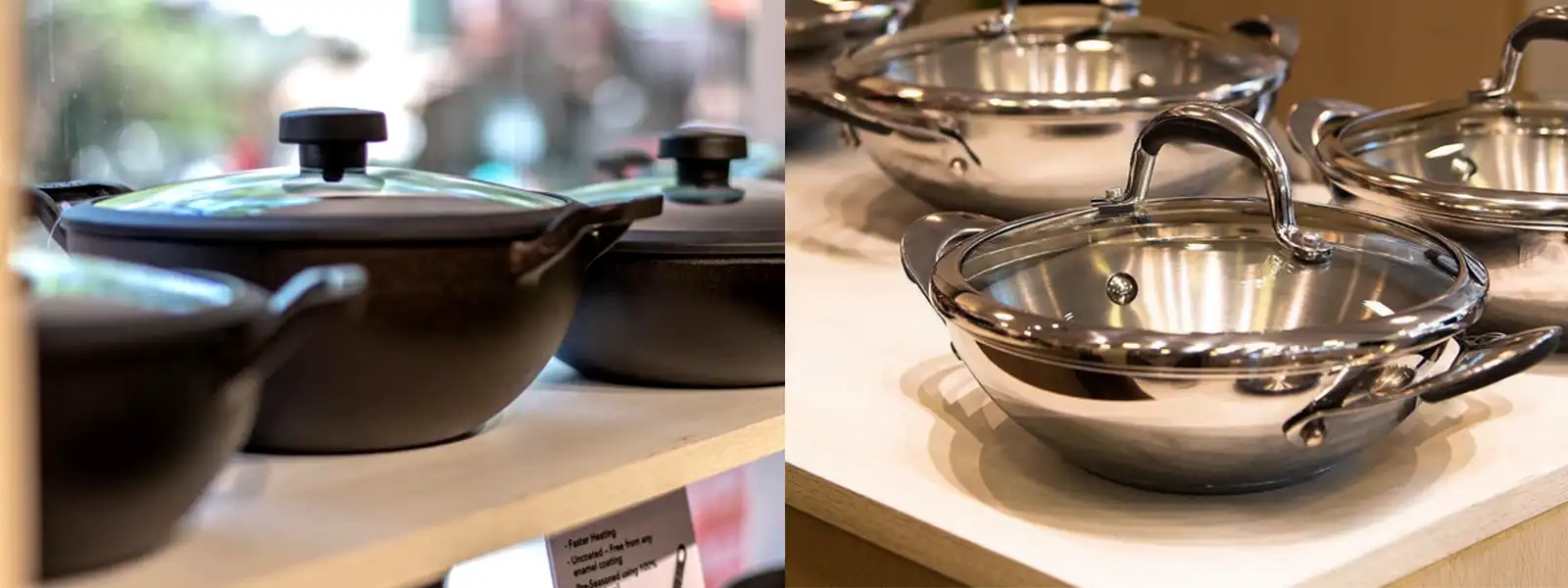
Cast Iron Vs Stainless Steel Cookware: Which one should you pick?
2 Items
How to Make Your Non-Stick Cookware Last Longer
2 Items
Nonstick Cookware: A Practical Solution for Health-Conscious Cooks
2 Items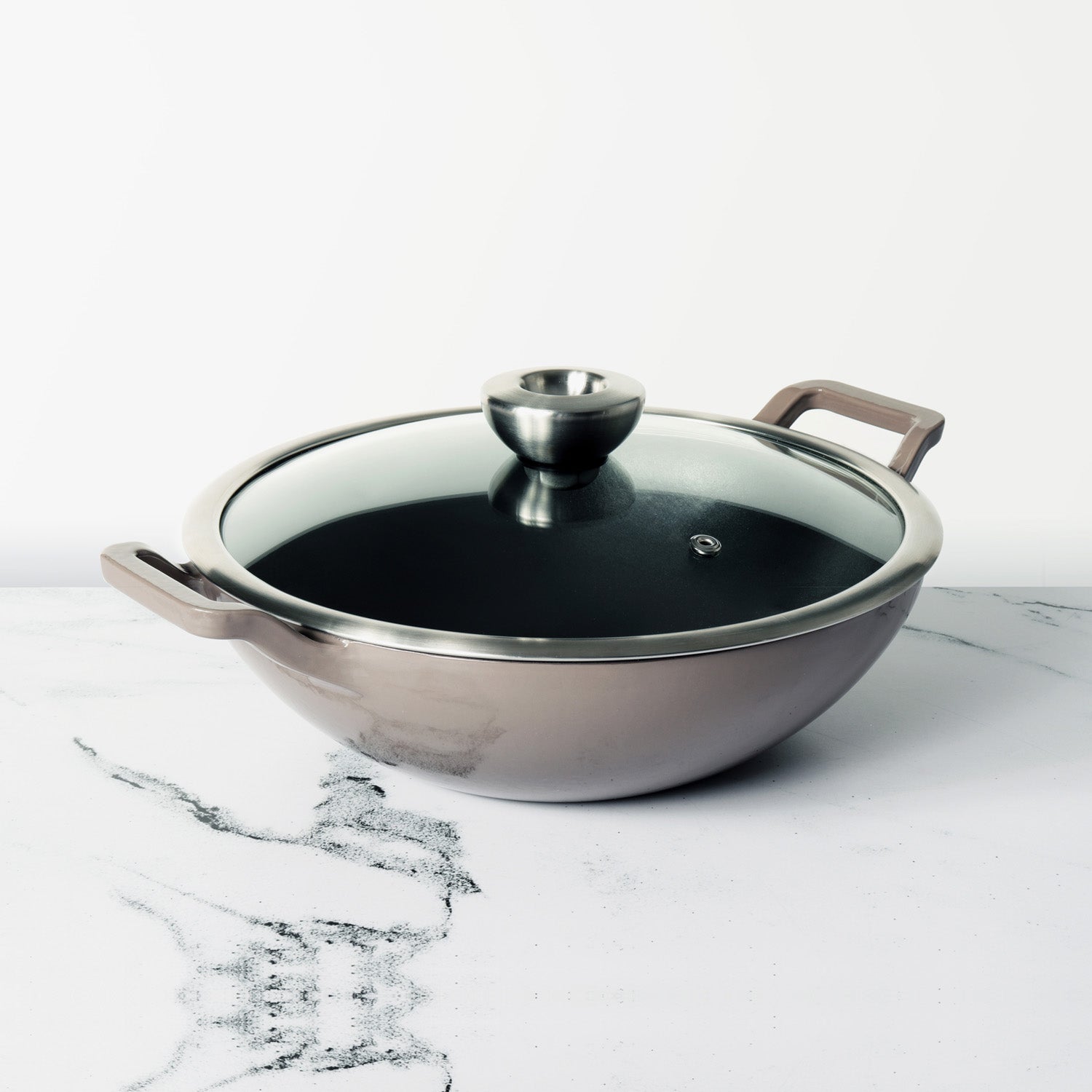


Leave a comment