



Indian cooking is layered, technique-driven, and deeply dependent on heat control. From slow-cooked dals and rich gravies to high-heat tadka and vegetable stir-fries, cookware plays a critical role in how flavours develop. This is why stainless steel cookware is increasingly considered one of the best choices for Indian kitchens.
When used correctly, stainless steel pans for Indian cooking offer unmatched control, hygiene, and versatility. This guide explains exactly how to cook Indian food successfully in stainless steel pans, while also helping you avoid common mistakes that lead to sticking or burning.
Table of Contents
Why Stainless Steel Cookware is Ideal for Indian Cooking
Indian recipes involve acidic ingredients, long cooking times, frequent stirring, and high-temperature tempering. Stainless steel cookware handles all of this effortlessly.
Key reasons stainless steel cookware works so well in Indian kitchens:
- It is non-reactive, making it safe for tomatoes, tamarind, curd, kokum, and lemon
- It provides excellent heat control for masala-based cooking
- It is hygienic, non-porous, and toxin-free
- It withstands daily cooking without chipping or coating damage
Premium tri-ply stainless steel cookware, such as Meyer stainless steel cookware, is especially effective because it distributes heat evenly and responds quickly to flame adjustments—two essentials for Indian cooking.

Tips to Cook Indian Food in Stainless Steel Pans
Step 1: Preheat the Stainless Steel Pan Correctly
Preheating is the single most important rule when using stainless steel pans for Indian cooking.
How to preheat properly:
-
Place the pan on medium heat for 1–2 minutes
-
Sprinkle a few drops of water onto the surface
-
If the water forms small beads and moves around, the pan is ready
Once preheated, add oil and allow it to warm slightly before adding ingredients. This creates a natural non-stick effect and prevents food from clinging to the surface.
This technique is crucial for tadka, sautéing onions, paneer cooking, and vegetable sabzis.
Step 2: Add Oil at the Right Time
Adding oil to a cold pan or overheated pan is a common mistake.
Best practice:
-
Heat the stainless steel pan first
-
Add oil only after preheating
-
Allow the oil to shimmer gently before adding spices or vegetables
This ensures cumin seeds crackle evenly, mustard seeds pop correctly, and aromatics cook without burning.
Step 3: Control Heat for Indian Recipes
Indian food does not require high heat throughout the cooking process.
Use heat wisely:
- Medium heat for onions, ginger-garlic paste, and masala bases
- Medium-low heat for dals, gravies, and slow cooking
- Brief high heat only for tempering or roasting whole spices
Stainless steel cookware responds quickly to heat changes, giving you better control than nonstick or aluminium cookware.
Step 4: Let Food Release Naturally
If food sticks, it usually means it is not ready to be moved.
Examples:
- Paneer releases after forming a light crust
- Vegetables loosen after caramelisation
- Proteins release once properly cooked
Avoid stirring too frequently. Stainless steel pans reward patience with better texture and deeper flavour.
Step 5: Cooking Onion-Tomato Masala in Stainless Steel
The onion-tomato base is the heart of most Indian curries. Stainless steel cookware allows you to see colour changes clearly, preventing undercooked or burnt masalas.
Correct method:
-
Preheat pan and add oil
-
Add whole spices like cumin, bay leaf, cloves, or cardamom
-
Add onions and cook until golden, not pale
-
Add ginger-garlic paste and sauté until raw aroma disappears
-
Add tomatoes and cook until oil separates
Proper masala cooking enhances flavour and prevents acidity or bitterness.
Step 6: Handling Acidic Ingredients Safely
Stainless steel cookware is completely non-reactive, making it ideal for:
-
Tomato-based gravies
-
Tamarind rasam and sambhar
-
Curd-based curries
-
Lemon and vinegar finishing
Cook acidic ingredients on medium heat and allow them to reduce properly to avoid sticking and enhance taste.
Step 7: Healthier Cooking with Less Oil
When used correctly, stainless steel pans require less oil than commonly assumed.
Tips:
-
Use a thin, even layer of oil
-
Rely on proper temperature rather than excess fat
-
Food absorbs less oil at optimal heat levels
This makes stainless steel cookware a healthier choice for everyday Indian meals.
Step 8: Deglazing for Better Flavour
If masala sticks slightly to the bottom:
- Add a splash of water, stock, or tomato purée
- Gently scrape with a spatula
Deglazing lifts flavourful browned bits, prevents burning, and enriches gravies and dals.
Step 9: Choose the Best Stainless Steel Cookware in India
Not all stainless steel cookware performs equally.
Look for:
-
Tri-ply or multi-ply stainless steel construction
-
Thick aluminium or steel core
-
Flat base for even heat contact
High-quality options like Meyer tri-ply stainless steel cookware are designed specifically for Indian cooking styles, offering durability, even heating, and superior control.
Step 10: Cleaning and Maintenance
Proper cleaning keeps stainless steel pans performing at their best.
Cleaning tips:
-
Allow the pan to cool before washing
-
Soak briefly if food residue remains
-
Use warm water and mild dish soap
-
Avoid harsh abrasives for daily use
A clean surface improves cooking performance and longevity.
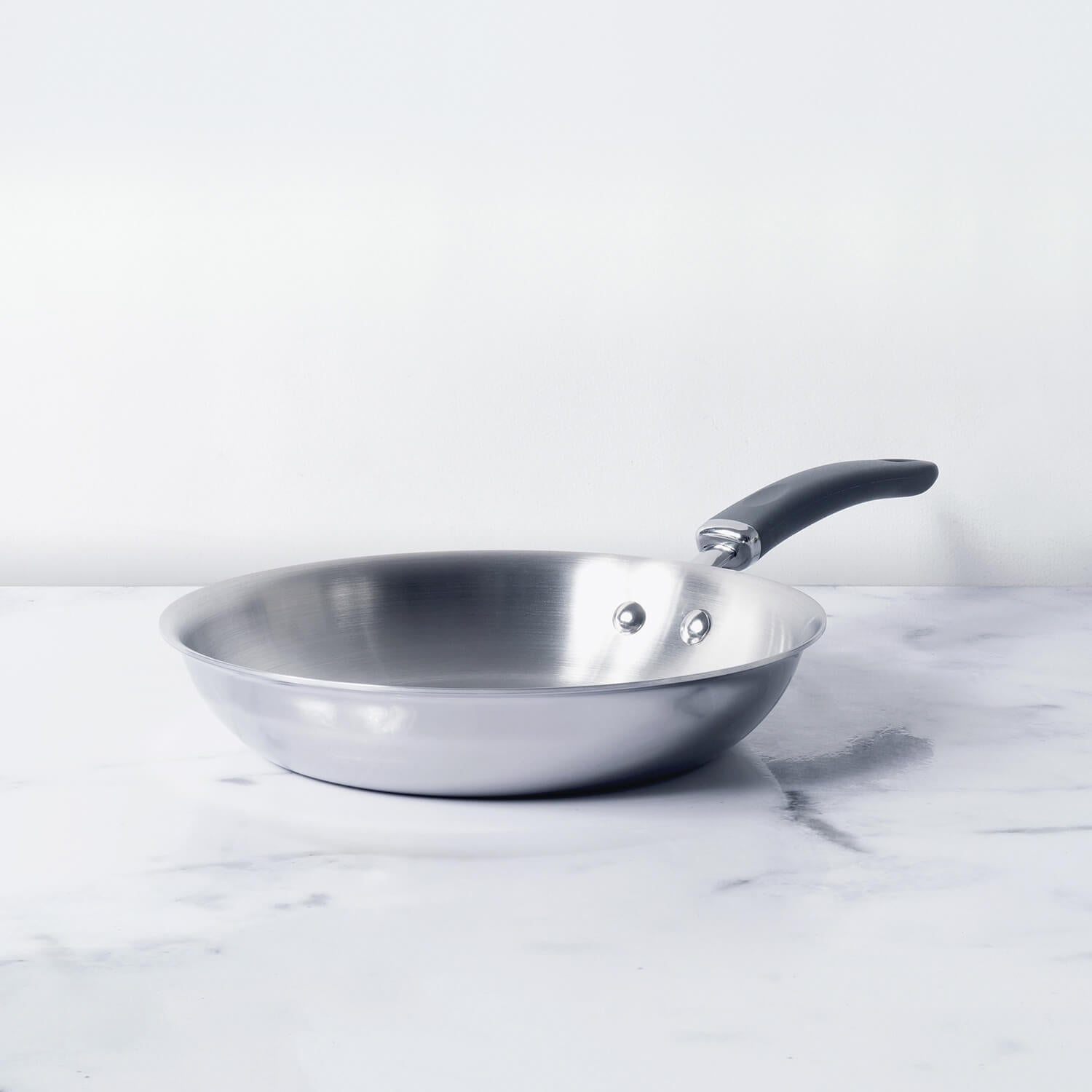
Meyer Trivantage Stainless Steel Triply Cookware Open Frypan, 28cm
Common Mistakes to Avoid
-
Skipping preheating
-
Cooking everything on high flame
-
Stirring constantly
-
Using thin stainless steel cookware
-
Adding food to cold oil
Avoiding these mistakes dramatically improves results.
Conclusion
Stainless steel cookware offers unmatched control, hygiene, and durability for Indian kitchens. Once you master preheating, heat control, and timing, stainless steel pans become one of the most dependable tools for Indian cooking.
For anyone searching for the best stainless steel cookware in India, tri-ply stainless steel pans deliver professional-level performance with long-term reliability.
MORE FROM BLOG
Top Collections

Can Stainless Steel Cookware Last for Decades?
2 Items
How Does Stainless Steel Cookware Handle High Heat in Indian Cooking?
2 Items
How does stainless steel cookware improve cooking control?
2 Items
Is stainless steel cookware suitable for all Indian recipes?
2 Items
Is Stainless Steel Good for Daily Indian Cooking?
2 Items
Why Do Professional Indian Kitchens Use Stainless Steel Cookware?
2 Items
Why is stainless steel cookware considered hygienic?
2 Items


Leave a comment