



When choosing cookware for Indian kitchens, one question consistently appears in online searches: Why does stainless steel cookware not react with food? With Indian recipes relying heavily on acidic ingredients such as tomatoes, tamarind, curd, lemon juice, vinegar, and fermented batters, cookware safety becomes just as important as performance.
Stainless steel cookware is widely regarded as one of the safest and most reliable options for Indian cooking. Its non-reactive nature makes it ideal for daily use, long cooking hours, and pressure cooking. But what exactly makes stainless steel cookware non reactive? The answer lies in material science, design, and quality.
Table of Contents
- 1. What Is Non Reactive Cookware and Why Does It Matter?
- 2. The Science Behind Why Stainless Steel Does Not React With Food
- 3. Why Stainless Steel Cookware Is Ideal for Acidic Indian Dishes
- 4. Taste Neutrality
- 5. Stainless Steel Cookware and Food Safety
- 6. Non-Porous Surface and Hygiene Benefits
- 7. Performance Under High Heat and Pressure Cooking
- 8. Stainless Steel vs Other Cookware Materials
- 9. Importance of Choosing High-Quality Stainless Steel Cookware
- 10. Conclusion
What Is Non Reactive Cookware and Why Does It Matter?
Non reactive cookware refers to cookware materials that do not chemically interact with food during cooking. Reactive cookware, such as bare aluminum or copper, can react with acidic or alkaline ingredients, causing metal leaching, colour changes, and metallic taste.
In contrast, stainless steel cookware does not react with acidic foods. This makes it suitable for Indian dishes like tomato gravies, tamarind-based sambars, curd curries, and vinegar-rich Indo-Chinese sauces. Using non reactive cookware helps preserve taste, nutrition, and food safety.
This is one of the primary reasons stainless steel cookware is recommended for Indian kitchens and professional restaurants alike.

The Science Behind Why Stainless Steel Does Not React With Food
Stainless steel is an alloy made from iron combined with chromium and, in some grades, nickel. The key element that makes stainless steel cookware non reactive is chromium.
Chromium reacts with oxygen to form a thin, invisible protective layer on the surface of the cookware known as a passive oxide layer. This layer prevents moisture, acids, and salts from reaching the metal underneath. Even if the surface gets scratched or exposed to high heat, the protective layer regenerates naturally.
Because of this self-healing barrier, stainless steel cookware remains chemically stable and does not release metals into food. This is why stainless steel is considered safe for cooking acidic Indian food.
Meyer Select Stainless Steel Straining Saucepan 18cm
Why Stainless Steel Cookware Is Ideal for Acidic Indian Dishes
Indian cooking uses acidity not just occasionally, but daily. Tomatoes are slow-cooked into masalas, tamarind is boiled in dals, curd is simmered into kadhi, and lemon juice is added to tempering and rice dishes.
Stainless steel cookware handles all these acidic ingredients without reacting, even during long simmering or pressure cooking. There is no risk of metallic taste, discoloration, or chemical interaction.
Premium cookware brands like Meyer stainless steel cookware are designed specifically for such cooking conditions, making them ideal for Indian households that cook from scratch every day.
Taste Neutrality: A Key Benefit of Stainless Steel Cookware
One major advantage of non reactive stainless steel cookware is its ability to remain taste-neutral. Reactive cookware can interfere with flavour, especially in sour dishes. Stainless steel allows ingredients to cook exactly as intended.
Spices bloom cleanly, tomatoes reduce into rich gravies, and curd-based sauces remain smooth and balanced. This is essential for authentic Indian cooking, where flavour layering is crucial.
Meyer stainless steel cookware is engineered to preserve the original taste of ingredients, ensuring that your food tastes the way it should—pure, balanced, and authentic.
Stainless Steel Cookware and Food Safety
Food safety is one of the biggest reasons people switch to stainless steel cookware. Unlike coated cookware that may degrade over time, stainless steel does not peel, flake, or release toxins when heated.
High-quality stainless steel cookware is approved worldwide for commercial kitchens because it is safe, durable, and hygienic. It does not react with acidic food, does not absorb flavours, and does not harbour bacteria.
Meyer stainless steel cookware uses food-grade materials that are toxin-free, making it a safe choice for everyday Indian cooking, especially for families and health-conscious consumers.
Non-Porous Surface and Hygiene Benefits
Another reason stainless steel cookware does not react with food is its non-porous surface. Porous cookware can absorb acids, oils, and spices, leading to lingering odours and stains.
Stainless steel has a smooth, sealed surface that resists absorption. Even after cooking strong-smelling dishes like fish curry, garlic-heavy gravies, or vinegar-based sauces, stainless steel cookware can be cleaned thoroughly without residue.
This makes stainless steel cookware one of the most hygienic options for Indian kitchens.
Performance Under High Heat and Pressure Cooking
Indian cooking often involves high heat, tadka cooking, and pressure cooking. Some cookware materials struggle under these conditions, especially when acidic ingredients are involved.
Stainless steel cookware remains stable under high temperatures and pressure. Products like the Meyer Presta stainless steel pressure cooker are designed to handle acidic dals, tomato-based curries, and long cooking cycles without reacting with food.
This makes stainless steel cookware suitable for both traditional and modern Indian cooking methods.
Stainless Steel vs Other Cookware Materials
Compared to aluminum cookware, stainless steel is far safer for acidic food cooking. Aluminum reacts with acids and can leach into food. Nonstick cookware may initially be non reactive, but once coatings wear out, performance and safety decline.
Cast iron cookware, while excellent for many recipes, can react with acidic dishes and alter taste if used frequently for sour foods.
Stainless steel cookware offers the best balance of safety, durability, taste neutrality, and versatility, making it one of the best cookware materials for Indian kitchens.
Importance of Choosing High-Quality Stainless Steel Cookware
Not all stainless steel cookware performs the same. Quality depends on alloy composition, thickness, and manufacturing standards. Low-quality steel may not offer the same long-term non-reactive performance.
Meyer stainless steel cookware is engineered using advanced technology and high-grade materials to ensure consistent, long-lasting non-reactive cooking. This makes it a smart investment for everyday Indian cooking.
Conclusion
Stainless steel cookware does not react with food because of its unique alloy composition and protective chromium oxide layer. This makes it one of the safest, most hygienic, and most reliable cookware materials available today.
For Indian cooking that involves acidic ingredients, spices, long simmering, and pressure cooking, stainless steel cookware delivers unmatched performance and peace of mind. Choosing premium options like Meyer stainless steel cookware ensures that your food remains safe, flavourful, and nutritionally intact—every single day.
MORE FROM BLOG
Top Collections
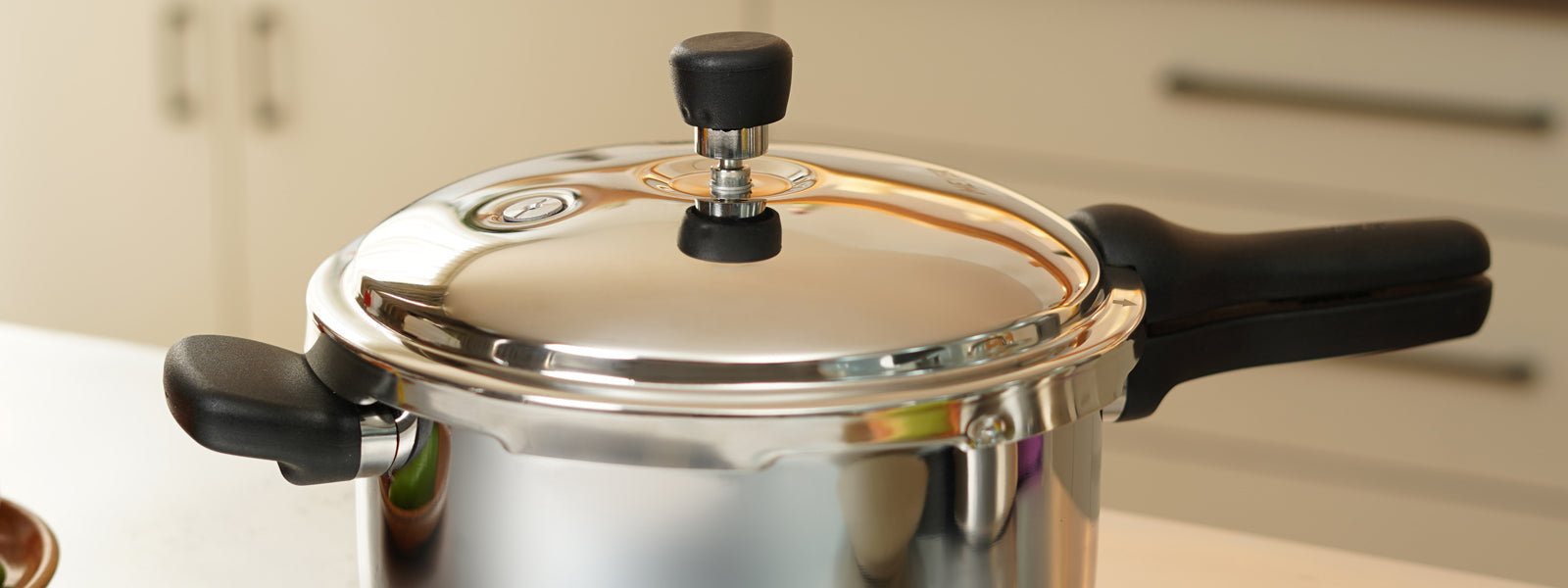
Advantages of a 2 Litre Stainless Steel Pressure Cooker
2 Items
Best Stainless Steel Kadai for Deep Frying
2 Items
Can stainless steel pan be used for Deep Frying?
2 Items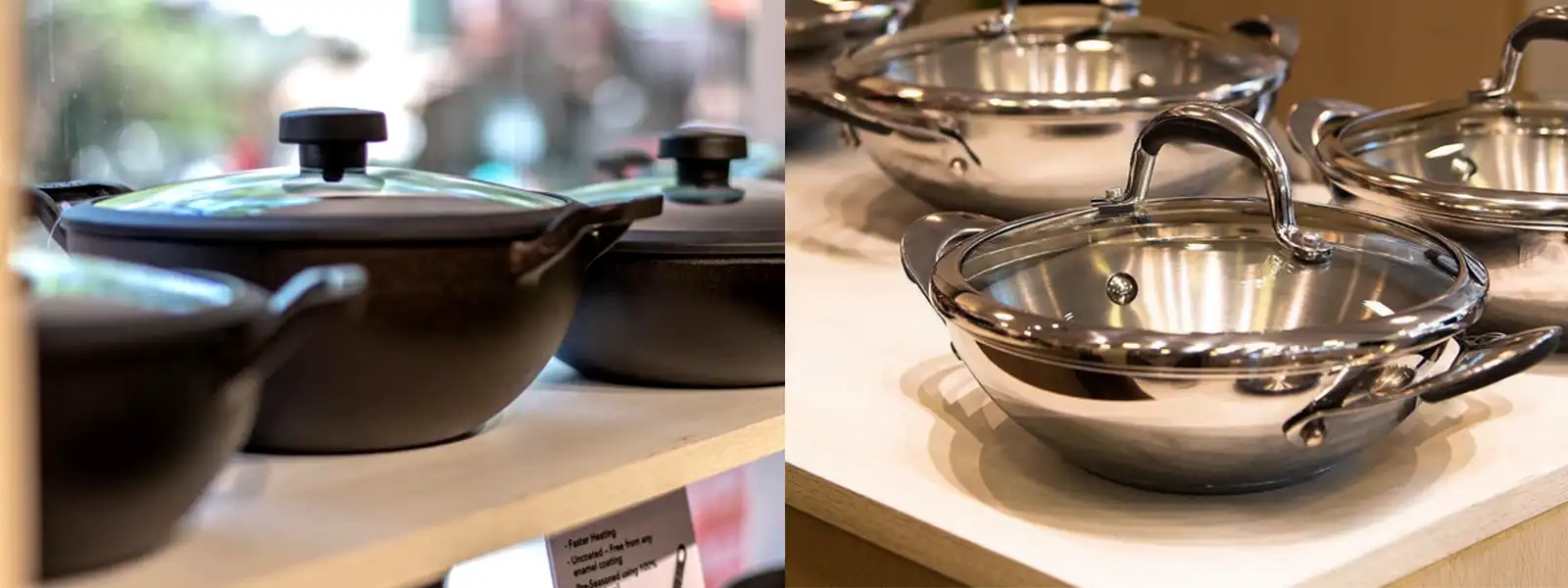
Cast Iron Vs Stainless Steel Cookware: Which one should you pick?
2 Items
How does stainless steel cookware improve cooking control?
2 Items
Is stainless steel cookware suitable for all Indian recipes?
2 Items


Leave a comment