



Indian cooking is rich in flavor, technique, and diversity. From tempering spices and sautéing vegetables to simmering curries and preparing crispy snacks, every dish requires careful control of heat, ingredients, and cooking medium. Among these elements, oil plays a vital role. It enhances flavor, prevents sticking, and helps spices release their aroma. However, what many home cooks overlook is that the shape of cookware itself can significantly influence how much oil is needed during cooking.
While ingredients and recipes are important, the design and geometry of cookware—its base, depth, and curvature—directly affect how oil spreads, heats, and interacts with food. When cookware is thoughtfully designed, it allows oil to distribute more efficiently, helping cooks prepare delicious meals with less oil.
Understanding this relationship between cookware shape and oil usage can help households cook healthier meals while maintaining authentic Indian flavors.
Table of Contents
- 1. Why Oil Usage Matters in Indian Cooking
- 2. How Cookware Shape Influences Oil Distribution
- 3. Flat Pans and Their Impact on Oil Usage
- 4. Rounded Kadhais and Oil Concentration
- 5. Deep Pots and Oil Pooling
- 6. Sloped Sides and Ingredient Movement
- 7. Heat Distribution and Oil Behavior
- 8. Real-Life Examples from Indian Kitchens
- 9. Additional Advantages of the Right Cookware Shape
- 10. Practical Tips for Reducing Oil Usage
- 11. Conclusion
Why Oil Usage Matters in Indian Cooking
Oil has always been an essential component in Indian cuisine. It acts as a medium for cooking spices, enhances texture, and contributes to the overall taste of a dish. However, modern kitchens increasingly focus on balanced oil usage for healthier cooking habits.
Excess oil can make dishes heavy and mask natural flavors, while insufficient oil may cause food to stick or cook unevenly. The key is achieving the right balance—and cookware design plays an important role in achieving that balance.
The amount of oil required during cooking often depends on:
-
Surface area of the cookware
-
Depth of the vessel
-
Curvature of the sides
-
Heat distribution across the base
-
Type of dish being prepared
When cookware allows oil to spread evenly and interact efficiently with ingredients, it naturally reduces the need for excessive oil.

How Cookware Shape Influences Oil Distribution
When oil is added to cookware, it responds to heat and gravity. It spreads across the cooking surface and coats ingredients as they cook. The shape of the vessel determines whether oil spreads thinly or collects in concentrated areas.
Three primary structural features influence oil usage.
Base Width
Cookware with a wider base allows oil to spread into a thin, even layer. This thin coating helps ingredients cook evenly without requiring additional oil.
Depth
Deeper cookware may require slightly more oil depending on the cooking method. However, it is ideal for recipes that include liquids, where oil becomes part of a larger cooking medium.
Side Curvature
Cookware with curved sides allows ingredients to move easily during stirring. This movement helps distribute oil more effectively around the food.
When these elements work together, they create an efficient cooking environment where minimal oil can still achieve excellent results.
Flat Pans and Their Impact on Oil Usage
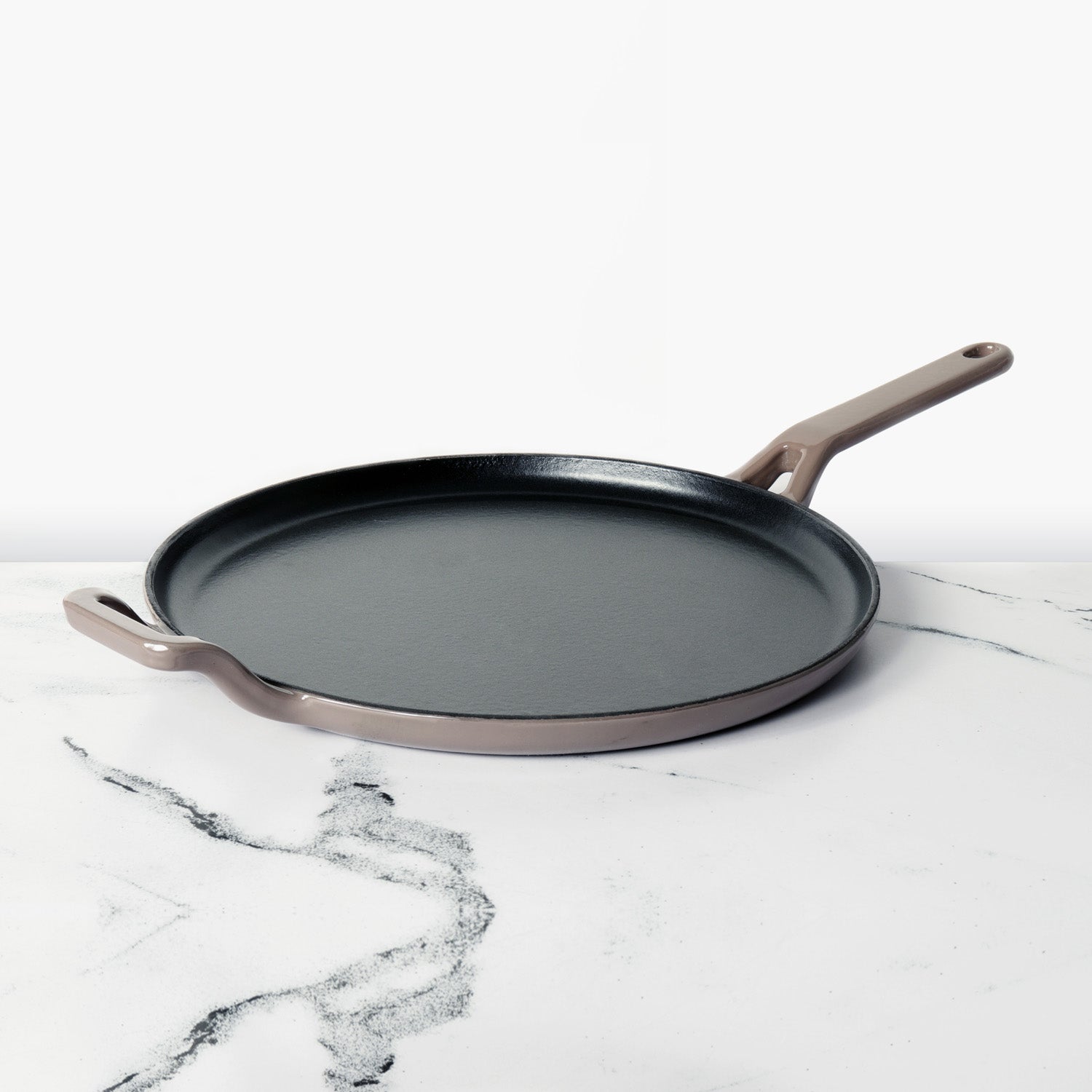
Flat cookware such as frypans and tawas typically has a broad cooking surface with low sides. This design allows oil to spread evenly across the base.
Because of the large surface area, only a small amount of oil is required to coat the entire pan. Once heated, the oil forms a thin film that helps ingredients cook without sticking.
Flat pans are especially useful for dishes such as:
-
Omelettes
-
Cheela and pancakes
-
Egg bhurji
-
Paneer sauté
-
Stir-fried vegetables
Since ingredients are cooked in a single layer, heat reaches them evenly and quickly. This prevents the need to add extra oil during cooking.
Rounded Kadhais and Oil Concentration
The traditional Indian kadai has a distinctive shape—rounded sides with a moderately narrow base. This design is highly efficient for many Indian cooking techniques.
When oil is added to a kadai, it naturally collects near the center of the base. Because the sides are curved, ingredients tend to slide back toward the middle while stirring. This allows the oil to remain concentrated around the food instead of spreading too thinly.
This design works particularly well for:
-
Dry sabzis
-
Paneer dishes
-
Bhindi fry
-
Mixed vegetables
-
Stir-fried masalas
Since oil gathers near the center where cooking occurs, less oil is needed to coat the ingredients effectively.
Curved sides also allow continuous stirring without ingredients sticking to sharp corners, which further reduces the need for extra oil.
Deep Pots and Oil Pooling
Deep cookware such as saucepans and stockpots serves a different purpose. These vessels have tall sides and narrower bases, which makes them ideal for cooking dishes that contain liquid.
In deep cookware, oil tends to settle at the bottom rather than spreading widely. However, this is not usually a problem because dishes cooked in these vessels typically contain water, stock, or gravy.
Examples include:
-
Dal
-
Curries
-
Soups
-
Rice dishes
-
Khichdi
In these preparations, oil is often used mainly for tempering spices rather than coating the entire cooking surface. The presence of liquid helps distribute heat and flavor throughout the dish.
For this reason, deep cookware is best suited for simmering and boiling rather than dry sautéing.
Sloped Sides and Ingredient Movement
Cookware with gently sloped sides improves ingredient movement during cooking. When ingredients move smoothly across the surface, oil can coat them more evenly.
This is especially useful for dishes that require constant stirring, such as:
-
Upma
-
Poha
-
Vegetable pulao
-
Paneer bhurji
-
Fried rice
The curved or sloped structure prevents food from getting trapped in corners. As a result, ingredients remain evenly coated with oil while cooking, reducing the need to add extra oil.
This design also allows for easier stirring and better heat circulation.
Heat Distribution and Oil Behavior
Cookware shape works closely with heat distribution to influence oil usage. If heat spreads unevenly across the cooking surface, oil may gather in certain areas while leaving other sections dry.
This uneven distribution can lead to burning in some spots and sticking in others, often prompting cooks to add more oil.
Cookware with thick bases and well-engineered construction helps maintain stable heat across the surface. When heat is evenly distributed, oil spreads uniformly and forms a thin cooking layer rather than pooling in isolated areas. This improves cooking efficiency and reduces the need for additional oil.
Real-Life Examples from Indian Kitchens
The impact of cookware shape becomes clearer when examining everyday cooking situations. When preparing a vegetable stir-fry in a wide frypan, the vegetables cook quickly with a thin layer of oil spread across the surface. The large base allows ingredients to cook evenly without overcrowding.
In contrast, when cooking bhindi in a rounded kadai, the vegetables remain near the center of the vessel while stirring. This ensures they stay coated with oil even if only a small quantity is used. Dal cooked in a deep saucepan requires minimal oil because the dish contains liquid. The oil added during tempering spreads naturally through the simmering lentils.
Similarly, parathas cooked on a flat tawa require only a thin coating of oil or ghee to achieve a crispy texture. These examples show how cookware shape supports efficient oil usage in different cooking techniques.
Additional Advantages of the Right Cookware Shape
Choosing cookware with thoughtful design offers benefits beyond reducing oil consumption.
Cooking becomes faster because ingredients receive even heat. Balanced heat exposure also improves texture, preventing vegetables from becoming soggy or overcooked.
Flavor balance improves when oil is used in the right proportion, allowing spices and natural ingredients to stand out.
Finally, cookware that uses less oil tends to leave less residue, making cleaning easier and quicker.
Practical Tips for Reducing Oil Usage
Even with the right cookware, simple cooking practices can further reduce oil consumption.
Preheating cookware before adding oil helps the oil spread more efficiently across the surface.
Cooking at moderate heat prevents oil from burning or collecting in certain areas.
Stirring ingredients regularly ensures they remain coated with oil without needing extra additions.
Matching cookware to the recipe is also important. Flat pans work best for dry cooking, while deeper pots are ideal for liquid-based dishes.
Avoiding overcrowding in the pan ensures ingredients cook evenly and do not require additional oil.
Conclusion
Oil is an important part of Indian cooking, but the amount required can vary significantly depending on the cookware being used. The shape of cookware—its base width, depth, and curvature—plays a major role in how oil spreads and interacts with food.
Flat pans allow thin oil layers for quick cooking, rounded kadhais help concentrate oil around ingredients, and deep pots support simmering dishes with minimal oil usage.
Understanding how cookware shape influences oil behavior helps home cooks make better choices in their kitchens. By selecting well-designed cookware suited to specific cooking methods, it becomes possible to prepare flavorful Indian meals while maintaining healthier oil consumption.
Thoughtful cookware design supports efficient cooking, better heat control, and balanced oil usage—helping households enjoy traditional recipes with improved cooking comfort and consistency.
MORE FROM BLOG
Top Collections
Cast iron cookware for Indian Curries
2 Items
Choosing the Right Non-Stick Cookware for Diwali Delights
2 Items
How Does Ceramic Cookware Prevent Food from Sticking Naturally?
2 Items
How Is Cast Iron Cookware Made?
2 Items
How Steel Cookware has replaced Aluminium Cookware in India 2022
2 Items


Leave a comment