



Many people associate seasoning with cast iron cookware, but did you know that you can also season a stainless steel pan? While stainless steel doesn't require seasoning in the same way as cast iron, creating a temporary, naturally slick cooking surface can help reduce sticking and improve your cooking experience—especially when preparing delicate foods.
If you've recently purchased a stainless steel pan or are switching from non-stick cookware, understanding how to season it properly can make all the difference.
Table of Contents
- 1. Do Stainless Steel Pans Need Seasoning?
- 2. What Does Seasoning a Stainless Steel Pan Do?
- 3. When Should You Season a Stainless Steel Pan?
- 4. How to Season a Stainless Steel Pan
- 5. Is Seasoning Necessary Every Time?
- 6. The Water Drop Test
- 7. Common Mistakes to Avoid
- 8. Why Triply Stainless Steel Makes Cooking Easier
- 9. Cook with Confidence Using Meyer TriVantage and Meyer TriVantage Pro
- 10. Caring for Your Stainless Steel Pan
- 11. Final Thoughts
Do Stainless Steel Pans Need Seasoning?
Unlike cast iron or carbon steel cookware, stainless steel pans do not require regular seasoning to protect them from rust or corrosion.
High-quality food-grade stainless steel is naturally durable, non-reactive, and resistant to rust. However, some home cooks choose to season their stainless steel pans occasionally to create a temporary cooking surface that can help reduce food sticking.
It's important to understand that this seasoning layer is not permanent. It gradually wears away with washing and regular cooking, so the process may need to be repeated if desired.
For most everyday cooking, proper preheating and the correct cooking technique are far more important than seasoning.

What Does Seasoning a Stainless Steel Pan Do?
Seasoning involves heating a thin layer of oil until it bonds lightly with the cooking surface.
This process can help:
-
Reduce sticking during cooking.
-
Improve food release for certain recipes.
-
Create a smoother cooking experience.
-
Enhance browning when used correctly.
Seasoning does not turn stainless steel into non-stick cookware, but it can make cooking certain foods easier.
When Should You Season a Stainless Steel Pan?
Seasoning may be useful if you:
-
Have purchased a new stainless steel pan.
-
Frequently cook eggs or pancakes.
-
Prepare delicate foods that tend to stick.
-
Want to create a temporary slick cooking surface.
For most everyday cooking—such as vegetables, curries, soups, dals, pasta, or stir-fries—seasoning is generally optional.
How to Season a Stainless Steel Pan
Seasoning a stainless steel pan is simple and takes just a few minutes.
Step 1: Wash the Pan Thoroughly
Before seasoning, wash the pan with warm water and mild dish soap to remove any manufacturing residue, dust, or oils. Dry it completely using a soft cloth.
Step 2: Heat the Pan
Place the empty pan over medium heat for two to three minutes. The pan should become hot but not excessively overheated.
Step 3: Add Oil
Add a small amount of cooking oil with a relatively high smoke point.
Some excellent choices include:
-
Groundnut oil
-
Rice bran oil
-
Sunflower oil
-
Avocado oil
Swirl the oil so it coats the entire cooking surface evenly.
Step 4: Heat Until the Oil Begins to Smoke Lightly
Allow the oil to heat until you notice the first signs of light smoke. This indicates that the oil has reached a temperature where it begins forming a thin protective layer on the cooking surface.
Avoid overheating the oil, as excessive smoking can leave unwanted residue.
Step 5: Turn Off the Heat
Remove the pan from the heat and allow it to cool naturally.
Step 6: Wipe Away Excess Oil
Once the pan has cooled, use a paper towel or soft cloth to wipe away the remaining oil.
The surface should appear clean with only a very thin film remaining.
Your pan is now ready to use.
Is Seasoning Necessary Every Time?
The simple answer is no.
Unlike cast iron cookware, stainless steel does not require seasoning before every use.
Instead, experienced home cooks rely on proper cooking techniques.
Preheat the pan before adding oil. Once the pan is hot, add the oil and allow it to heat briefly before introducing your ingredients. Let the food cook undisturbed until it naturally releases from the surface before flipping or stirring.
Following these steps is usually sufficient for everyday cooking.
The Water Drop Test
One of the easiest ways to determine whether your stainless steel pan has reached the correct cooking temperature is by performing the water drop test.
After preheating the pan, sprinkle a few drops of water onto the surface.
If the water evaporates immediately or breaks into tiny droplets, the pan has not yet reached the ideal temperature.
If the water forms a bead that glides smoothly across the surface before evaporating, the pan is ready for cooking.
At this point, wipe away the water, add your cooking oil, and begin preparing your meal.
Common Mistakes to Avoid
Many sticking problems are caused by cooking techniques rather than the cookware itself.
Some common mistakes include:
-
Adding oil before the pan has heated.
-
Using excessively high heat.
-
Moving food too early before it naturally releases.
-
Cooking frozen food directly from the freezer.
-
Overcrowding the pan.
-
Washing the pan while it is still extremely hot.
Avoiding these mistakes can significantly improve your experience with stainless steel cookware.
Why Triply Stainless Steel Makes Cooking Easier
While seasoning can help, the construction of the cookware plays an even greater role in cooking performance.
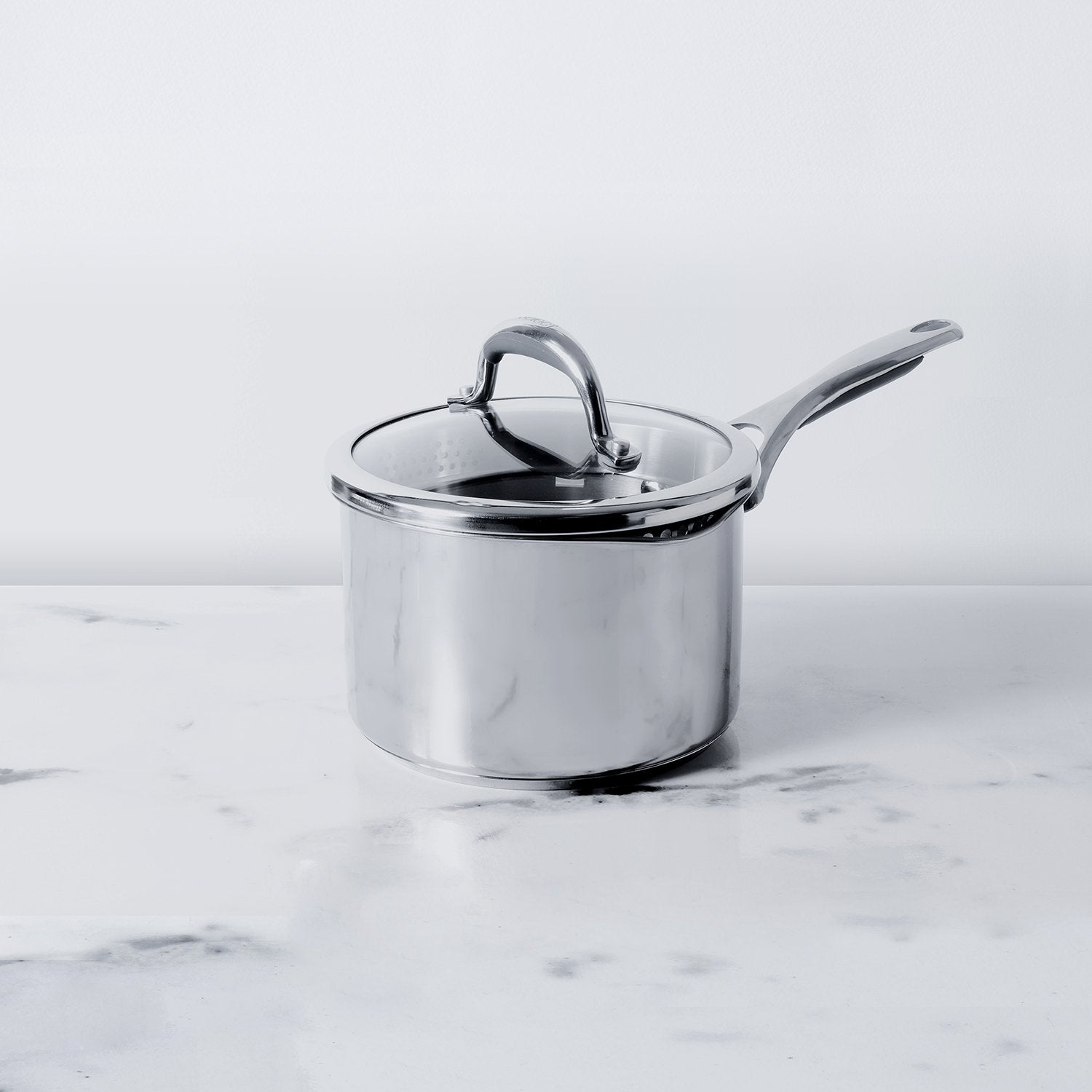
Triply cookware features three permanently bonded layers—a food-grade stainless steel interior, a thick aluminium core, and a magnetic stainless steel exterior.
The aluminium core distributes heat quickly and evenly across the entire cooking surface, minimizing hot spots that often cause food to stick or burn.
This results in better temperature control, more even cooking, and improved consistency across a wide range of recipes.
Whether you're preparing vegetables, curries, pasta, sauces, soups, stir-fries, or one-pot meals, triply cookware helps make cooking easier and more enjoyable.
Cook with Confidence Using Meyer TriVantage and Meyer TriVantage Pro
Choosing premium cookware makes proper cooking techniques even more effective.
The Meyer TriVantage Series is designed for everyday cooking, combining premium triply construction with even heat distribution, long-lasting durability, and dependable performance. Whether you're sautéing vegetables, preparing curries, or cooking breakfast, it helps deliver consistent results while reducing the chances of uneven cooking.
For those seeking an elevated cooking experience, the Meyer TriVantage Pro Series offers advanced engineering and premium craftsmanship. Each piece is constructed with a 304 food-grade stainless steel interior, a thick aluminium core for rapid and uniform heat distribution, and a magnetic stainless steel exterior that is compatible with induction cooktops.
The Pro Series also features sturdy riveted handles, thoughtfully designed cookware shapes, and a 10-year warranty, making it a dependable choice for modern kitchens.
Whether you're a beginner learning to cook with stainless steel or an experienced home chef looking for professional-grade performance, both Meyer TriVantage and Meyer TriVantage Pro are designed to deliver outstanding cooking results every day.
Caring for Your Stainless Steel Pan
Keeping your stainless steel cookware in excellent condition is easy with a few simple habits.
Wash the cookware with warm water and mild dish soap after each use. Allow it to cool before cleaning, and avoid using abrasive scrubbers that may dull the finish. Dry the cookware thoroughly before storing it, and use low to medium heat for most recipes, as triply cookware retains heat efficiently.
With proper care, quality stainless steel cookware can provide years of dependable performance.
Final Thoughts
Seasoning a stainless steel pan is optional, but it can be a helpful technique for reducing sticking and improving food release when cooking delicate recipes.
However, the real secret to successful stainless steel cooking lies in proper preheating, choosing the right cooking oil, and cooking at appropriate temperatures.
When these techniques are combined with high-quality triply cookware, cooking becomes even more enjoyable. Thanks to superior heat distribution, excellent temperature control, and exceptional durability, the Meyer TriVantage and Meyer TriVantage Pro collections are designed to help you achieve consistently delicious results with confidence.
Whether you're preparing a quick breakfast, an everyday family meal, or an elaborate festive feast, understanding how to use your stainless steel cookware correctly will help you get the very best out of every recipe.
MORE FROM BLOG
Top Collections
Best Stainless Steel Kadai for Deep Frying
2 Items
Can I use stainless steel cookware in an electric oven?
2 Items
Can Stainless Steel Cookware Last for Decades?
2 Items
Can Stainless Steel Cookware Replace Non-Stick Pans?
2 Items
Choosing Between Stainless Steel and Non-Stick Frying Pans
2 Items


Leave a comment