



The rise of home-based pop-up restaurants has opened new doors for chefs and passionate home cooks. From weekend-only menus and limited-seat dining to curated tasting experiences, pop-ups allow creators to test concepts without the overhead of a full-scale restaurant. However, one challenge remains universal: scaling home recipes without losing consistency. The key to successful scaling lies not just in ingredients or manpower, but in choosing the right cooking vessels—cookware that performs reliably under volume, time pressure, and repetition.
Table of Contents
- 1. Why Scaling Recipes Is Different from Everyday Cooking
- 2. How the Right Vessels Enable Recipe Scaling
- 3. Essential Cookware for Home Pop-Up Restaurants
- 4. Batch Cooking Strategies for Pop-Ups
- 5. Managing Space in a Home Pop-Up Setup
- 6. Cost Efficiency & Long-Term Value
- 7. Customer Experience & Brand Reputation
- 8. Conclusion
Why Scaling Recipes Is Different from Everyday Cooking
Cooking for 2–4 people allows room for instinct. Cooking for 20–40 guests requires structure.
Scaling recipes introduces challenges such as:
- Uneven cooking in larger quantities
- Longer cooking times affecting texture
- Loss of flavour balance
- Increased risk of burning or undercooking
Standard home cookware is often not designed to handle these demands. Professional-grade vessels help maintain control, consistency, and confidence.

How the Right Vessels Enable Recipe Scaling
1. Even Heat Distribution
Larger volumes need cookware that distributes heat uniformly to prevent scorching at the base and raw spots on top.
2. Heat Retention for Batch Cooking
Pop-up kitchens often cook in batches. Cookware with strong heat retention ensures each batch cooks identically.
3. Capacity Without Compromising Technique
Using the correct vessel size preserves cooking methods—allowing proper sautéing, simmering, and reduction even at scale.
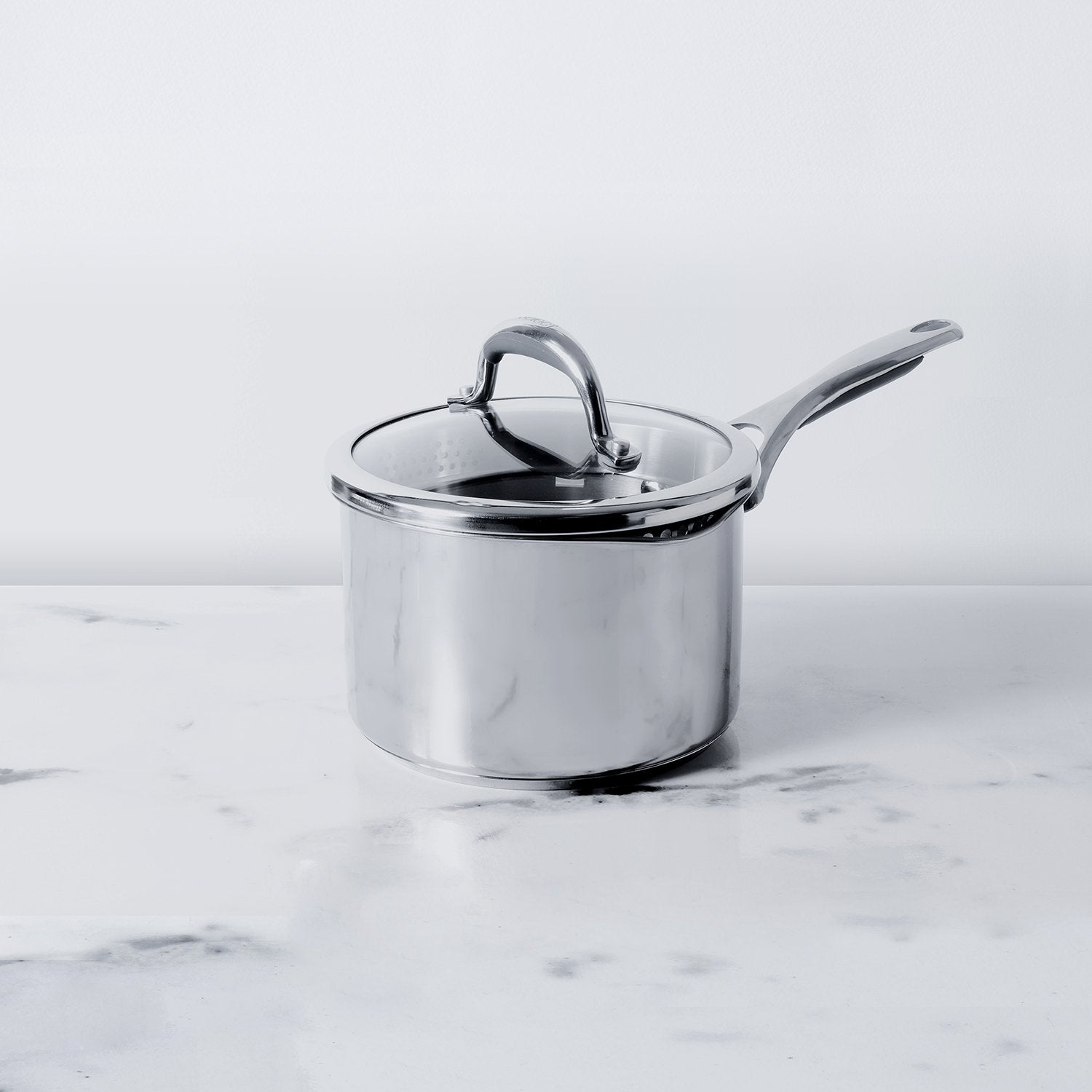
Meyer Pre Seasoned Cast Iron curved Kadai without Lid, 20cm
Essential Cookware for Home Pop-Up Restaurants
Heavy-Duty Kadhai / Wok
A large, deep kadhai is essential for:
- Curries and gravies
- Stir-fried vegetables
- Deep frying snacks
- Rice-based dishes
Triply stainless steel kadhais provide strength and consistent heat for repetitive use.
Large Stock Pots
Stock pots are the backbone of scaled cooking.
Ideal for:
- Dal, sambhar, and rasam
- Rice and biryani base prep
- Soup and broth
A thick base prevents burning during long cooking hours.
For dishes that benefit from slow, even cooking, enamel cast iron ensures flavour depth and texture consistency.
Perfect for:
- Dum biryani
- Stews and braises
- One-pot mains
They also double as elegant serving vessels for pop-up dining.
Speed is critical in pop-up kitchens. Pressure cookers reduce prep time while maintaining uniform results.
Used for:
- Lentils and legumes
- Base gravies
- Bulk vegetable prep
Wide Frypans & Sauteuse
Large frypans support:
- High-volume shallow frying
- Protein searing
- Finishing sauces
Wide surfaces allow faster cooking and better control.
Batch Cooking Strategies for Pop-Ups
- Pre-cook base gravies
- Finish dishes fresh per batch
- Use consistent cookware across batches
- Document cooking times precisely
Right cookware ensures repeatability.
Managing Space in a Home Pop-Up Setup
- Choose stackable cookware
- Use vessels that multitask
- Avoid excess sizes
- Keep prep and finishing cookware separate
Smart vessel selection keeps operations smooth even in small kitchens.
Cost Efficiency & Long-Term Value
Professional cookware may cost more initially, but it:
- Lasts longer
- Reduces wastage
- Saves fuel
- Supports consistent output
This directly impacts profitability.
Customer Experience & Brand Reputation
Guests judge pop-ups on:
- Taste consistency
- Portion quality
- Timely service
Right cookware ensures each plate meets expectations—building trust and word-of-mouth.
Conclusion
A successful home pop-up restaurant balances creativity with precision. While recipes bring the vision, the right cooking vessels make scaling possible without compromise.
With dependable, high-performance cookware, home chefs can confidently move from family portions to guest service—turning kitchens into credible pop-up dining spaces.
MORE FROM BLOG
Top Collections

10 Easy Recipes You Can Cook in a Triply Tope
2 Items
10 Healthy Recipes For A Healthy New Year 2021
2 Items
5 Easy, Comforting chicken Recipes for beginners
2 Items
5 Easy Christmas Cake Recipes- Best Home-Baked Cake Ideas
2 Items
Easy Pressure Cooker Recipe for Bengali Pithe (Rice Dumplings)
2 Items
Easy to Prepare Healthy Cauliflower Recipes
2 Items


Leave a comment