



In every Indian kitchen, the tawa is more than just cookware—it is a daily companion that shapes some of our most loved meals. From soft, puffed rotis to thin, crispy dosas, the tawa plays a crucial role in determining texture, taste, and consistency. While it may seem convenient to use a single tawa for everything, the reality is that roti and dosa require very different cooking environments, and the right tawa can make all the difference.
If you’ve ever struggled with rotis turning hard instead of soft, or dosas sticking and not spreading evenly, the issue often lies not in the recipe, but in the cookware. Understanding the differences between a roti tawa and a dosa tawa can help you make a smarter, more efficient choice for your kitchen. With thoughtfully designed solutions from Meyer, achieving perfect results becomes easier and more consistent.
Table of Contents
Why Roti and Dosa Need Different Tawas
At a glance, both rotis and dosas are cooked on flat surfaces, but their cooking processes are fundamentally different.
Roti-making is a high-heat, quick-cooking process. The dough needs to cook rapidly so that steam builds inside, causing the roti to puff. This requires intense heat and a surface that can respond instantly.
Dosa-making, in contrast, is a controlled, medium-heat process. The batter needs time to spread thinly, cook evenly, and gradually crisp up. Too much heat can burn the dosa before it cooks through, while uneven heat can result in patchy textures.
Because of these differences, the design, material, and surface of the tawa must align with the cooking method.

What Makes a Tawa Ideal for Roti?
High Heat Performance for Quick Cooking
Roti requires immediate exposure to high heat. A good roti tawa should heat up quickly and maintain that heat consistently, even when multiple rotis are cooked one after another. If the heat drops between batches, rotis may turn dry or fail to puff properly.
Materials like cast iron excel here because they store heat effectively and release it evenly across the surface.
Slightly Curved Surface for Better Puffing
Traditional roti tawas often feature a slightly concave surface. This subtle curve helps concentrate heat toward the centre, allowing the roti to cook evenly and puff more efficiently.
It also makes flipping easier and ensures that the edges cook without drying out too quickly.
Thick Base for Heat Stability
A thicker tawa base prevents rapid heat loss. This is particularly important in busy kitchens where rotis are made in quick succession. A stable temperature ensures consistent results every time.
Best Materials for Roti Tawa
Cast Iron Tawa
Cast iron is widely considered the gold standard for roti-making. It retains high heat, delivers even cooking, and enhances the flavour with slight charring. Over time, it develops a natural non-stick surface when properly seasoned.
Hard Anodized Tawa
For those who prefer a lighter option, hard anodized tawas offer good heat performance and durability. They are easier to handle and maintain, making them suitable for daily use.
What Makes a Tawa Ideal for Dosa?
Completely Flat Surface for Even Spreading
A dosa requires a perfectly flat surface to spread the batter thinly and evenly. Any curvature can cause the batter to pool in certain areas, leading to uneven thickness and inconsistent cooking.
A flat tawa ensures that the dosa cooks uniformly from edge to centre.
Even Heat Distribution for Crisp Texture
Dosas need steady, medium heat to cook properly. If the heat is too high, the dosa may burn before becoming crisp. If it is too low, it may turn soft and pale.
A good dosa tawa distributes heat evenly, ensuring that every part of the dosa cooks at the same rate.
Smooth Surface for Easy Release
The ability to spread batter smoothly and lift the dosa without tearing is essential. A smooth surface reduces sticking and helps achieve the thin, crisp texture that defines a perfect dosa.
Best Materials for Dosa Tawa
Non-Stick Tawa
Non-stick tawas are ideal for dosa-making, especially for beginners. They allow batter to spread effortlessly and require less oil, making cooking more convenient and predictable.
Well-Seasoned Cast Iron Tawa
For those who prefer traditional cooking, a properly seasoned cast iron tawa can produce beautifully crisp dosas with excellent flavour. However, it requires experience and proper maintenance.
Key Differences Between Roti and Dosa Tawa
Shape and Design
Roti tawas may have a slight curve, while dosa tawas are completely flat. This difference directly affects how the food cooks and behaves on the surface.
Heat Requirement
Roti tawas are designed for high heat and rapid cooking. Dosa tawas require controlled, even heat over a longer period.
Surface Texture
Roti tawas can work well with slightly textured surfaces, especially in cast iron. Dosa tawas benefit from smoother finishes for better batter spread and release.
Can One Tawa Work for Both?
Many home cooks prefer a single multipurpose tawa, but this often involves compromise.
A flat, heavy cast iron tawa can be used for both rotis and dosas if:
-
It is well-seasoned
-
Heat is carefully controlled
However, achieving perfect results for both consistently can be challenging.
For best performance:
-
Use a dedicated tawa for rotis
-
Use a separate tawa for dosas
This ensures that each dish is cooked under ideal conditions.
Choosing the Right Tawa for Your Kitchen
Selecting the right tawa depends on your cooking habits and preferences.
Frequency of Use
If rotis are a daily staple, investing in a high-quality roti tawa is essential. If dosa is a regular part of your meals, a dedicated dosa tawa will make cooking easier and more consistent.
Ease of Maintenance
Cast iron requires seasoning and care but offers long-term benefits. Non-stick and hard anodized options are easier to maintain and more beginner-friendly.
Heat Source Compatibility
Ensure the tawa works efficiently on your cooktop, whether gas or induction.
The Meyer Approach to Tawa Design
Meyer designs tawas that align with the real needs of Indian cooking. With a focus on material quality, heat distribution, and user-friendly features, Meyer tawas are crafted to deliver reliable performance across different cooking styles.
Whether you’re making rotis on high heat or preparing dosas with precision, Meyer offers cookware that balances durability, efficiency, and ease of use—helping you achieve consistent results every time.
Final Thoughts
The difference between a roti tawa and a dosa tawa may seem subtle, but it has a significant impact on your cooking results.
Roti tawas are built for high heat and quick puffing, while dosa tawas are designed for even heat and smooth spreading. Understanding these differences allows you to choose the right tool for each task, improving both efficiency and outcomes in your kitchen.
By investing in the right tawa, you not only enhance the quality of your food but also make your everyday cooking more enjoyable and effortless.
MORE FROM BLOG
Top Collections
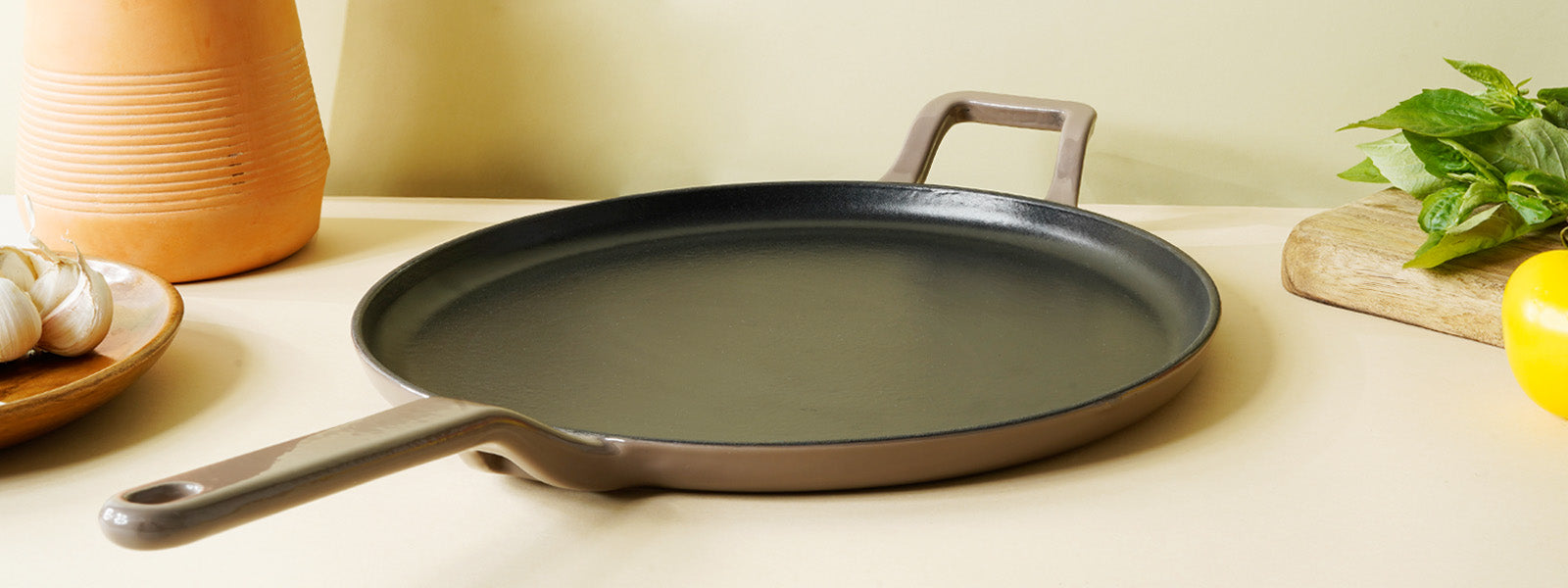
Add Enamelled Cast Iron Dosa Tawa to your kitchen this Diwali
2 Items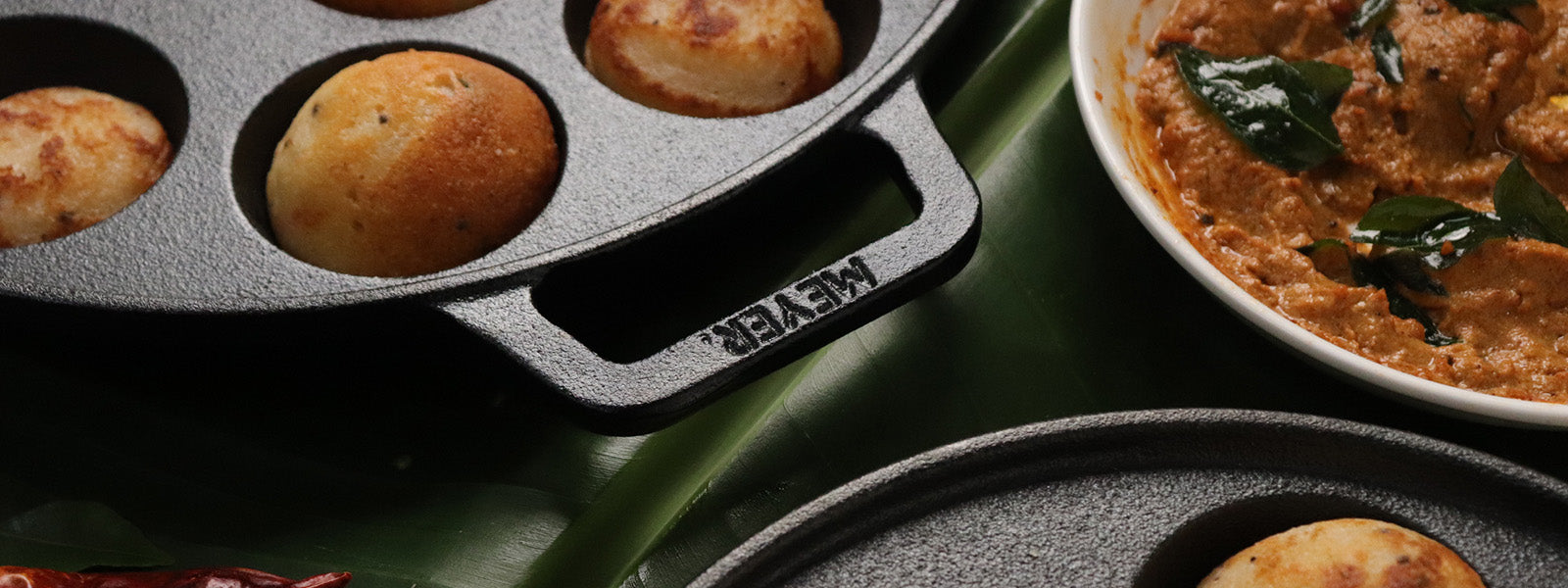
Best Appam Tawa For Authentic Appam at Home
2 Items
Best Non Stick Roti Tawa Price: Cookware For Everyone
2 Items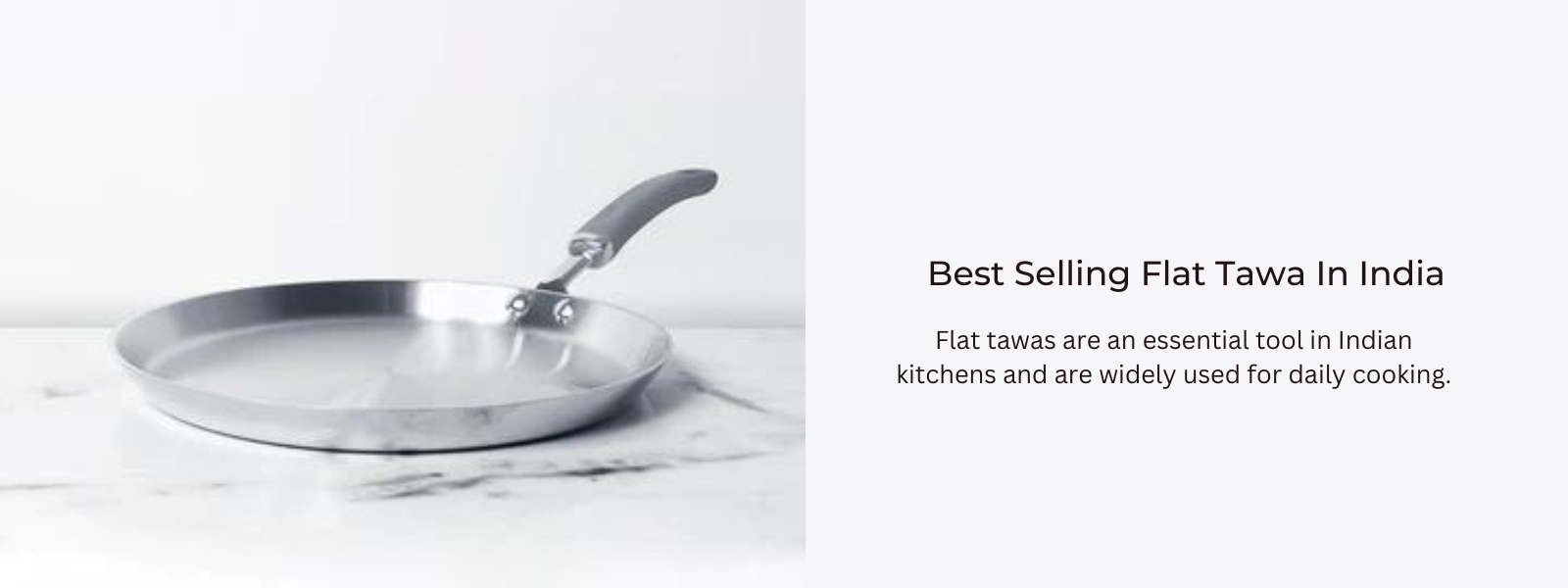
Best Selling Flat Tawa In India For Daily Cooking
2 Items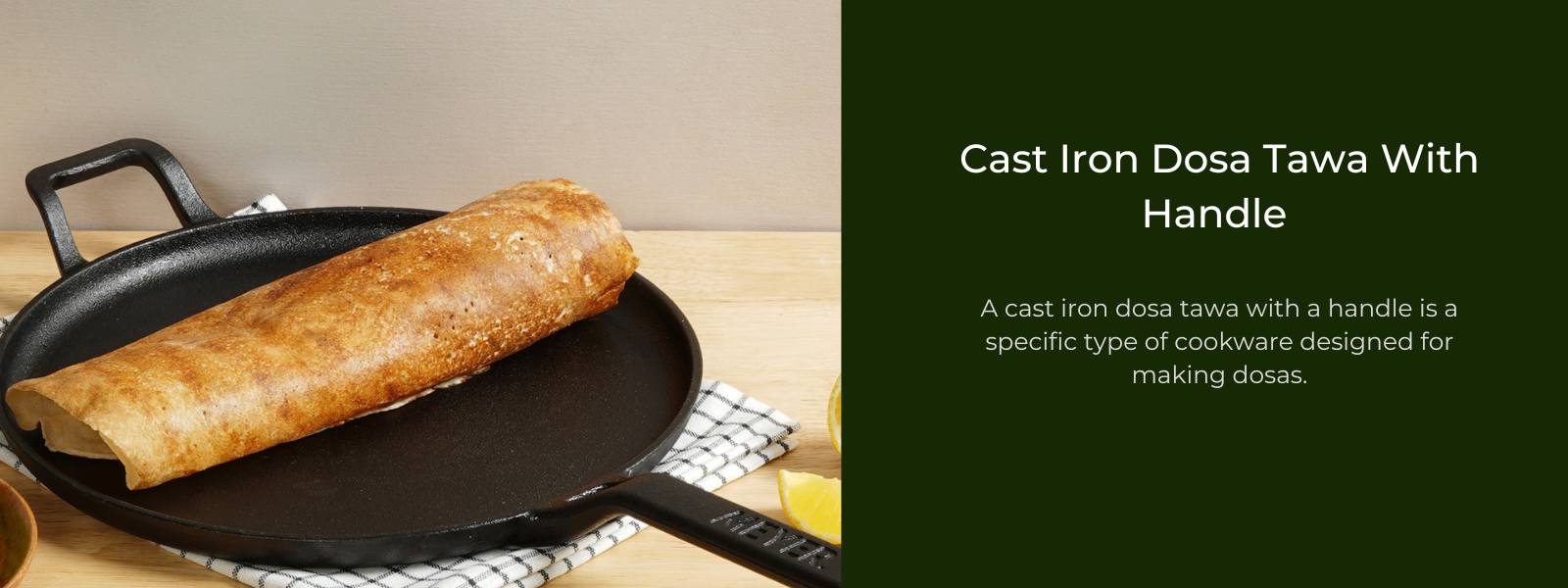
Cast Iron Dosa Tawa With Handle For Ease Of Use
2 Items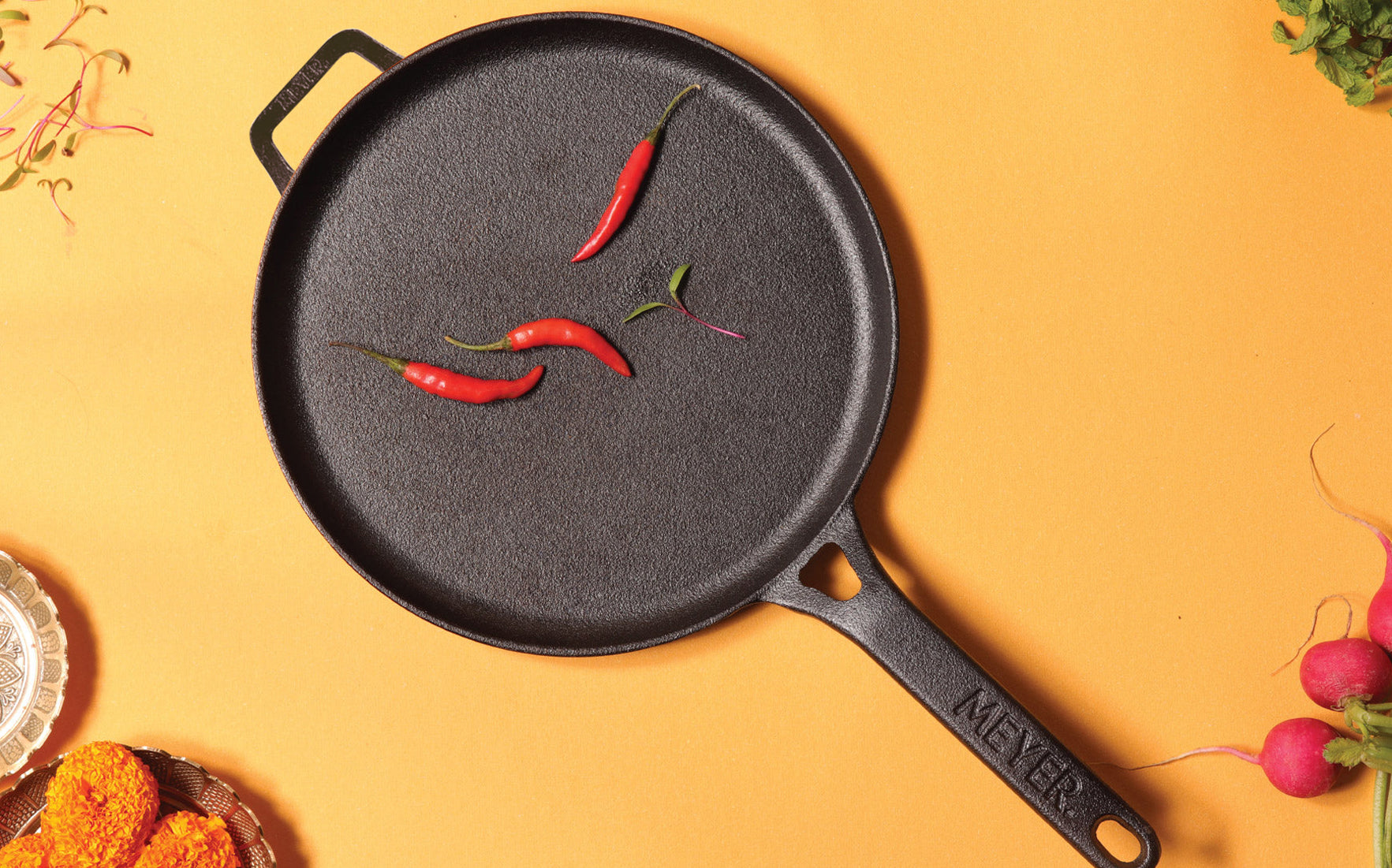
Dosa Delights: Choosing the Perfect Tawa for Diwali
2 Items


Leave a comment